

I’ll be honest — the first time I looked into how to start a garden from scratch, I ended up more confused than when I began. Every article assumed I knew what “amending soil” meant, and my yard was just sad grass with one stubborn tree. If that sounds familiar, this guide is for you. […]
I’ll be honest — the first time I looked into how to start a garden from scratch, I ended up more confused than when I began. Every article assumed I knew what “amending soil” meant, and my yard was just sad grass with one stubborn tree. If that sounds familiar, this guide is for you.
I’ve been growing vegetables, herbs, and way too many tomatoes for several years now, and I wish someone had handed me a simple, no-fluff walkthrough back then. So I wrote one. This is my beginner-proof playbook for how to start a garden from scratch — picking your spot, fixing your soil, choosing your first plants, and building a routine that won’t eat your weekends.
No fancy gear, no botany degree. Just real steps that work, in the order I’d tell them to a friend. By the end, you’ll know exactly what to do in your first month. Let’s get into it.
Table of Contents
Why Starting a Garden Is Worth the Trouble
The first question everyone asks me about how to start a garden from scratch is whether it’s actually worth the effort. Short answer: yes, and not for the reasons you’d think. Homegrown tomatoes do taste about a hundred times better than the sad pink ones from the store — that’s real. But the best part of my garden is the ten quiet minutes I spend out there each morning with coffee, noticing what’s new. A sprout that wasn’t there yesterday. A bee doing its rounds. It slows your brain down in a way scrolling never will.
Be honest about your first year: you will lose some plants, forget to water, and feed at least one squirrel. That’s normal — it’s tuition. Aim for progress, not perfection.
Picking the Right Spot for Your First Garden
Location decides about half your success before you plant a single thing. The single biggest factor in how to start a garden from scratch the right way is sunlight: most vegetables want six to eight hours of direct sun a day. Walk your yard in the morning, at noon, and in the late afternoon, and note which spots truly get that much. The patch you think is sunny? Check again at 3 p.m. — trees cast longer shadows than you’d expect.
Next, think about water: you’ll water a lot early on, so stay within easy hose reach. And keep the garden close to the house — there’s a real rule among gardeners that the farther it is from your door, the less you visit it, and unvisited gardens don’t thrive. Finally, make sure the spot drains well (no lingering puddles) and isn’t the windiest corner of the yard.
In-Ground, Raised Beds, or Containers: Which Should You Choose?
One of the most common questions I get about how to start a garden from scratch is whether you need raised beds. Honest answer: no. Planting directly in the ground costs nothing and gives roots unlimited room — though rough native soil (mine was clay and regret) takes real effort to fix.
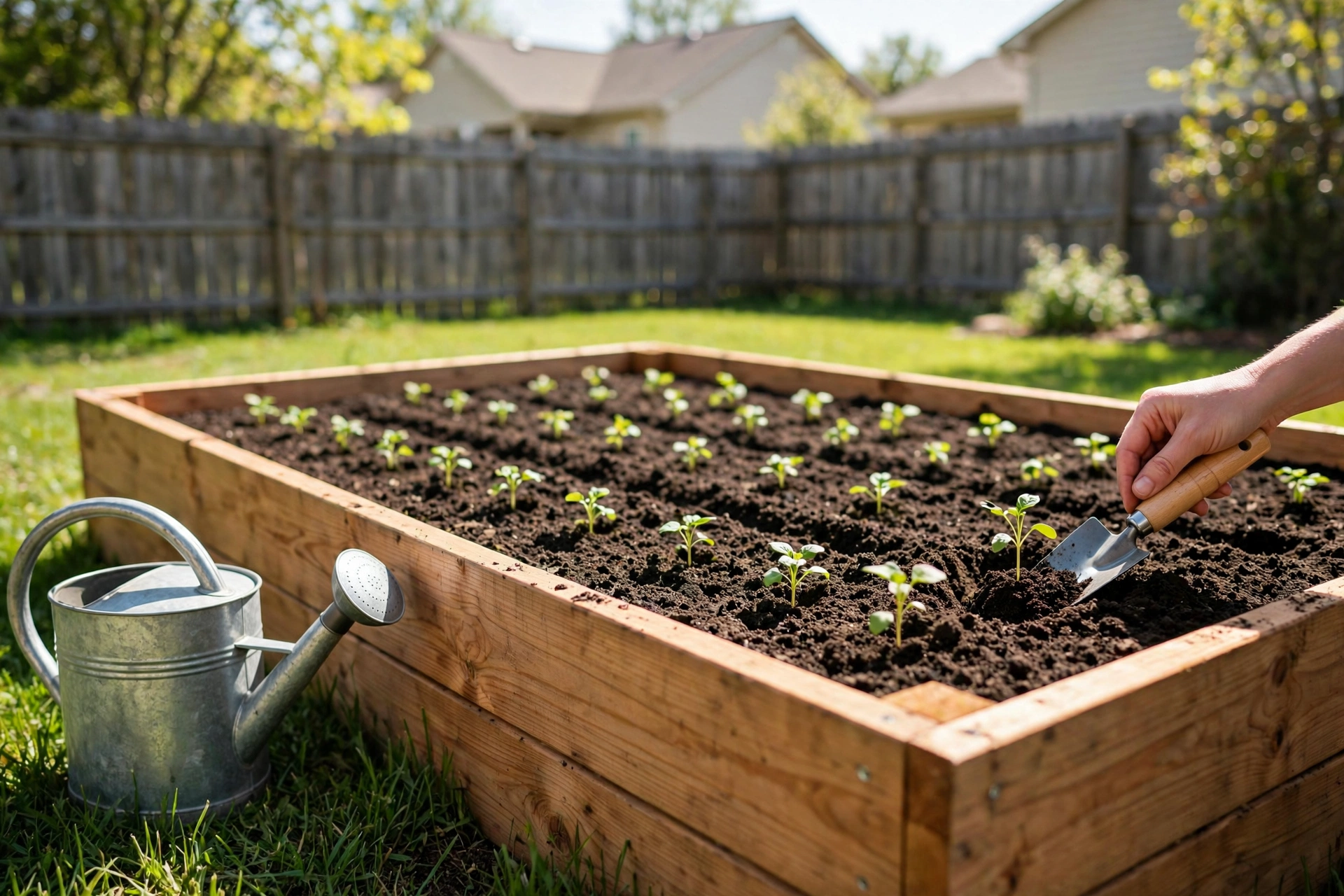
Raised beds are the popular middle ground for good reason. You fill them with decent soil from day one, they drain well, and your back will thank you. A simple 4×8-foot bed from basic lumber is cheap and holds an impressive amount of food. Containers — pots, grow bags, even buckets with drainage holes — are the easiest start of all, and perfect if you rent or lack space. Herbs, peppers, and cherry tomatoes thrive in pots. My advice: start with one raised bed or a handful of large containers. You can always expand later — and trust me, you will.
Soil Basics Made Simple
Nobody wants to hear that dirt matters more than plants, but it’s true. When people ask me the real secret behind how to start a garden from scratch successfully, soil is always my answer. Good soil is dark, crumbly, and smells faintly like a forest floor. Squeeze a damp handful: a ball that crumbles when poked means decent soil, a sticky lump means clay, and instant crumbling means sand.
The good news: you don’t need a chemistry degree. Just work a few inches of compost — the bagged stuff from the garden center is completely fine — into the top layer of your soil. Compost feeds plants, loosens clay, and helps sand hold water. It’s the closest thing to a cheat code gardening has. Skip fancy fertilizers for now; compost and patience will carry your first season. One more rule: never work soil that’s soaking wet, or you’ll compact it into concrete. Wait a day after heavy rain.
The Only Tools a Beginner Actually Needs
Garden centers want you to buy everything, but a beginner needs five things: a sturdy trowel, a hand fork, a watering can or hose with a gentle nozzle, gloves, and a bucket. That’s the whole list.
Once you’re hooked, add a garden fork, pruning shears, and a kneeling pad. But don’t buy everything on day one — half the fun of learning how to start a garden from scratch is discovering what you actually use. Start minimal and spend the savings on compost and plants.
The Easiest Vegetables and Herbs to Start With
Don’t start with the fussy stuff. Your first garden should be full of plants that practically grow themselves, because early wins keep you going. My can’t-miss list: lettuce and salad greens, radishes (ready in about a month), bush beans, zucchini (one plant feeds a neighborhood), cherry tomatoes, cucumbers, basil, chives, and mint — but grow mint in a pot, or it takes over everything. You’ve been warned.
When people ask me how to start a garden from scratch on a tight budget, I point them at these easy crops first. And here’s a tip that took me embarrassingly long to learn: match the plant to your season. Lettuce and radishes love cool spring weather and bolt in summer heat; tomatoes and peppers want it warm. The seed packet tells you when to plant — actually read it. I once planted cilantro in July and wondered why it flowered in two weeks. The packet knew. I didn’t listen.
Nervous about killing things? Start smaller than you think — a few herb pots on a sunny step teach the same skills. And if you’ve already kept alive a few hard-to-kill indoor plants, you already have the patience and observation habits outdoor gardening rewards.
Seeds vs. Seedlings: Which Is Better for Beginners?
When you’re figuring out how to start a garden from scratch, this comes up fast: seeds or starter plants? Do a mix. Seeds are dirt cheap, and beans, radishes, lettuce, and carrots are genuinely easier sown directly in soil — plus you get far more variety than the garden center carries.
Seedlings shortcut the slow stuff — tomatoes, peppers, and eggplants take weeks from seed indoors, so a healthy transplant skips the hardest part. Choose stocky, deep-green plants (not tall, leggy ones) and check leaf undersides for bugs. Follow the spacing on the tag: twelve inches between tiny seedlings looks wasteful, but crowded plants fight for light and air. Thin ruthlessly.
A Simple Watering and Feeding Routine
Most beginners go wrong by loving plants to death. My rule for how to start a garden from scratch without drowning everything: water deeply, less often, at the base. A good soak two or three times a week beats a daily sprinkle — it trains roots downward where soil stays moist. Stick your finger two inches in: dry means water, damp means wait.
Water in the morning: leaves dry fast (fewer fungal problems) and plants face the afternoon hydrated. Water gently at soil level, and mulch with a few inches of straw, leaves, or wood chips — it locks in moisture, suppresses weeds, and nearly halves watering chores. Compost mixed in at the start feeds most vegetables for weeks; if plants pale mid-season, a liquid feed or compost top-up perks them back up — and experienced growers recommend trying homemade compost tea before buying anything bottled.
Beginner Mistakes to Avoid
Let me save you from my greatest hits. Mistake one — the most common I see when people learn how to start a garden from scratch: planting too much, too soon. That first spring energy is dangerous. You imagine a farm; what you can actually water and weed is a modest plot. Start with one bed or six pots. Master that, then expand.
Mistake two: planting everything at once and harvesting nothing at once. Sow lettuce every two weeks instead of all together, and you’ll eat salads for months. Mistake three: ignoring pests until they’re a plague — two minutes a day looking under leaves catches problems early. Mistake four: quitting after one bad season. Every gardener I know killed plenty of plants in year one; the only real failure is not planting again.
Your 4-Week Getting-Started Plan
Enough theory — here’s your launch sequence. If you’re wondering how to start a garden from scratch this month, follow this and you’ll be planting by week three.
Week 1: Observe and decide. Track your sunlight, pick your spot and method — containers, a raised bed, or a dug patch. Buy compost and your five basic tools.
Week 2: Build and prep. Set up containers or build your bed, fill with a soil-and-compost mix, and buy your easy-crop seeds plus a few seedlings.
Week 3: Plant. Sow beans, radish, and lettuce; transplant tomatoes, peppers, and basil; water everything in well. Label it all — you won’t remember what’s what.
Week 4: Settle into routine. Morning check with coffee, water when the soil’s dry two inches down, pull weeds while tiny, watch for pests. This is when you learn the real answer to how to start a garden from scratch is mostly just: start, then pay attention. You’ve got this.
FAQs
Is it cheaper to start a garden than buying vegetables?
Starting small is genuinely cheap — a few seed packets, a bag of compost, and basic tools cost less than one big grocery run, and one zucchini plant can outproduce a summer of store-bought. Skip the fancy kits in year one and it pays for itself fast. The bigger payoff is flavor — and the fact that you grew it.
How much space do I need for my first garden?
Less than you think. A 4×4-foot bed grows a serious amount of greens, herbs, and beans, and a sunny balcony with five or six large pots is a real garden. What matters more than square footage is sunlight — six-plus hours — and your willingness to check on things. Start with space you can easily reach and water.
When is the best time of year to begin?
Spring is the classic answer, and for warm-season crops like tomatoes it’s the right one. But the best time to learn how to start a garden from scratch is whenever you’re motivated enough to do it — just match plants to the season ahead. In mild climates you can plant nearly year-round; in midsummer, start with heat-lovers like beans and basil in containers.
Do I need to test my soil before planting?
For a first garden, no. A squeeze test and a few inches of compost will carry you through year one. Soil testing becomes useful in year two or three, when you want to fine-tune nutrients or troubleshoot poor growth. Don’t let the perfect be the enemy of the planted.
How long until I get my first harvest?
Faster than you’d expect. Radishes can be ready in under a month, salad greens in about six weeks, bush beans in roughly two months. Tomatoes and peppers take 60 to 90 days from transplant. That’s why beginners should plant fast crops alongside slow ones: quick wins keep you going while the tomatoes take their sweet time.
Final Thoughts: Just Dig In
Learning how to start a garden from scratch isn’t about getting everything right the first time. It’s about picking a sunny spot, improving your soil a little, planting things that want to grow, and showing up for a few minutes a day. That’s genuinely 90% of it.
Your first garden won’t be perfect, and that’s the point. Somewhere between the first sprout and the first tomato eaten warm off the vine, you’ll understand why gardeners get that dreamy look. So grab a trowel this weekend. Future you — the one eating homegrown salad in June — says thanks. Happy growing!


2 Comments