
For years, my workout ended the moment I put the weights down. I would grab my bag, walk out of the gym, and wonder why I felt so stiff the next morning. My hamstrings felt like guitar strings, my shoulders ached, and getting out of bed felt like a negotiation. Then a trainer friend watched […]
For years, my workout ended the moment I put the weights down. I would grab my bag, walk out of the gym, and wonder why I felt so stiff the next morning. My hamstrings felt like guitar strings, my shoulders ached, and getting out of bed felt like a negotiation. Then a trainer friend watched me finish a session and said something simple: you are skipping the most important ten minutes. That was when I finally learned how to stretch after a workout properly, and it changed how my body feels after every single session.
Learning how to stretch after a workout properly is not about becoming flexible overnight or doing complicated yoga poses. It is about giving your muscles a gentle cooldown while they are still warm, so they return to their normal resting length instead of tightening up. Done right, it takes about ten minutes, it feels good, and it leaves you looser the next day.
In this guide I will show you exactly how to stretch after a workout properly, including which stretches to do, how long to hold each one, the order that works best, and the mistakes that can turn a good cooldown into a wasted one. Whether you run, lift, play sport, or do home workouts, this routine will fit your training.
Table of Contents
Why Stretch After a Workout at All?
When you exercise, your muscles contract repeatedly and your heart rate rises. Stopping suddenly leaves your muscles in a shortened, tightened state. A gentle cooldown, including stretching, helps your heart rate come down gradually and gives your muscles a chance to relax. Stretching after a workout also feels like a mental full stop — a few quiet minutes where you check in with your body and finish your session on purpose instead of just walking away.
One honest note: stretching after a workout is not a magic cure for soreness. Research has found that stretching does not reliably prevent delayed-onset muscle soreness, the stiffness you feel a day or two after a hard session. What it does do is ease that tight, restricted feeling, improve your flexibility over time, and help you move better in your next session. Those benefits alone are worth ten minutes.
Before or After: Getting the Timing Right
Static stretching, where you hold a stretch still for twenty to sixty seconds, belongs after your workout, not before it. Holding long static stretches before intense exercise can temporarily reduce power and strength. Before a workout, do a dynamic warm-up instead: leg swings, arm circles, walking lunges, and light jogging. After a workout, switch to static stretching, because your muscles are warm, pliable, and ready to lengthen safely. That is why learning how to stretch after a workout properly starts with timing: move before, hold still after.
The Golden Rules of Post-Workout Stretching
First, stretch to mild tension, never pain. You should feel a gentle pull, not a sharp sensation. If it hurts, ease off immediately. Second, hold each stretch for thirty to sixty seconds per side — thirty seconds is the sweet spot, sixty is excellent for very tight areas. Third, breathe normally; slow, steady breathing helps the muscle relax into the stretch, easing a tiny bit deeper on each exhale. Fourth, never bounce — bouncing can trigger a protective reflex and increase the risk of a small tear. Fifth, prioritise the muscles you just trained: leg day means legs, upper-body day means upper body.
How to Stretch After a Workout Properly: My 10-Minute Routine
Here is the routine I use. Hold each stretch for thirty seconds per side, breathing slowly throughout.
- Standing Quad Stretch: Stand tall near a wall for balance if needed. Bend one knee and pull your foot gently towards your glutes with the same-side hand. Keep your knees close together and your chest tall. Hold thirty seconds, then switch sides.
- Hamstring Stretch: Sit on the floor with one leg extended straight and the other foot tucked against your inner thigh. Hinge forward from your hips with a flat back, reaching towards your toes. Only go as far as you feel a gentle pull behind your thigh. If you cannot reach your toes, reach towards your shin or use a towel around your foot.
- Hip Flexor and Lunge Stretch: Step one foot forward into a lunge, back leg extended behind you, back knee resting gently on the floor if comfortable. Tuck your pelvis slightly under and lean forward until you feel a stretch at the front of your back hip. Hold thirty seconds per side.
- Glute and Figure-Four Stretch: Lie on your back and cross one ankle over the opposite knee, making a figure-four shape. Pull the bottom leg gently towards your chest until you feel a deep stretch in the glute of the crossed leg. Hold thirty seconds per side.
- Calf Stretch: Stand facing a wall, step one foot back, and press the back heel firmly into the floor while bending the front knee. Keep the back leg straight and feel the stretch in the calf. Hold thirty seconds, then switch sides. For a deeper stretch, bend the back knee slightly.
- Chest Opener: Stand tall and clasp your hands behind your back. Gently lift your hands away from your body and open your chest, squeezing your shoulder blades together. Hold thirty seconds. This is a wonderful counter-stretch after push-ups, bench press, or hours hunched over a desk.
- Cross-Body Shoulder Stretch: Bring one arm across your chest and use the other hand to gently pull it closer at the elbow. Keep the stretching shoulder relaxed and down. Hold thirty seconds per side.
- Triceps and Overhead Stretch: Raise one arm overhead, bend the elbow so your hand reaches down your back, and use the other hand to gently press the elbow further back. Keep your ribs down and avoid arching your lower back. Hold thirty seconds per side.
- Neck Stretch: Sit or stand tall, drop one ear gently towards the same shoulder, and let gravity do the work. Do not pull hard with your hand. Hold twenty to thirty seconds per side.
- Child’s Pose for the Lower Back: Finish on the floor in child’s pose — knees wide, big toes together, arms extended forward, hips sinking back towards your heels. Breathe deeply for sixty seconds. This releases the lower back and gives your whole body a moment to settle.
How to Stretch After a Workout Properly for Different Training Types
After running, spend extra time on calves, hamstrings, quads, and hip flexors. After lifting weights, stretch the muscles you trained: leg day means quads, hamstrings, glutes, and calves; upper-body day means chest, shoulders, triceps, and lats (add a lat stretch by reaching both arms overhead and leaning gently to each side). After a home bodyweight workout, follow the full ten-minute routine as written. After sport such as football or tennis, pay attention to any area that felt tight during play, and add a wide-legged seated stretch for the inner thighs if you play field sports. For a structured starting point, see this calisthenics workout for beginner guide.
Common Stretching Mistakes to Avoid
The first mistake is skipping the cooldown entirely — I did this for years, and my flexibility got worse even though I was training regularly. The second is stretching cold muscles aggressively; save long static holds for after, when muscles are warm. The third is bouncing, which can cause micro-tears and makes muscles tighten defensively. The fourth is holding your breath; relax your face, breathe out slowly, and let the muscle release. The fifth is stretching through sharp pain — mild tension is good, sharp or joint pain is a stop sign. The sixth is rushing: five seconds per stretch does almost nothing. If you only have five minutes, do fewer stretches and hold each one properly.
How Often Should You Stretch?
Ideally, stretch after every workout. That consistency is what builds flexibility over time. If you train most days, you will naturally stretch most days, which is perfect. On rest days, a gentle ten-minute stretching session on its own is also wonderful, especially if you sit at a desk all day — just warm up first with a few minutes of walking or gentle movement so your muscles are not completely cold.
Does Stretching Prevent Injury?
The honest answer is more nuanced than most fitness articles admit. Stretching after a workout has not been shown to strongly reduce injury risk on its own. Good warm-ups, sensible training loads, proper technique, and adequate rest matter far more. What stretching does do is improve your range of motion, help you notice tightness before it becomes a problem, and leave you feeling better after training.
Stretching With an Injury or Medical Condition
If you have an injury, a medical condition, or you are pregnant, some stretches may need modifying. Avoid stretching an injured muscle aggressively, and never stretch into pain around an injured joint. If you are unsure, talk to a physiotherapist or your doctor about which stretches are right for you. The NHS guide to how to stretch after exercising is also a useful reference.
Building the Habit
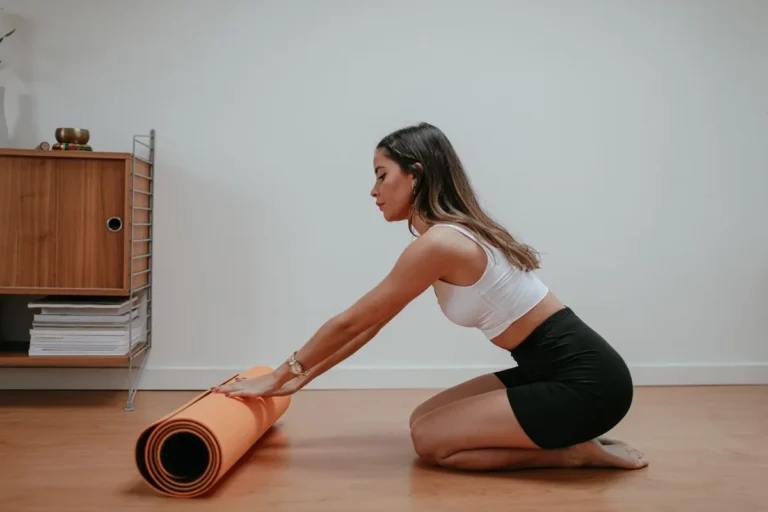
The hardest part of learning how to stretch after a workout properly is not the technique — it is remembering to do it. I made stretching part of the workout, not an optional extra: I do not consider a session finished until the cooldown is done. I keep it simple, the same ten stretches in the same order every time, in the same place, on a mat near where I trained. And I track how I feel rather than how far I can stretch — hamstrings less tight in the morning, sitting comfortably on the floor for longer. Those small wins keep me consistent.
Frequently Asked Questions
How long should I hold each stretch after a workout?
Hold each static stretch for thirty to sixty seconds per side. Thirty seconds is effective for most people, and sixty seconds works well for very tight areas. Holds shorter than fifteen seconds do very little for flexibility.
Should I stretch before or after a workout?
Do dynamic, moving stretches before a workout to warm up, and static, held stretches after a workout to cool down. Long static stretches before intense exercise can temporarily reduce power, so save them for afterwards.
Does stretching after a workout prevent soreness?
Stretching after a workout has not been shown to reliably prevent delayed-onset muscle soreness, but it does ease tightness, improve flexibility over time, and help you cool down gradually.
Is it bad to stretch every day?
Gentle stretching every day is fine for most people, especially after workouts. Keep stretches to mild tension, never force them, and skip or modify any stretch that causes sharp pain.
What should I do if a stretch hurts?
Stop immediately if a stretch causes sharp or joint pain. Ease off to a gentler position, and if the pain persists, get advice from a physiotherapist or doctor rather than pushing through it.
Do I need to stretch muscles I did not train?
Prioritise the muscles you just worked, but a short full-body cooldown is fine too. If you are short on time, stretch the trained muscles properly rather than rushing through every muscle group.
The Bottom Line
Learning how to stretch after a workout properly gave me back something I did not realise I had lost: the feeling of moving easily the day after training. Ten quiet minutes, ten simple stretches, and a little patience are all it takes. Start with the routine in this guide after your next session, hold each stretch for thirty seconds, breathe slowly, and notice how different you feel the next morning. Your future self, getting out of bed without groaning, will thank you. Once you know how to stretch after a workout properly, that ten-minute habit is easy to keep, and learning how to stretch after a workout properly will keep paying off after every session.