

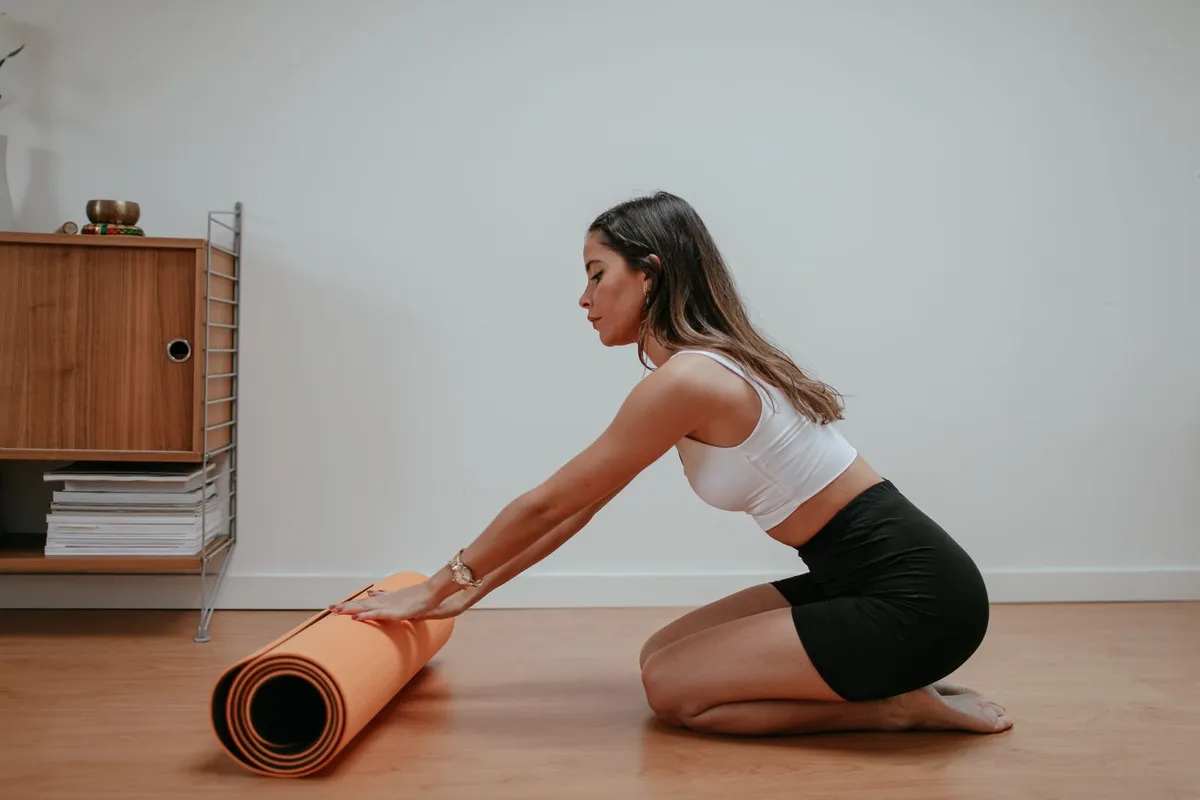
I learned how to clean a yoga mat the hard way: by ignoring mine for months until it smelled like an old gym bag and my hands started slipping halfway through downward dog. I had bought a good mat, I used it almost daily, and I honestly assumed it was cleaning itself somehow. It was […]
I learned how to clean a yoga mat the hard way: by ignoring mine for months until it smelled like an old gym bag and my hands started slipping halfway through downward dog. I had bought a good mat, I used it almost daily, and I honestly assumed it was cleaning itself somehow. It was not.
When I finally gave it a proper wash, the difference was embarrassing — better grip, no smell, and a mat that actually looked like something I wanted to roll out every morning.
Here is the thing most people miss: your mat absorbs everything. Sweat, skin oils, dust from the floor, lotion from your hands, and whatever your bare feet picked up on the way to the mat.
A quick wipe now and then is not vanity, it is maintenance. A clean mat grips better, lasts longer, and does not become a petri dish you press your face into during child’s pose.
In this guide I will walk you through exactly how to clean a yoga mat, from the 60-second wipe-down after every practice to the monthly deep clean that brings a grimy mat back to life.
I will also cover what to do differently for PVC, rubber, TPE, and cork mats, and the common mistakes that ruin mats for good.
Table of Contents
Why Your Yoga Mat Gets Dirty Faster Than You Think
Your mat spends its life flat on the floor, collecting dust even when you are not using it. Add a sweaty practice on top and you have warmth, moisture, and organic matter — the exact recipe bacteria love.
Open-cell mats, like natural rubber, are the worst offenders because they soak sweat in like a sponge. Closed-cell mats, like most PVC and TPE mats, resist absorption better, but sweat still dries on the surface and leaves a slippery film behind.
The smell is usually the first sign. If your mat smells musty when you unroll it, that is bacteria and mildew setting up home. Slipping hands are the second sign: a layer of dried sweat and body oil kills grip. And if you practice hot yoga or outdoors, the whole process speeds up dramatically. None of this means your mat is ruined. It just means it is overdue for a clean.
How Often Should You Clean a Yoga Mat?
The honest answer depends on how much you sweat and how often you practice, but this schedule has worked for me for years: After every practice, a quick wipe-down with a damp cloth or a simple spray. This takes under a minute and prevents buildup.
Once a week, a proper wash with mild soap and water, if you practice three or more times a week. Once a month, a deep clean, especially for open-cell mats or if you do hot yoga. Immediately, any time the mat gets visibly dirty, smells, or has been used outdoors or in a shared studio.
If you only practice once a week in a gentle class and barely break a sweat, a weekly wipe and a monthly wash is plenty. If you are a daily hot-yoga person, wipe after every session and deep clean every two weeks. The rule I live by is simple: the more sweat, the more cleaning.
What You Need to Clean a Yoga Mat
You do not need special equipment or expensive mat cleaners. Here is my kit: a soft cloth or sponge (microfiber works best, and never use anything abrasive), mild dish soap or a gentle castile soap, white vinegar and water for a homemade spray, a spray bottle, a bathtub or a large basin for deep cleaning, and clean towels for drying. That is it.
Skip the bleach, skip the harsh disinfectant sprays, and skip anything with alcohol unless your mat’s manufacturer specifically says it is safe. Harsh chemicals break down the surface of most mats and can make them slippery or flaky over time.
The Daily Wipe-Down: How to Clean a Yoga Mat After Every Practice
This is the habit that makes everything else easier. Right after practice, while the mat is still unrolled, follow these steps for how to clean a yoga mat quickly.
- Mix a quick spray: one part water and one part white vinegar, with a few drops of tea tree oil if you like the scent. Or just use plain water on a damp cloth — that alone removes most surface sweat.
- Spray the top surface lightly. Do not soak it; a light mist is enough for closed-cell mats.
- Wipe the whole surface with a soft cloth, working in one direction.
- Flip the mat and wipe the underside too, since it picks up floor dust.
- Leave it unrolled for a few minutes to air dry before rolling it up.
Sixty seconds, done. If you do nothing else from this guide, do this. It prevents the slow buildup that eventually turns into a smell you cannot ignore.
The Weekly Wash: My Step-by-Step Method
Once a week, or after a particularly sweaty week, give your mat a real wash:
- Unroll the mat on a clean floor or in the bathtub.
- Mix warm water with a few drops of mild dish soap — about a tablespoon per gallon is plenty.
- Dip a soft cloth in the soapy water, wring it out, and wipe the entire top surface in sections.
- For stubborn spots, let the soapy cloth sit on the spot for a minute, then wipe gently. Never scrub hard.
- Wipe the whole surface again with a cloth dampened in clean water to remove soap residue. Soap left behind makes mats slippery.
- Repeat on the underside.
- Pat dry with a towel, then lay the mat flat or hang it over a drying rack until completely dry.
The most important step is the rinse wipe. Leftover soap is the number one reason people complain that their mat feels slippery after cleaning. When the mat is fully dry and no longer cool or damp to the touch, roll it up loosely with the top side facing out.
For another detailed walkthrough, see this guide on how to clean a yoga mat.
How to Deep Clean a Yoga Mat (Monthly Soak)
For a mat that has not been cleaned in a while, or an open-cell mat that has absorbed months of sweat, a soak works wonders:
- Fill a bathtub with warm — never hot — water and add a small amount of mild dish soap.
- Submerge the mat and let it soak for 10 to 15 minutes. You will be surprised, and slightly horrified, by the colour of the water.
- Gently scrub both sides with a soft cloth while it is submerged.
- Drain the tub and rinse the mat under clean running water, or refill the tub with clean water and swish it around until the water runs clear.
- Shake off excess water and lay the mat flat on a clean towel. Roll the towel and mat together gently to press out moisture — do not wring the mat.
- Unroll and hang it over a shower rod or drying rack. Let it air dry completely, which can take up to 24 hours for thick open-cell mats.
Only soak mats that can handle it. Most PVC and TPE mats are fine. Natural rubber mats can be soaked briefly but should not be left submerged for hours. Cork mats should never be soaked — cork absorbs water and can warp or grow mildew inside.
How to Clean a Yoga Mat by Material
Not all mats are the same, and the wrong method can damage yours. Check your mat’s care label first, but these are the general rules:
PVC (closed-cell): The easiest to clean. Wipe-downs, soap washes, and soaks are all fine. Avoid acetone and harsh solvents, which can break down the surface.
TPE (closed-cell): Similar to PVC — gentle soap and water is ideal. Avoid essential oils and oil-based cleaners, which can degrade TPE over time.
Natural rubber (open-cell): Needs more care. Wipe after every use, wash with mild soap and water, and never use vinegar or essential oils — both can break down rubber. Dry completely before rolling, or it will smell.
Cork: Wipe with a damp cloth and a tiny bit of soap. Never soak cork, never use vinegar, and let it dry fully. Cork is naturally antimicrobial, so it needs less aggressive cleaning than other mats.
Cotton or jute (travel mats): Many of these can go in the washing machine on a gentle cold cycle, but check the label. Air dry only.
When in doubt, the gentlest method that gets the job done is the right one.
What NOT to Use on Your Yoga Mat
I have seen people ruin good mats with the wrong cleaner, so here is the avoid list:
Bleach and chlorine cleaners — they break down the mat surface and leave a residue you then press your skin into. Alcohol-based disinfectants — they dry out rubber and TPE and can make the surface flaky.
Abrasive scrubbers — steel wool, rough sponges, and stiff brushes scratch the surface and destroy grip. Essential oils in large amounts — a few drops in a spray are fine for most mats, but undiluted oils stain and degrade rubber and TPE.
The dishwasher or a hot dryer — heat warps mats. Always air dry. If a cleaner smells strongly chemical, it is probably too harsh for something your face touches.
How to Get Smell Out of a Yoga Mat
A smelly mat is usually a damp mat. Bacteria thrive in moisture, so the fix is cleaning plus thorough drying:
- Wash the mat with mild soap and water as above.
- For a stubborn smell on PVC or TPE mats, wipe with a diluted vinegar solution (one part vinegar to four parts water) and let it sit for five minutes before rinsing. Skip vinegar on rubber and cork mats.
- Sprinkle baking soda over the dry mat, leave it for 30 minutes, then wipe or shake it off. Baking soda absorbs odours without damaging the surface.
- Let the mat air out in fresh air — not direct sunlight for long periods, which can fade and degrade it — until completely dry.
If the smell survives all of that, the mat may have mildew deep inside an open-cell mat. At that point, replacement is honestly the healthier choice.
How to Dry and Store Your Mat So It Stays Clean
Drying matters as much as washing. A mat rolled up while damp will smell within days. Always let it dry completely flat or hanging, top side up, before rolling.
Never use a hair dryer or radiator to speed it up — heat damages the material. For storage, roll loosely with the top surface facing outward. This prevents the edges from curling and keeps the grippy side from sticking to itself.
Store it somewhere cool and dry, away from direct sunlight, and never leave it in a hot car. If you use a mat bag, make sure the mat is fully dry before it goes in.
Can You Put a Yoga Mat in the Washing Machine?
Usually, no. Most standard PVC, TPE, and rubber mats should not go in the washing machine — the agitation can warp them, and detergent residue is hard to rinse out.
The exceptions are thin cotton or jute travel mats, and a few brands that specifically say machine-washable on the label. If your mat’s label says machine washable, use a gentle cold cycle with mild detergent, no fabric softener, and air dry flat. For every other mat, hand washing is safer and takes barely more time.
The Bottom Line: How to Clean a Yoga Mat
Learning how to clean a yoga mat changed my practice more than any new pose did. A clean mat grips better, smells like nothing, and lasts years instead of months.
The routine is simple: wipe it down after every practice, wash it properly once a week, deep clean it once a month, and always let it dry completely before rolling it up. Match the method to your mat’s material, skip the harsh chemicals, and your mat will take care of you for a long time.
If you are building a home workout habit around your mat, a short bodyweight routine pairs perfectly with a clean practice space — my guide to a beginner calisthenics workout is a good place to start.
How often should you clean a yoga mat?
Wipe your mat down after every practice, wash it with mild soap and water once a week if you practice regularly, and deep clean it about once a month. Hot yoga practitioners and daily users should clean more often, since sweat builds up faster.
Can I use vinegar to clean my yoga mat?
Vinegar diluted with water is safe for PVC and TPE mats and works well for odour removal. Avoid vinegar on natural rubber and cork mats, because it can break down those materials over time.
Can you wash a yoga mat in the washing machine?
Most yoga mats should not go in the washing machine, since agitation and heat can warp them. Only thin cotton or jute mats, or mats whose labels specifically say machine-washable, should be machine washed on a gentle cold cycle and air dried.
How do I get the smell out of my yoga mat?
Wash the mat with mild soap and water, wipe PVC or TPE mats with diluted vinegar, sprinkle baking soda on the dry mat for 30 minutes to absorb odours, and let it air dry completely. A mat that still smells after this may have deep mildew and should be replaced.
Should I clean both sides of my yoga mat?
Yes. The top side collects sweat and body oils, while the underside picks up dust and dirt from the floor. Wipe both sides during every clean, and always dry the mat fully before rolling it up.
What is the best homemade yoga mat cleaner?
A spray of equal parts water and white vinegar with a few drops of tea tree oil is the most popular homemade cleaner for PVC and TPE mats. For rubber and cork mats, use plain water with a drop of mild dish soap instead, since vinegar can damage those materials.