

I’ve lost count of how many times I’ve bought a beautiful bunch of bananas on Monday, only to find them covered in brown spots by Wednesday and smelling like a banana bread emergency by Friday. It’s one of those small, everyday frustrations — you buy fruit with the best intentions, and two days later half […]
I’ve lost count of how many times I’ve bought a beautiful bunch of bananas on Monday, only to find them covered in brown spots by Wednesday and smelling like a banana bread emergency by Friday. It’s one of those small, everyday frustrations — you buy fruit with the best intentions, and two days later half the bunch is destined for the freezer or the bin.
So I went down the rabbit hole on how to keep bananas from ripening too fast, and honestly, there’s real science behind why these things seem to sprint from green to mush. Once I understood what was going on — and tried every storage trick I could find in my own kitchen — I finally cracked the code. Here’s everything I learned, including the 10 tricks that genuinely work and a few popular ones that honestly don’t.
Table of Contents
Why Bananas Ripen So Fast (The Ethylene Problem)
Bananas are what food scientists call a “climacteric” fruit, which is a fancy way of saying they keep ripening after you pick them — unlike grapes or strawberries, which basically stop the moment they leave the vine. Bananas produce and respond to a natural plant gas called ethylene, and ethylene is basically the ripening alarm bell for fruit.
Here’s the sneaky part: a banana produces ethylene, and that ethylene triggers the banana next to it to ripen faster, which then produces even more ethylene. It’s a chain reaction. That’s why one overripe banana in the bunch seems to drag the whole crowd down with it. I used to think the mushy one was just “bad luck,” but it’s literally gassing the others into submission.
Temperature speeds this up too. Warmth accelerates ethylene production, which is why a bunch left near the stove or on a sunlit counter turns to mush seemingly overnight. The good news is that every single trick below is really just a different way to fight ethylene, slow the temperature effect, or both.
Trick 1: Buy Them Greener Than You Think You Need
This is the simplest habit change and it made the biggest difference for me. If you’re grocery shopping on Sunday and want bananas to last through Thursday, don’t grab the pretty yellow ones — grab the bunch that’s still green at the tips, maybe even a little green along the ridges.
Green bananas give you a 2-3 day head start. They’ll ripen on your counter at room temperature, and you get to eat them exactly when they’re perfect instead of racing the clock. I know it’s tempting — the yellow ones look ready and the green ones look unappetizing — but future-you will be grateful. Think of it as buying time.
Trick 2: Hang Them Up, Don’t Lay Them Flat
You’ve probably seen banana hangers in stores and thought they were just a gimmick. They’re not, entirely. When bananas sit flat on a counter, the ones on the bottom get bruised by the weight of the bunch, and bruised spots release extra ethylene, which speeds up ripening around those spots.
Hanging a bunch keeps air circulating around every banana and avoids those pressure bruises. I bought a cheap wooden banana hanger years ago as a novelty and it genuinely buys my bananas an extra day or two. If you don’t have one, a hook under a cabinet works fine too. It’s a small thing, but it works.
Trick 3: Separate the Bunch Into Singles
This one fights the chain-reaction problem directly. When bananas are clustered together in a bunch, the ethylene each one gives off bathes its neighbors and speeds everyone’s ripening up. Pull the bananas apart — gently twist each one off the crown — and they each ripen more on their own schedule instead of gassing each other into mush.
I’ll be honest: separated bananas look a little sad and lonely on the counter. But it genuinely slows things down, especially combined with the next trick. If you only do one thing on this list, make it this one plus the stem wrapping.
Trick 4: Wrap the Stems in Plastic Wrap or Foil
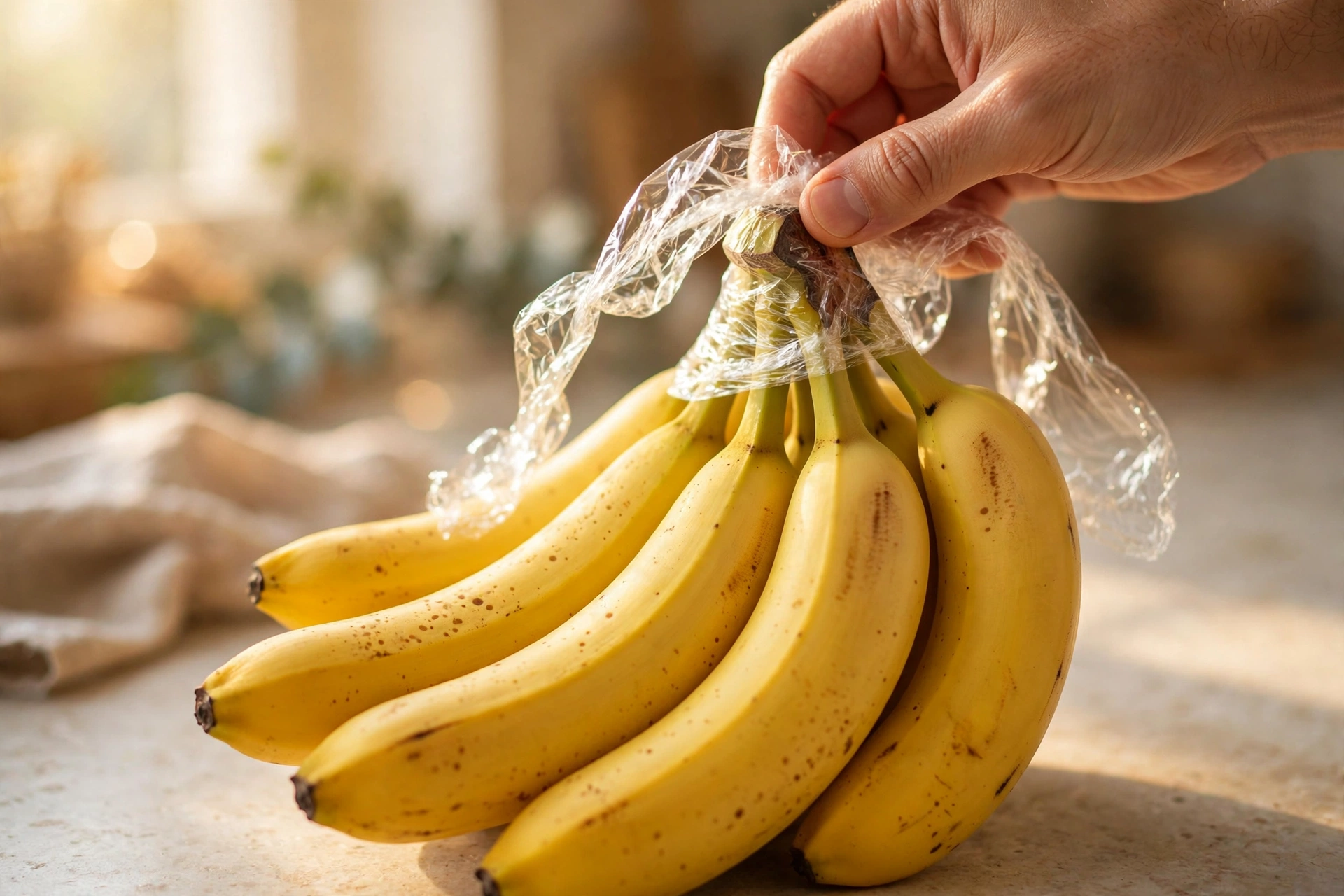
This is the trick that gets shared everywhere, and I’m happy to report it actually works — with a caveat. The stem end of the banana (the crown where they join the bunch) is where the most ethylene escapes. Wrapping the stems tightly in plastic wrap or aluminum foil traps that gas and slows the whole ripening process.
The key detail most people skip: for the best results, wrap each individual stem after separating the bananas. Wrapping the whole crown while the bunch is still together helps a little, but wrapping individual stems helps a lot more because you’ve broken up the bunch and sealed off each banana’s main ethylene leak. Use regular plastic wrap, press it on tight, and don’t be shy about it.
Does it look weird? A little. Do your bananas last noticeably longer? In my experience, yes — a solid extra day or two of perfect yellow before spots appear.
Trick 5: Keep Them Away From Other Fruit
Remember the ethylene chain reaction? It doesn’t just work banana-to-banana. A lot of fruits pump out ethylene — apples, pears, avocados, peaches, and tomatoes are the big offenders. If you keep your bananas in a fruit bowl next to apples, the apples are actively ripening your bananas faster.
This is the one that used to get me. I had a beautiful fruit bowl setup — bananas, apples, avocados, all together, looking very Pinterest-worthy — and my bananas were browning in two days flat. The moment I moved the bananas to their own spot, away from everything else, they started lasting dramatically longer. Your fruit bowl can stay pretty; just give the bananas their own territory. (And flip it around: if you actually WANT to ripen an avocado fast, put it in a paper bag with a banana. Same science, working for you.)
Trick 6: Find the Cool, Shady Spot
Temperature matters enormously. Bananas ripen fastest in warm spots — on top of the fridge where heat rises, next to the stove, or on a windowsill catching afternoon sun. I used to keep mine on the kitchen counter right next to a sunny window because it looked nice. It looked nice and they turned brown in 48 hours.
Move your bananas to the coolest spot in your kitchen: a shaded corner of the counter, a pantry shelf, somewhere away from heat sources and direct sunlight. Every few degrees cooler slows ethylene production noticeably. You don’t need anything fancy — just stop storing them in the warmest part of your kitchen.
Trick 7: Refrigerate Them Once They’re Perfectly Yellow
There’s a persistent myth that you should never put bananas in the fridge. The truth is more nuanced: don’t refrigerate GREEN bananas, because the cold damages the ripening enzymes and they’ll never ripen properly — they can stay green and starchy forever. But once a banana is at your ideal shade of yellow, the fridge is your best friend.
Cold temperatures dramatically slow the ripening process. The peel will darken — sometimes quite a lot, turning brown or nearly black — and that’s totally normal and harmless. It looks alarming but the fruit inside stays perfectly good for several extra days. I used to throw these away because I thought a black peel meant a rotten banana. It’s just cosmetic; the flesh inside is usually flawless. This trick alone can extend perfect bananas from a couple of days to nearly a week.
Trick 8: Freeze the Ones You Can’t Eat in Time
No matter how good your storage game is, sometimes life happens and you’ve got three bananas going spotty at once. Don’t throw them away — freeze them. Peel them first (never freeze them in the peel; it turns into a miserable black mess that’s nearly impossible to remove), break them into chunks, and lay them on a baking sheet in the freezer for an hour before transferring to a freezer bag. That way they don’t freeze into one giant banana blob.
Frozen bananas are genuinely one of the best things to have in your freezer. Blend them straight from frozen with a splash of milk and you’ve got ice cream-textured “nice cream” with no added sugar. They make smoothies thick and creamy, and they’re perfect for banana bread and muffins. I keep a bag going at all times now, and I almost never waste a banana anymore.
Trick 9: Don’t Ripen Them on Purpose (Unless You Mean To)
This is less a trick and more a mindset thing. A lot of ripening “advice” is actually about speeding things up — paper bags, warm ovens, rice bowls. Those are great if you bought green bananas and need them for a recipe tomorrow. But if your goal is longevity, don’t accidentally do the ripening tricks. Keep them out of bags, out of warm spots, and away from the ethylene-heavy fruits I mentioned.
Trick 10: What NOT to Do — The Myths That Make It Worse
A few popular ideas deserve to be retired:
Storing bananas in a sealed plastic bag. This is the big one. Sealed bags trap ethylene gas right against the fruit, concentrating it and making bananas ripen FASTER, not slower. An open bunch breathes; a sealed bag suffocates them in their own ripening gas. (Wrapping just the stems is different — that’s sealing the gas source, not trapping gas around the whole fruit.)
The sunny windowsill. Light and warmth are the enemies. A banana in direct sun is basically in a ripening accelerator. Shady and cool wins every time.
Refrigerating green bananas. As I mentioned, cold stops green bananas from ripening at all. If you bought them green, leave them at room temperature until they yellow up, THEN refrigerate.
Lemon juice or vinegar on the peel. Some corners of the internet swear by this. In my experience it does nothing for whole bananas — it’s a trick for cut fruit (apples, avocados) to prevent oxidation browning, which is a completely different process from ethylene ripening. Skip it.
What to Do With the Ones That Got Away
Even with all ten tricks, you’ll occasionally end up with a banana that’s gone full brown and squishy. Good news: brown bananas are at peak sweetness, and they’re arguably the most useful bananas in your kitchen.
Banana bread is the obvious answer — overripe bananas are the entire reason banana bread exists, and they’re so sweet you can cut back on added sugar. Mashed overripe banana works as an egg replacement in vegan baking (about half a banana per egg). Sliced onto oatmeal or blended into a smoothie, they’re basically nature’s sweetener.
Speaking of breakfast, bananas are one of my go-to breakfast staples — I almost always have some sliced over my morning oatmeal or blended into a smoothie. If you’re looking for more ways to work them into your mornings, check out these nutritious breakfast ideas — there are some great combos in there that go beyond the usual.
How to Keep Bananas From Ripening Too Fast: The Simple System That Works
If all ten tricks feel like a lot, here’s the condensed version I actually use every week: buy them slightly green, separate the bunch, wrap the individual stems in plastic wrap, hang them or set them in a cool shady spot away from other fruit, and move them to the fridge the moment they’re perfectly yellow. Freeze anything you can’t eat in time.
That’s it. Five habits, maybe two minutes of effort, and that’s how to keep bananas from ripening too fast in my kitchen — my bananas now reliably last a full week instead of two frantic days. The science is simple — you’re just fighting ethylene and heat — and once you see how much difference it makes, you’ll never go back to the sad, spotty two-day bunch again.
For more on the science of ethylene and produce storage, Mississippi State University Extension has a helpful fact sheet on produce storage guidance covering bananas and ethylene.


4 Comments