

I’ve thrown away more sad, slimy lettuce than I care to admit. You know the pattern: you buy a beautiful crisp head of romaine on Sunday with big salad plans, and by Thursday the outer leaves have gone brown and translucent, the whole thing smells faintly like a swamp, and into the bin it goes. […]
I’ve thrown away more sad, slimy lettuce than I care to admit. You know the pattern: you buy a beautiful crisp head of romaine on Sunday with big salad plans, and by Thursday the outer leaves have gone brown and translucent, the whole thing smells faintly like a swamp, and into the bin it goes. For years I assumed that’s just what lettuce does — lasts a few days, then gives up. Turns out I was storing it wrong the whole time.
After a particularly embarrassing streak of throwing out three heads in one month, I finally did proper research and ran my own side-by-side test of the most recommended storage methods. The results genuinely surprised me: with the right method, a head of lettuce can stay crisp for up to three weeks. If you’re tired of wasting money on wilted greens, here’s everything I learned about how to keep lettuce fresh for weeks — including the method that worked best, the one I expected to win but didn’t, and the mistakes that quietly ruin lettuce no matter what you do.
Table of Contents
Why Does Lettuce Go Bad So Fast?
Four forces work together. Excess moisture is the number one killer — water sitting on leaves creates a perfect environment for bacteria and fungi, causing the classic slimy rot. Ethylene gas from fruits like apples, bananas, and pears accelerates decay, causing brown rusty spots and faster wilting.
Physical damage is the third force — every bruised or torn leaf is an entry point for microbes. And warmth and airflow fluctuation round out the list — lettuce wants to be cold with stable humidity. Every good method for how to keep lettuce fresh for weeks controls moisture, blocks ethylene, minimizes damage, and keeps things cold.
For more on the science of ethylene gas and leafy greens, see this guide on how to store lettuce so that it remains fresher for longer from Moral Fibres.
Method 1: The Paper Towel + Zip-Lock Bag (My Best Everyday Pick)
Wash your lettuce if you like, then dry it thoroughly — this is critical. Wrap the leaves or head loosely in a dry paper towel, slide into a zip-lock bag, seal most of the way, leaving a small gap for air circulation. Store in the crisper drawer.
The paper towel absorbs the excess moisture that would otherwise pool on the leaves and start the rot cycle; the bag keeps leaves from drying out and wilting. Swap the paper towel every 2–3 days — once damp, it holds wetness against the leaves instead of absorbing it. In my test, romaine stayed crisp 12–14 days; butterhead about 8–9 days. If you want a reliable everyday answer for how to keep lettuce fresh for weeks, this is it.
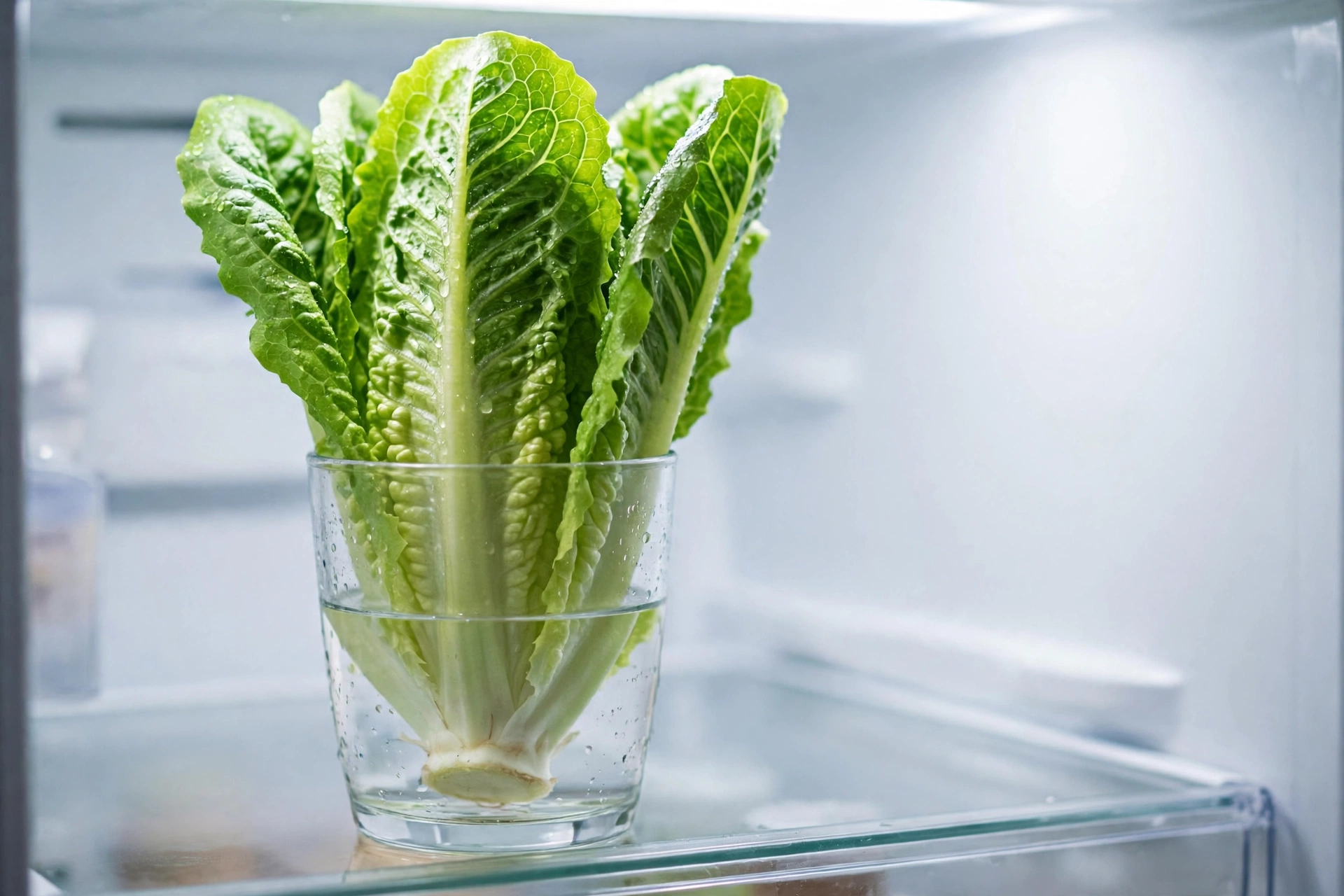
Method 2: The Cup of Water Method (The Surprise Winner for Whole Heads)
Trim a thin slice off the base of a whole head, stand the head cut-side down in a cup or small bowl with an inch or two of water, and refrigerate. Change the water when cloudy, top up as needed.
The lettuce draws water up through the stem like a flower in a vase — the leaves stay hydrated from the inside, preventing wilting. It only works for whole heads, not loose leaves. My romaine head stayed genuinely crisp for 19 days. Romaine does particularly well; butterhead lasted about 10–12 days. For whole heads, this is the most impressive answer I’ve found for how to keep lettuce fresh for weeks.
Method 3: The Sealed Glass Jar (Great for Prepped Greens)
Wash and dry thoroughly (a salad spinner earns its keep here), tear or chop, pack into a large clean dry glass jar or airtight container, seal, and refrigerate.
The sealed container creates stable humidity while the glass keeps leaves from getting crushed. Everything must be truly dry going in — even a little residual water in a sealed jar accelerates slime. Lasts about 7–9 days; best for greens you’ll use within the week. This is the best answer for how to keep lettuce fresh for weeks when you’ve already prepped your greens.
Method 4: The Tea Towel Roll (The Plastic-Free Option)
Wash and dry well, lay leaves on a clean dry tea towel, roll it up like a Swiss roll, and place in the fridge.
The towel absorbs excess moisture while the bundle buffers leaves from dry fridge air. Swap to a fresh dry towel when the first gets damp. Lasts 7–8 days in my test — zero plastic. If you want to know how to keep lettuce fresh for weeks without any plastic, this is your method.
Method 5: The Don’t-Touch-It Method (Simplest of All)
Not using the lettuce for a few days? Don’t wash, don’t cut, don’t take it out of the produce bag. Put the whole intact head straight into the crisper drawer.
The outer leaves shield the inner ones, and washing introduces moisture while cutting creates damage sites. An untouched head coasts for a surprisingly long time — 10 days in my crisper, still great. Once you cut into it, switch to one of the methods above. Sometimes the simplest answer for how to keep lettuce fresh for weeks is to do nothing at all.
My Test Results: Which Method Actually Won?
I ran all five methods side by side with romaine heads bought the same day. Here’s the final ranking for how to keep lettuce fresh for weeks, from longest-lasting to shortest:
- Cup of water — 19 days, genuinely crisp to the end. Winner for whole heads.
- Paper towel + zip-lock — 12–14 days. Best all-rounder.
- Don’t-touch-it — 10 days untouched. Best if you’re not using it yet.
- Sealed glass jar — 7–9 days. Best for pre-chopped prep.
- Tea towel roll — 7–8 days. Best plastic-free option.
For comparison, the control head — tossed straight into the fridge with no method — was slimy by day 5.
The Mistakes That Ruin Lettuce (Whatever Method You Use)
No matter which method you choose for how to keep lettuce fresh for weeks, avoid these mistakes:
- Storing lettuce next to ethylene producers — apples, bananas, pears, avocados. Keep greens on the opposite side of the crisper from fruit.
- Putting wet lettuce into storage — dry thoroughly first; a salad spinner helps.
- Leaving damaged leaves on — slimy outer leaves spread decay fast, remove them before storing.
- Crushing or overpacking — bruised leaves rot first.
- Forgetting the paper towel — swap it every 2–3 days, or the towel holds wetness against the leaves.
If you liked the freshness science here, you’ll enjoy my guide on how to keep bananas from ripening too fast — the same ethylene gas that kills lettuce is the star of that story too.
Can You Revive Limp Lettuce?
If leaves are wilted but not slimy, they’re usually revivable. Fill a bowl with ice-cold water, submerge the limp leaves for 15–20 minutes.
The cold water rehydrates the cells — I’ve seen floppy leaves come back to a respectable crunch. This works for wilt, not slime. Slimy, translucent, or foul-smelling leaves are done; compost them. Reviving is a handy bonus skill once you know how to keep lettuce fresh for weeks — but prevention beats revival every time.
Learning how to keep lettuce fresh for weeks isn’t about one magic trick — it’s about understanding that moisture, ethylene gas, physical damage, and warmth are working against you, and choosing the storage method that neutralizes them.
For whole heads, the cup-of-water method surprised me with 19 days of crispness. For everyday loose leaves, paper towel plus zip-lock remains unbeatable for the effort. Start with one change — just moving your lettuce away from the bananas — and your wallet and salads will notice the difference within a week.
Frequently Asked Questions
How long can lettuce actually stay fresh in the fridge?
With proper storage, a whole head of romaine can stay crisp for up to 3 weeks using the cup-of-water method — a proven way for how to keep lettuce fresh for weeks. With the everyday paper-towel-and-bag method, expect 10–14 days. Loose leaves and softer varieties like butterhead last about a week.
Should I wash lettuce before storing it?
You can, but only if you dry it thoroughly afterward. Excess moisture is the main cause of rot, so many people prefer to store lettuce unwashed and wash it right before eating. Drying thoroughly is the golden rule for how to keep lettuce fresh for weeks — a salad spinner gets leaves truly dry.
Why does my lettuce get brown spots?
Brown or rusty spots are usually caused by ethylene gas from nearby fruits (apples, bananas, pears) or by oxidation where leaves were damaged. Storing lettuce away from fruit and removing damaged leaves before storage prevents most of it.
Can I freeze lettuce?
Technically yes, but it won’t be crisp when thawed — freezing ruptures the cell walls. Frozen lettuce works fine in cooked dishes like soups, but for salads, proper cold storage is far better.
Does the type of lettuce matter for storage life?
Yes. Crisp varieties like romaine and iceberg last longest; softer varieties like butterhead and loose-leaf lettuce have shorter storage life. The methods above for how to keep lettuce fresh for weeks work for all types, just with adjusted expectations.
Is slimy lettuce safe to eat?
No — discard any lettuce that’s slimy, translucent, or smells off. Sliminess means bacterial breakdown is underway. Wilted but otherwise clean leaves are fine to revive; slimy ones are not.


One thought on “How to Keep Lettuce Fresh for Weeks: 5 Storage Methods I Tested”