

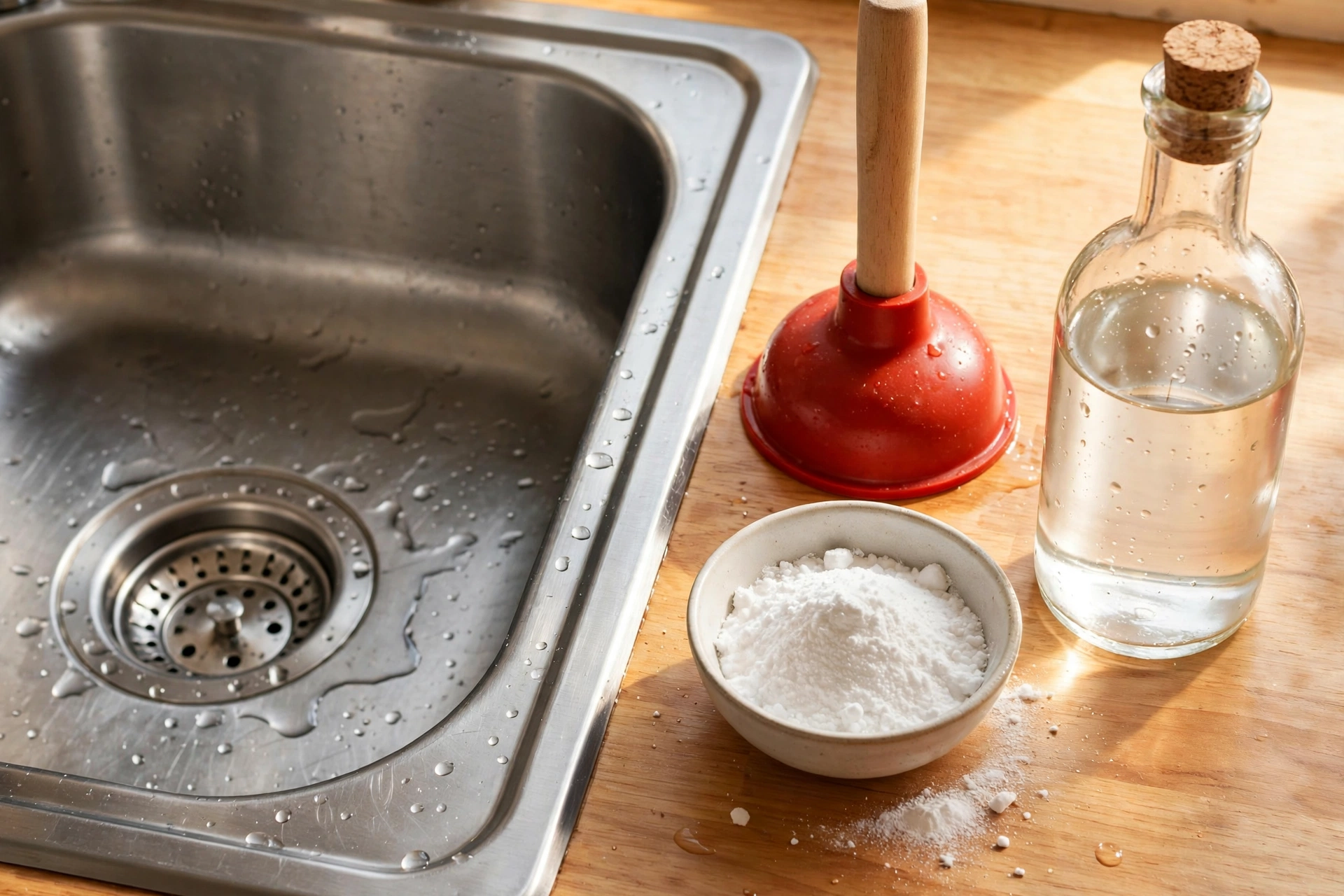
How to Unclog a Drain Without Chemicals: 7 Methods That Actually Worked for Me Learning how to unclog a drain without chemicals became a personal mission of mine about two years ago, after a bottle of store-bought drain cleaner ate the finish right off my bathtub’s drain cover. Standing water, a gurgling sink, that faint […]
How to Unclog a Drain Without Chemicals: 7 Methods That Actually Worked for Me
Learning how to unclog a drain without chemicals became a personal mission of mine about two years ago, after a bottle of store-bought drain cleaner ate the finish right off my bathtub’s drain cover. Standing water, a gurgling sink, that faint sour smell — I’d been there, and my instinct was always to grab the strongest chemical bottle on the grocery shelf and dump half of it down the drain.
Here’s what nobody tells you: caustic chemical cleaners can be brutal on your pipes, especially older ones, and they’re genuinely nasty stuff to keep under the sink. The fumes make my eyes water, they’re terrible for the environment, and — the part that really got me — they don’t even work on a lot of real-world clogs. Once I committed to figuring out how to unclog a drain without chemicals, I realized everything I needed was already in my kitchen.
So I tried every non-chemical fix I could find and separated what actually works from what just looks good in a video. These are the seven methods I use in my own home, in the order I try them — from the easiest five-minute fix to the one that requires getting under the sink.
Table of Contents
Why I Stopped Buying Chemical Drain Cleaners
Three things pushed me away from the chemical stuff. First, safety. Caustic soda and acid-based cleaners burn skin on contact, the fumes are awful in a poorly ventilated bathroom, and I have curious kids who open every cabinet in the house. Having that stuff within their reach stopped feeling okay.
Second, the damage to plumbing. Chemical cleaners generate heat as they react, and that heat can soften PVC pipes and wreck the rubber seals in your drain assembly. In older metal pipes, repeated use corrodes them from the inside.
Third, the environment. Everything you pour down the drain ends up somewhere — the water system, the soil, the rivers. Once that clicked, the whole “pour and pray” approach felt lazy.
Method 1: The Boiling Water Flush
This is always my first move, and it surprises me how often it’s the only move I need. Boil a full kettle, then pour it slowly — in two or three stages — straight down the drain.
Boiling water works best on grease-based clogs, which is why it’s my go-to for the kitchen sink. Hot grease cools and solidifies inside your pipes, and hot water melts it right back down. One caution: with PVC pipes, let the water cool a minute off a full rolling boil — extreme heat can soften PVC joints. For metal pipes, full boil is fine.
I usually do two kettles back to back. If the water drains noticeably faster after the first, the second often finishes the job. Zero improvement after two rounds means the clog is hair or a solid mass, and it’s time for Method 2.
Method 2: Baking Soda and Vinegar Fizz
Yes, the classic — I’m including it because it genuinely works on soft, gunky clogs: soap scum, toothpaste residue, that gray slime that builds up in bathroom drains over months. It’s one of the first things I recommend to anyone learning how to unclog a drain without chemicals.
My exact process: run the hot tap briefly to warm the pipe. Pour half a cup of baking soda directly down the drain, getting as much into the opening as possible. Follow with half a cup of white vinegar. It’ll fizz — cover the drain with a plug or damp cloth to keep the action pointed downward, not up into your face. Wait 30 to 45 minutes, then flush with a full kettle of hot water.
Be realistic about its limits. It won’t dissolve hair, and if baking soda just sits on top of standing water, it never reaches the clog — plunge first, then come back to this. I also run this routine through my bathroom drains monthly as maintenance, and it keeps the slow-buildup clogs from ever forming.
Method 3: The Plunger (And Why Most People Do It Wrong)
Confession: for years I owned a plunger and had no idea how to use one. I’d poke at the drain a few times, get nowhere, and give up. Technique is everything — and so is using the right kind: a sink plunger with a flat-bottomed cup, not the flanged kind made for toilets.
The trick is the seal. Run enough water to cover the cup completely — a plunger needs water, not air, to push pressure down the pipe. Plunging a bathroom sink? Plug the overflow hole with a wet rag, or all your pressure escapes through it.
Then plunge with rhythm: firm, steady strokes, 15 to 20 of them, pulling up on the upstroke. You should feel resistance — that’s the clog moving. Run hot water afterward to check the flow. A decent sink plunger costs a few dollars, lasts forever, and is the most underrated tool in any guide to how to unclog a drain without chemicals.
Method 4: Baking Soda, Salt, and Hot Water
This is the heavy-duty cousin of Method 2 — my pick when the basic fizz doesn’t cut it. Salt is mildly abrasive, and combined with baking soda and hot water it scrubs at a stubborn clog in a way the plain version can’t.
Mix half a cup of baking soda with a quarter cup of table salt and pour the dry mixture straight down the drain. Wait ten minutes so it settles into the clog, then add a full kettle of hot (not quite boiling) water. If you can, let it sit overnight — the extended soak makes a real difference with grease and soap buildup. Flush with hot tap water in the morning.
I used this on a kitchen sink that took ten minutes to empty a basin of dishwater. One overnight treatment and it flowed like new. Same caveat as before: it has to reach the clog, so don’t bother if the drain is full of standing water.
Method 5: A Manual Drain Snake
If everything above fails and the drain is still slow, it’s time for the drain snake — also called a plumber’s snake or hand auger. This finally fixed a shower drain in my house that had defeated every other method, because the problem was a dense mat of hair a foot down the pipe. No pour-down remedy was ever going to dissolve that, and it’s exactly the kind of clog that makes people give up on learning how to unclog a drain without chemicals. Don’t — the snake is the answer.
A basic hand-crank drain snake costs under fifteen dollars and is worth every penny. Feed the coiled end into the drain while turning the crank — the rotation helps the tip grab the clog instead of just poking through it. When you feel resistance, keep cranking and push gently. Retract slowly; the hook usually comes back with the clog wrapped around it. Fair warning: wear rubber gloves and have a trash bag ready.
For a detailed walkthrough with photos, the folks at Family Handyman have an excellent step-by-step guide to unclogging a sink covering different fixture types. A snake reaches clogs three to five feet down — far beyond any pour-down remedy — making it the most powerful option on this list.
Method 6: Dish Soap for Greasy Kitchen Clogs
Almost embarrassingly simple, and specifically for the kitchen, where most clogs are cooking grease and food residue. Squeeze a generous quarter cup of dish soap directly down the drain — not a few drops. Dish soap is designed to cut grease, which is exactly what it does inside your pipes.
This works best as maintenance for sinks that drain slowly but aren’t fully blocked. I’ve made it part of my monthly kitchen routine — soap, hot water, done — and haven’t had a serious kitchen clog since. For a shower drain, the underlying problem is often hair plus soap scum — and if your fixtures have that chalky white buildup too, check out my guide on removing hard water stains from shower glass, since mineral buildup and slow drains tend to go hand in hand.
Method 7: Remove and Clean the P-Trap
This sounds intimidating but is honestly a fifteen-minute job once you’ve done it. The P-trap is the U-shaped pipe under your sink — it holds water to block sewer gases, which also makes it the number one place clogs form.
Put a bucket directly under the trap to catch the water and gunk inside. Loosen the slip nuts on either end by hand or with channel-lock pliers, turning counterclockwise, and pull the trap down. Dump the contents (gloves on), scrub the inside with an old toothbrush and dish soap, and rinse it in another bucket. Reattach, hand-tighten the nuts, and run water to check for leaks.
This is the most reliable answer to how to unclog a drain without chemicals when nothing else works, because you’re physically removing the blockage instead of trying to dissolve it or push it through. If the trap is clean but the drain is still slow, the clog is further down the line — that’s snake territory, or plumber territory.
What Never to Do When a Drain Clogs
A quick list of things I’ve done myself or watched others do, all of which made things worse. First, don’t mix chemical drain cleaners with any home remedy — especially bleach with vinegar or any acid-based product. Those combinations create toxic fumes that can genuinely hurt you. Avoiding dangerous combinations is one more reason the chemical-free approach to how to unclog a drain without chemicals wins for me.
Second, don’t use a wire coat hanger as a drain snake. It’s too stiff, it scratches porcelain and pipe interiors, and the sharp end can puncture the trap or get stuck — turning a simple clog into an actual plumbing emergency. A real drain snake costs less than a pizza.
Third, don’t ignore a drain that’s getting progressively slower. Slow drains are a warning; a full blockage is the consequence. Five minutes of maintenance costs almost nothing, while an emergency plumber on a Sunday costs a lot. And finally, don’t pour cooking grease down the drain, ever — wipe pans with a paper towel and toss it, since grease is the number one cause of kitchen clogs.
When It’s Time to Call a Plumber
I love a good DIY fix, but stubbornness can cost more than a service call. If multiple drains are clogged at once — kitchen sink, bathtub, and toilet all backing up — the blockage is probably in your main sewer line. No plunger or home remedy fixes that, and messing with the main line can cause a sewage backup, a whole different level of nightmare.
Other red flags: water backing up in one fixture when you use another (flushing the toilet makes the shower drain gurgle), a persistent sewage smell, or water damage around a fixture’s base. And if you’ve worked through all seven methods and the drain is still fully blocked, don’t keep forcing it — the problem could be a broken pipe or a deep main-line clog needing professional equipment. Calling a plumber isn’t giving up; it’s being smart.
Frequently Asked Questions
Does baking soda and vinegar really unclog drains?
It genuinely helps with soft, gunky clogs — soap scum, toothpaste, light grease buildup, the gray slime that accumulates in bathroom drains over months. It will not dissolve a solid mass of hair. Think of it as a first attempt and a maintenance treatment, not a miracle cure for a fully blocked pipe.
What is the fastest way to unclog a drain without chemicals?
A properly used sink plunger is the fastest fix for most clogs — good technique clears a typical bathroom or kitchen clog in a couple of minutes. For greasy kitchen sinks, boiling water followed by dish soap is nearly as quick. A manual drain snake handles the stubborn clogs nothing else can reach.
Can I unclog a drain with just hot water?
Sometimes, yes — if the clog is mostly grease or soap, a few kettles of hot water poured slowly can melt it enough to restore flow. This works best on kitchen sinks and is far less effective on bathroom hair clogs. If two rounds of hot water change nothing, move on to the plunger or a drain snake.
Is it safe to use a drain snake on any drain?
A manual hand-crank snake is safe for most standard sinks, tubs, and shower drains when used gently. Avoid forcing it through toilet traps or garbage disposals, and skip electric power augers unless you know what you’re doing. If you meet hard resistance you can’t work past, stop and call a plumber.
Why does my drain keep clogging in the same place?
Repeat clogs usually mean the root cause hasn’t been addressed — grease going down the kitchen sink, hair going down the shower without a catcher, or a partial blockage deep in the pipe. Install a cheap drain strainer, stop pouring grease down the sink, and run a monthly hot-water-and-baking-soda flush.
The Bottom Line: How to Unclog a Drain Without Chemicals
If you take nothing else from this article, take this order of operations: hot water first, then baking soda and vinegar, then the plunger, then the salt variation, then the drain snake, then dish soap for grease, and finally the P-trap. Start gentle, escalate as needed. Every method costs almost nothing and won’t damage your pipes or fill your home with harsh fumes.
Learning how to unclog a drain without chemicals also changes how you think about prevention. Once you’ve seen what a clog looks like up close, you get religion about drain strainers fast — a two-dollar mesh strainer catches the hair that would otherwise mat together three feet down your pipe. Wiping greasy pans with a paper towel before washing keeps the kitchen sink flowing. Running hot water for thirty seconds after doing the dishes melts grease before it solidifies.
In conclusion, a slow drain doesn’t mean a trip to the store for harsh chemicals. Start with the simplest fix, work down the list, and you’ll be surprised how rarely you need anything stronger than hot water and a good plunger.