

I have lost count of the times I have pulled a shirt from the laundry basket and found a ghostly sticky rectangle on it — a price tag I forgot to peel, a care sticker that went through the wash anyway, a name label on a kid’s jacket. If you have ever needed to know […]
I have lost count of the times I have pulled a shirt from the laundry basket and found a ghostly sticky rectangle on it — a price tag I forgot to peel, a care sticker that went through the wash anyway, a name label on a kid’s jacket. If you have ever needed to know how to remove sticker residue from clothes, you know the frustration: the paper peels off easily, but the glue stays behind, One particularly irritating Saturday, a new cotton tee came out of the wash with a barcode sticker fused to the chest. That afternoon I tested basically every home method people swear by.
Most sticker glue comes off fine if you pick the right method for your fabric — one wrong choice, like acetone on the wrong fabric, turns a small sticky spot into a ruined garment. Here is everything I learned.
Table of Contents
Rubbing Alcohol: My First Choice for Sticker Residue on Clothes
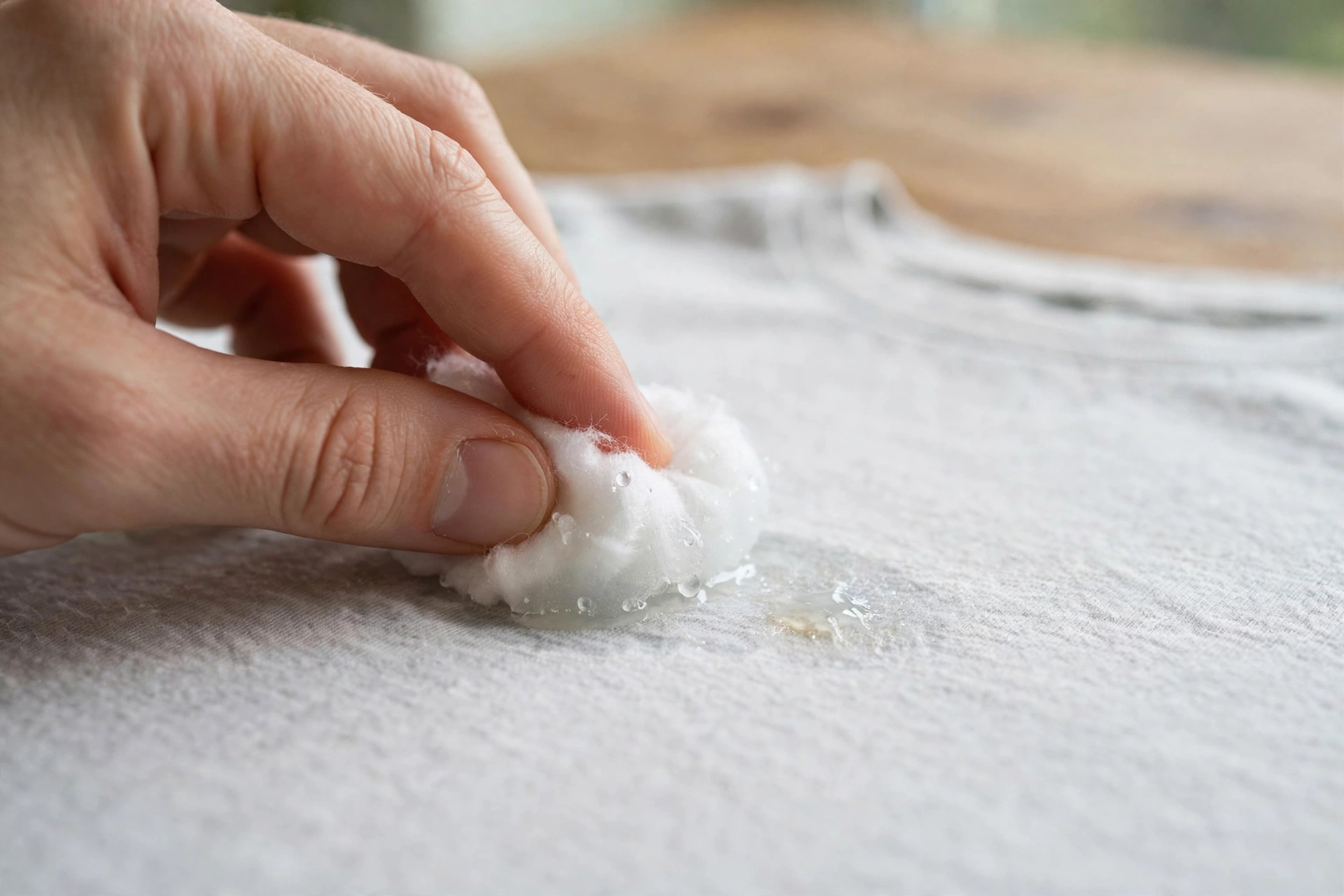
Rubbing alcohol (isopropyl alcohol, the stuff in the pharmacy bottle) is my number one method, and the one I reach for about 80 percent of the time. It dissolves most adhesive residues without bleaching fabric, and it evaporates cleanly so it leaves nothing of its own behind.
Lay the garment flat on a clean towel, sticker-side up. Soak a cotton ball or a corner of a white cloth in rubbing alcohol and press it onto the sticky area. Hold it there for a couple of minutes so the alcohol can soak in — patience matters, because glue that has been baked into fabric by a hot dryer needs time to soften. Then work at the edges with the cloth in small circles. Keep refreshing the alcohol and repeat until the stickiness is gone.
One caution: on colored fabrics, test in a hidden spot first, like an inside seam. I have never had rubbing alcohol fade a garment, but a quick spot test is smart practice. Wash the garment normally afterward to remove the alcohol smell.
White Vinegar: The Backup Most People Already Own
No rubbing alcohol in the house? White vinegar is the next best thing, and most of us have a jug under the sink. Vinegar is mildly acidic, which is exactly what you want — the acid breaks down the adhesive bond without the harshness of chemical solvents.
Soak a cloth in undiluted white distilled vinegar, lay it over the sticky spot for about ten minutes, then use the same cloth to rub the glue off, working from the outside inward so you do not spread it. For stubborn spots, warm a small bowl of vinegar in the microwave for twenty seconds (warm, not hot) — the warmth speeds things up noticeably.
The one downside is the smell. A normal wash cycle takes care of it completely. I have used this on white cotton tees, jeans, and a polyester blouse, and it has never discolored anything. Use white vinegar only — apple cider or malt vinegar can stain light fabrics. Plenty of adhesive removal guides, like this one on getting sticker glue off different surfaces, also rank vinegar high among home options.
Freezing: How to Remove Sticker Residue From Clothes Without Chemicals
Instead of dissolving the glue, you can freeze it so hard it becomes brittle and loses its grip on the fibers. This works best on fresh residue — the kind where a sticker was recently peeled and the glue is still soft and gummy.
Fold the garment so the sticky area is on the outside and exposed, put it in a plastic bag, and pop it in the freezer for an hour or two. When you pull it out, work fast: flex the fabric and scrape the glue off with an old credit card or your fingernail. If it starts getting soft again, put it back in the freezer for another thirty minutes.
I will be honest — this succeeds maybe 60 percent of the time for me. It is fantastic for thick, gummy globs and weak against thin, smeary residue that has been through the dryer. But when it works, it is the gentlest method of all, since no liquid or chemical touches the fabric.
How to Remove Sticker Residue From Clothes Made of Delicate Fabrics
Sticker residue on delicate fabrics like silk, wool, cashmere, or lace is a different game. Heat can felt wool, solvents can strip dye or weaken silk, and vigorous rubbing pills everything. So the rules change.
Start with the freezer method — the safest first attempt. If that is not enough, dab cool water with a drop of mild dish soap on a soft cloth (dab, never rub). A cotton swab of rubbing alcohol on a tested hidden spot is my last home option.
What I absolutely avoid on delicates: acetone, nail polish remover, heat, and vigorous scrubbing. If the residue is on a real silk blouse or a cashmere sweater that cost real money, consider a dry cleaner instead.
Warm Iron and Paper Towels: Melting the Glue Off
This sounds backwards after the freezer section, but gentle heat can melt adhesive so it transfers off the fabric and onto something else. It works on cotton, denim, and other sturdy fabrics — never on delicates or synthetics that can melt, like polyester, nylon, or acrylic.
Place the garment sticky-side down on a stack of paper towels, then place another paper towel on top. Press with a warm (not hot) iron for a few seconds at a time, checking between presses. The heat melts the glue and the paper towels absorb it. Swap in fresh towels as they pick up adhesive. I used this on a cotton hoodie with an old iron-on name label and the glue migrated into the paper towel like magic.
The risk is overheating. A too-hot iron bakes adhesive deeper into the fibers — the exact opposite of what you want. Keep it on medium-low and never leave the iron sitting in one spot.
Dish Soap and Warm Water: The Simplest Method
If the residue is fresh — you just peeled a sticker off a new garment and the glue has not been washed or dried into the fabric — dish soap and warm water often does the whole job.
Fill a basin with warm (not hot) water, add a squirt of dish soap, and submerge the sticky area for fifteen minutes. Then rub the fabric against itself gently, or use a soft toothbrush on the spot. Rinse, check, and repeat if needed.
This is also my default follow-up step after any other method. Once the bulk of the residue is off, a warm soapy wash makes sure nothing tacky remains. A clean machine matters here too — every few months I clean my washing machine with a simple vinegar routine to keep everything working properly.
Baking Soda Paste: Gentle Scrubbing Power
Baking soda sits in a sweet spot: abrasive enough to lift softened glue, gentle enough not to damage most fabrics. Make a thick paste — roughly two parts baking soda to one part water — spread it over the sticky area, and let it sit ten minutes. Then work it into the glue with a soft toothbrush or your fingertip in small circles.
This shines as a second step. On its own it struggles against fully set, dryer-baked residue. But after you have softened the glue with rubbing alcohol or vinegar, the paste scrubs away the thin film that liquid methods leave behind. Rinse thoroughly afterward — baking soda leaves a white powdery film if you do not wash it all out.
Acetone: Powerful, but Only for Plain Cotton
Acetone is the heavy artillery. It dissolves stubborn adhesive fast, including residue that has survived multiple wash and dry cycles. But it is also the method most likely to ruin your clothes, so treat it as a last resort — safe only on natural fibers like cotton and linen. On acetate, triacetate, modacrylic, or certain synthetic blends, it can dissolve the fibers themselves, leaving a hole or melted patch. Always check the care label and patch test on an inside seam first.
When I do use it, I dab it on with a cotton swab — never pour — work the glue loose, and wash the garment immediately. If every gentler method failed and the garment is plain cotton, acetone will probably finish the job. If the garment is anything else, do not risk it.
Commercial Sticker Removers: When to Just Buy One
Products like Goo Gone exist for a reason — they are formulated for this job and they work. The citrus-oil-based ones smell pleasant and handle most sticker glue quickly. I keep a bottle around for stubborn cases like old price stickers on secondhand clothes. After using one, pretreat the spot with dish soap and wash on the warmest setting the fabric allows.
How to Remove Sticker Residue From Clothes: What NOT to Do
I will be honest about the mistakes I have made, because they are more instructive than my successes. First: never put a garment with known residue into the dryer before treating it. Heat sets adhesive into fibers permanently — that is how my easy sticker problem became a Saturday-afternoon project. Always check for stickers before washing, and air-dry anything suspicious until the residue is fully gone.
Second: never scrape with anything sharp. A razor blade or knife nicks the fibers, and on thin fabrics it slices right through. A dull edge — an old credit card, a plastic spoon, your fingernail — is the maximum aggression your fabric should experience.
Third: do not assume a solvent is safe just because it worked on another garment. Acetone on cotton is fine; acetone on rayon is a disaster. Always check fiber content and always spot test. And do not give up after one method fails — different adhesives respond to different approaches, and combining methods (freeze first, then alcohol, then a baking soda scrub) beats any single method used harder.
How to Stop Sticker Residue Before It Starts
Prevention beats cure, and most of it is habit. Peel every sticker off new clothes before they go anywhere near the wash — price tags, size stickers, those little “inspected by” labels. Check pockets and collars, where name labels hide. When you peel, go slow and pull at a low angle, almost parallel to the fabric; fast ripping leaves more glue behind.
If you buy secondhand or get hand-me-downs with stubborn labels, treat the residue before the first wash, not after. And get whoever does laundry in your house into the habit too — my sticker disasters dropped to near zero once I started checking my partner’s new shirts.
My Final Take on Removing Sticker Residue From Clothes
Knowing how to remove sticker residue from clothes comes down to two decisions: picking the method that matches your fabric, and testing before you commit. For most everyday cotton and denim, rubbing alcohol is the fastest, safest answer — it is the method I reach for first and the one I recommend to friends. For delicates, start with the freezer and a gentle hand.
Frequently Asked Questions
Does rubbing alcohol damage clothes when removing sticker residue?
Rubbing alcohol is safe on most fabrics, including cotton, denim, polyester, and wool, because it evaporates cleanly without bleaching. I still recommend a quick spot test on an inside seam for dark or delicate fabrics.
Can you remove sticker residue that has already been through the dryer?
Yes, but it is harder, because dryer heat bakes the adhesive into the fibers. Rubbing alcohol is usually the most effective option — soak the spot generously and give it extra time to penetrate before working it loose. You may need two or three rounds, followed by a baking soda paste scrub to remove the final film.
Will white vinegar fade colored clothes?
White distilled vinegar is color-safe on the vast majority of fabrics and will not fade dyed clothing. The one exception is unstable or bleeding dyes, which is why a spot test on a hidden area is always smart. Rinse and wash normally afterward to remove the vinegar smell.
Is it safe to use nail polish remover on clothes to remove stickers?
It depends on the fabric. Acetone-based nail polish remover works well on 100% cotton and linen but can dissolve synthetic fibers like acetate and triacetate, leaving holes or melted patches. Always check the care label first and patch test on an inside seam.
How do you remove sticker residue from delicate fabrics like silk?
Start with the freezer method, since it involves no liquid or chemicals at all. If residue remains, dab cool water mixed with a drop of mild dish soap using a soft cloth — dab, never rub. Avoid heat and acetone entirely on silk, and for a prized garment consider a dry cleaner instead of gambling on solvents.
Why does sticker residue get worse after washing?
Heat is the culprit — washing in hot water and especially tumble drying melts the adhesive and drives it deeper into the fabric fibers. Always check for stickers before laundering and air-dry any garment with residue until it is fully removed.


2 Comments