

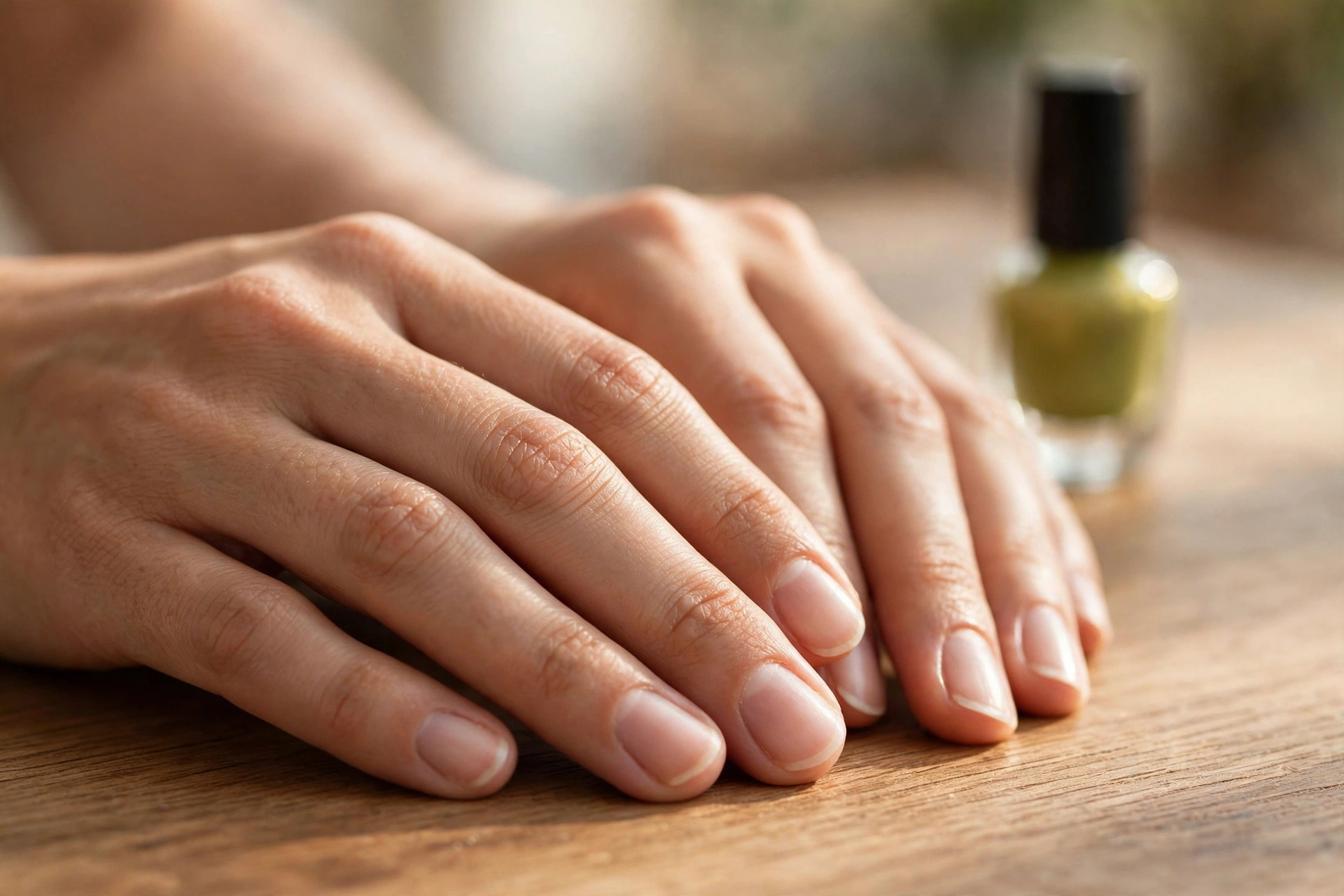
How to Stop Biting Nails: 9 Strategies That Finally Worked for Me How to stop biting nails is one of those things that sounds simple until you’ve tried to do it for twenty years — which is exactly how long I chewed mine. I started at nine, and the habit survived my teens, my twenties, […]
How to Stop Biting Nails: 9 Strategies That Finally Worked for Me
How to stop biting nails is one of those things that sounds simple until you’ve tried to do it for twenty years — which is exactly how long I chewed mine. I started at nine, and the habit survived my teens, my twenties, job interviews, weddings, and an embarrassing number of New Year’s resolutions. Every “just stop doing it” lecture from well-meaning relatives did exactly nothing, because nobody who doesn’t bite their nails understands that you don’t do it on purpose. Most of the time, you don’t even realize you’re doing it until your thumbnail is throbbing.
The thing nobody tells you is that quitting isn’t about willpower — it’s about understanding the habit and outsmarting it. Figuring out how to stop biting nails took me years of trial and error: bitter polishes, fidget toys, manicures I couldn’t really afford but bought anyway, and one memorable incident involving hot sauce that I do not recommend. But I eventually put together a set of strategies that actually worked, and I’ve been bite-free for over a year now. I’m not a doctor or a dermatologist — just someone who finally cracked a habit she thought she’d have forever. Here are the nine strategies that did it for me, in roughly the order I discovered them.
Table of Contents
Why We Bite Our Nails: Stress, Boredom, and the Loop Nobody Warns You About
For years I assumed I bit my nails because I was an anxious person, full stop. The real answer turned out to be more specific: I bit them because biting was my brain’s autopilot response to certain moments — stress before a deadline, sure, but also boredom on long phone calls, deep concentration while working, and that restless in-between feeling while waiting for food to arrive at a restaurant. Psychologists call nail biting a body-focused repetitive behavior, which is a clinical-sounding way of saying your body found a self-soothing loop and never let go of it. It sits in the same family as skin picking and hair pulling — and, I later realized, as my nighttime teeth-grinding habit, another repetitive behavior I carried without thinking about it.
The loop works like this: something triggers the urge (a rough edge on a nail, a stressful email, sheer boredom), you bite without fully deciding to, and you get a tiny hit of relief or stimulation. That little payoff teaches your brain to do it again next time. That’s what makes learning how to stop biting nails so frustrating — you’re not fighting a decision, you’re fighting a reflex that fires before your conscious mind shows up. But here’s the hopeful part: because it’s a loop, every part of the loop can be interrupted. That’s what every strategy below is really doing — breaking the loop at a different point.
How to Stop Biting Nails, Step One: Identify Your Personal Triggers
The first strategy that actually moved the needle for me wasn’t a product or a punishment — it was a notebook. For one week, I wrote down every time I caught myself biting: what time it was, where I was, what I was doing, and how I was feeling. Within three days, my patterns jumped off the page. I bit on long phone calls. I bit while watching TV after dinner. I bit in traffic. I bit when I was anxious, obviously, but I bit just as much when I was bored or even when I was concentrating hard on something.
Just knowing when you’re inclined to bite is genuinely half the battle — the American Academy of Dermatology says the same thing, and in my experience it’s true. Once I could see my triggers listed out, I could plan around them. Phone calls got a fidget toy (more on that later). TV time got a bowl of pistachios to crack instead of nails to chew. Traffic got a stress ball in the cup holder. The notebook didn’t stop the biting by itself, but it turned a mysterious, shameful compulsion into a predictable pattern with predictable solutions — and that changed everything.
Bitter-Tasting Nail Polish: The Classic Deterrent That Actually Worked
The single most effective tool I found for how to stop biting nails was also the simplest: bitter-tasting nail polish from the pharmacy. It’s an over-the-counter clear polish with an intensely bitter ingredient, and it is exactly as awful as it sounds. The first time I absentmindedly put a finger in my mouth after applying it, the taste was so shocking I actually laughed out loud — and then I didn’t put a finger in my mouth again for the rest of the day. That automatic, disgusted recoil is the whole point: it makes the habit unpleasant instead of soothing, which breaks the reward part of the loop.
A few practical notes from someone who used it for months. First, reapply it every single morning — it wears off with handwashing, and one unprotected day is all it takes to fall back into the groove. Treat it like sunscreen: part of the morning routine. Second, it works best on conscious biting; for the truly mindless, asleep-at-the-wheel kind of biting, you’ll want to pair it with a replacement habit so your hands have somewhere else to go. Third, keep a bottle at your desk and one in your bag, because you will forget to reapply at some point and you’ll want a backup within reach.
Keep Your Nails Trimmed and Filed — Give Your Teeth Nothing to Grab
This one sounds almost insultingly obvious, but it was a quiet game-changer: keep your nails short, and file the edges smooth twice a week. Less nail means less to bite, and it’s genuinely less tempting — dermatologists list this as one of their core recommendations, and I can confirm it from the other side of the habit. When my nails were long and ragged, every rough edge was an invitation. When they were short and smooth, my teeth would slide right off and the urge fizzled before it turned into a bite.
The filing matters as much as the clipping. Rough, uneven edges are like a flashing neon sign to a nail biter’s mouth, so I started keeping a small nail file in my purse, my desk drawer, and my car’s glove box. The moment I noticed a snag, I’d file it smooth instead of “fixing” it with my teeth — which, let’s be honest, is how half my biting sessions started. My simple rule for how to stop biting nails in everyday life: no rough edges left unattended, ever. It takes thirty seconds and removes one of the biggest physical triggers there is.
Manicure Motivation: Spending Money on My Nails Gave Me a Reason to Stop
I’ll be honest: I resisted this one for years because it sounded vain. But the American Academy of Dermatology lists regular manicures among its official advice on how to stop biting nails, and when I finally tried it, I understood why. I booked a gel manicure — thirty-five dollars I didn’t love spending — and suddenly my nails had a dollar value attached to them. Every time my hand drifted toward my mouth, a little voice said, “That’s thirty-five dollars you’re about to chew off.” Vanity, it turns out, is a perfectly good motivator.
You don’t have to spend salon money, though. The principle is that attractive, cared-for nails feel too precious to destroy. Painting your own nails with a color you love works the same way — you’ll think twice before chipping a perfect coat. And if polish isn’t your thing, covering your nails with tape, stickers, or even thin cotton gloves at home creates a physical barrier that interrupts the habit. The point isn’t the manicure itself; it’s giving yourself a daily, visible reason to protect your nails instead of attacking them.
Replacement Habits: Give Your Hands Something Else to Do
Here’s the uncomfortable truth I had to accept: you can’t just remove a habit — you have to replace it. My hands had spent twenty years traveling to my mouth on autopilot, and willpower alone couldn’t keep them parked in my lap. So I gave them new jobs. My desk drawer became a fidget arsenal: a small stress ball, a fidget cube, a tin of silly putty, and a smooth stone I could roll between my fingers. When the urge hit, I grabbed one of those instead. It felt silly for about a week. Then it felt normal. Then one day I realized I’d gotten through an entire stressful workday without a single bite, and I nearly cried.
The replacement needs to match the type of biting you do. If you bite when bored, you need something stimulating — a puzzle toy or even doodling works. If you bite when anxious, something soothing like putty or a warm mug of tea in both hands helps. And if there’s an oral component to your habit — and for me there absolutely was — chewing gum can be a lifesaver, because it keeps your mouth busy while your hands do something else. The goal isn’t to find one perfect substitute; it’s to build a small collection of options so there’s always something between your fingers and your mouth.
Taming the Stress That Sends Your Fingers to Your Mouth
I want to be straight with you: no polish or fidget toy will fully work if your stress levels are constantly redlining, because stress was the engine under my habit. Taming it didn’t require a meditation retreat — it required small, boring, repeatable habits. I started doing sixty seconds of slow breathing (in for four, hold for seven, out for eight) whenever I felt the anxious buzz that used to send my fingers to my mouth. I started taking a ten-minute walk after lunch instead of scrolling at my desk. I started writing down the three things rattling around my head before bed, so they stopped rattling.
None of this is magic, and none of it stopped a single bite by itself. What it did was lower the background hum of tension that made biting feel necessary. Think of it this way: the other strategies are the locks on the doors, and stress management turns down the pressure of the crowd pushing against them. If your nail biting is tangled up with genuine anxiety, addressing the anxiety directly is the kindest thing you can do for your nails — and for yourself.
The Rubber Band Trick (and the Wristband Version That Worked Better)
You’ve probably heard of the rubber band trick for how to stop biting nails: wear a rubber band on your wrist and snap it lightly against your skin every time you catch yourself biting. The idea is awareness training — the snap interrupts the autopilot and forces your conscious brain to notice what your hands are doing. I tried it, and it worked exactly as advertised: within days, I was catching myself mid-bite far more often, which meant I could deploy a replacement habit instead.
But I’ll be honest — I hated the rubber band. It snapped too hard, it looked odd at work, and I started “forgetting” to wear it. So I switched to a plain fabric hair tie on my wrist, and I just tugged it instead of snapping. Gentler, invisible, same effect: a small physical jolt that yanked my attention back to my hands. Whatever version you use, don’t snap hard enough to hurt yourself — the goal is a nudge, not punishment. Pair it with a replacement habit and it becomes a one-two punch: the wristband catches the urge, the fidget toy absorbs it.
Deal With Hangnails and Cuticles Before They Become Excuses
Hangnails were my number one physical trigger, and I suspect they’re high on the list for most nail biters. A hangnail is a tiny flap of skin that begs to be pulled — and for a nail biter, “pulling” inevitably escalates into a full biting session that leaves the surrounding skin raw. I finally broke the cycle by treating hangnails like the emergencies they are: the moment I spotted one, I’d clip it cleanly with nail clippers instead of tearing at it with my teeth. Never tear — tearing makes it worse and practically guarantees you’ll keep picking at it.
The broader fix was cuticle care, which I’d never taken seriously before. I started moisturizing my cuticles with hand cream every night and gently pushing them back after a shower instead of picking at them. I also stopped “cleaning up” my cuticles with my teeth, which — I know — is a second habit hiding inside the first one. Keep a pair of small clippers wherever you keep your nail file. The rule is simple: skin gets clipped with tools, never with teeth, and if there’s nothing ragged to catch your attention, there’s nothing to start a session.
What to Do After a Relapse — Because One Will Happen
Let me tell you about week three of my first serious quit attempt. I’d gone nineteen days without biting — my personal record by a mile — and then a brutal workday ended with me on the couch, and I looked down to find I’d chewed two nails to stubs without even deciding to. I felt sick with disappointment, and my first instinct was the classic one: “Well, I ruined it, might as well give up.” That instinct is the real enemy. The hardest part of how to stop biting nails isn’t quitting — it’s staying quit after a slip.
Here’s what I wish someone had told me: a relapse is data, not defeat. Instead of spiraling, I asked myself what broke the streak — exhaustion, no fidget toy nearby, a hangnail I’d ignored — and fixed those specific things the next day. I did not “start over Monday.” I resumed that same evening, bitter polish and all. One bad hour doesn’t erase nineteen good days; your nails don’t know the difference between day nineteen and day one. Be as kind to yourself as you’d be to a friend. Shame feeds the habit; curiosity starves it.
When to Seek Professional Help
Most nail biting responds to the strategies above, but sometimes how to stop biting nails requires backup — and that’s not failure, that’s just being honest about the size of the problem. If you’ve genuinely tried for months and can’t make progress, or if the biting is damaging your nails, causing infections, or bleeding regularly, it’s time to talk to a professional. A dermatologist can treat damaged nail beds and infections; a therapist — especially one familiar with habit-reversal training, a well-established behavioral technique for repetitive behaviors — can help you dismantle the habit loop with structured support.
It’s also worth seeking help if your nail biting feels tied to something bigger: persistent anxiety, obsessive-compulsive patterns, or other body-focused repetitive behaviors that are affecting your daily life. There’s no shame in any of this. You wouldn’t try to fix a broken tooth with positive thinking; some habits have roots that go deeper than a fidget cube can reach. Getting professional help isn’t admitting defeat — it’s upgrading your toolkit.
How long does it take to stop biting nails?
Honestly, longer than you’d like but less time than you’ve already spent biting them. Most people see real improvement within three to six weeks of consistent effort, and the habit typically fades over two to three months as the new routines take hold. My nails visibly transformed in about a month — but the first two weeks were the hardest, so plan your strongest strategies for the start.
Is biting your nails actually bad for you, or just ugly?
It’s genuinely bad for you. Chronic nail biting can damage the tissue that grows your nails, leading to permanently abnormal-looking nails, and it leaves you vulnerable to infections as you transfer bacteria from your mouth to your fingers and back. It can also cause dental problems over time, including chipped teeth and jaw strain — which is one reason I took it seriously enough to finally quit.
What’s the fastest way to stop biting nails?
There’s no magic overnight fix, but the fastest approach I’ve found for how to stop biting nails quickly is to stack strategies: bitter polish for the deterrent, a trigger log so you know your danger zones, and a replacement habit so your hands have somewhere to go. Any one of these alone is slow; all three together compound fast. Most people who combine methods see the urge drop sharply within the first two weeks.
Does bitter-tasting nail polish really work?
For most people, yes — it’s one of the most consistently effective tools out there, and dermatologists recommend it. The awful taste breaks the reward loop by making biting unpleasant instead of soothing. The catch is that you have to reapply it daily since it wears off with handwashing, and it works best as part of a bigger plan rather than your only line of defense.
Why do I bite my nails when I’m bored or anxious?
Because your brain learned long ago that biting provides a tiny hit of relief or stimulation, and now it reaches for that tool automatically. Nail biting is classified as a body-focused repetitive behavior — essentially a self-soothing mechanism that runs on autopilot. The fix isn’t fighting the feeling; it’s noticing the trigger and giving your hands a better job to do in that moment.
Can nails recover after years of biting?
In most cases, yes — nails are remarkably resilient. Once you stop, the nail bed usually recovers and new, healthy nail grows in over several months, since a full fingernail takes about six months to replace itself. If the nail matrix (the tissue under the cuticle that grows the nail) is severely damaged, growth can be permanently affected, so persistent problems are worth showing to a dermatologist.
The Bottom Line: How to Stop Biting Nails for Good
Learning how to stop biting nails changed more than my hands — it changed how I think about habits in general. The playbook is simpler than the habit makes it feel: find your triggers, make biting unpleasant with bitter polish, give your teeth nothing to grab by keeping nails short, give your hands better jobs with fidget tools, and calm the stress underneath it all. Stack as many of those as you can, forgive yourself fast when you slip, and get professional help if the habit is bigger than the toolkit.
A year after I started, my nails are the least interesting thing about my hands — and I mean that as the highest compliment. Nobody comments on them anymore, which means they finally look like everyone else’s. If you’ve been biting for years and you’re convinced you can’t stop, I was you. Start with one strategy today — the bitter polish is the easiest win — and let the rest follow. Your future self, with calm hands and unchewed nails, is closer than you think.