

Last winter my electricity bill came in at nearly double what I expected, and I did what most of us do — stood in the kitchen squinting at the numbers, then Googled. Within minutes I found someone swearing that a little plastic box you plug into the wall shaved 30% off their bill, and someone […]
Last winter my electricity bill came in at nearly double what I expected, and I did what most of us do — stood in the kitchen squinting at the numbers, then Googled. Within minutes I found someone swearing that a little plastic box you plug into the wall shaved 30% off their bill, and someone else calling that same box a scam.
That’s how I fell down the rabbit hole of searching for a device to reduce electricity bill that actually delivers, and what I found was messier and more interesting than I expected. Some gadgets genuinely earn their keep. Some are clever marketing wrapped in tech jargon. And the biggest savings have very little to do with buying anything new at all.
So here’s the deal. I’m not an electrician, and I don’t sell any of this stuff. I’m just someone who spent the last year testing, measuring, and occasionally cursing at an assortment of energy-saving gadgets in a real house with real bills. This is everything I learned — the honest version, scams and all.
Table of Contents
What a Device to Reduce Electricity Bill Actually Does (and Doesn’t)
Let’s start with the uncomfortable truth the marketing folks don’t want you thinking about: a device to reduce electricity bill cannot change what your power company charges per kilowatt-hour. Your rate is your rate. Every gadget on the market falls into one of only two real strategies — it either reduces how much electricity you use, or it shifts usage to cheaper times. There’s no third option, no magic.
The honest devices work by cutting consumption. A smart thermostat runs your heating and cooling more efficiently, so the AC draws power for fewer hours. A smart plug cuts power to the TV setup that’s been sipping electricity all night. LED bulbs draw a fraction of the watts of old incandescents. The dishonest devices claim to do something fancier — “correct your power factor,” “filter dirty electricity,” “stabilize voltage to reduce waste.” Those phrases sound scientific. They mostly mean nothing for a residential bill.
Here’s why. Your home is billed for real power — the actual energy consumed, measured in kilowatt-hours. Power factor correction matters for industrial facilities running huge motors on three-phase power, and utilities sometimes bill those customers for poor power factor. For homes, utilities don’t bill residential customers on power factor at all. So even if a “power saver box” genuinely corrected your power factor (and most don’t do anything measurable), your meter wouldn’t care. You’d save nothing. Zero. The bill wouldn’t move a rupee.
That single fact kills about half the products in this category. Keep it in your back pocket as we go through them.
The Scammy “Miracle” Boxes You Should Never Buy
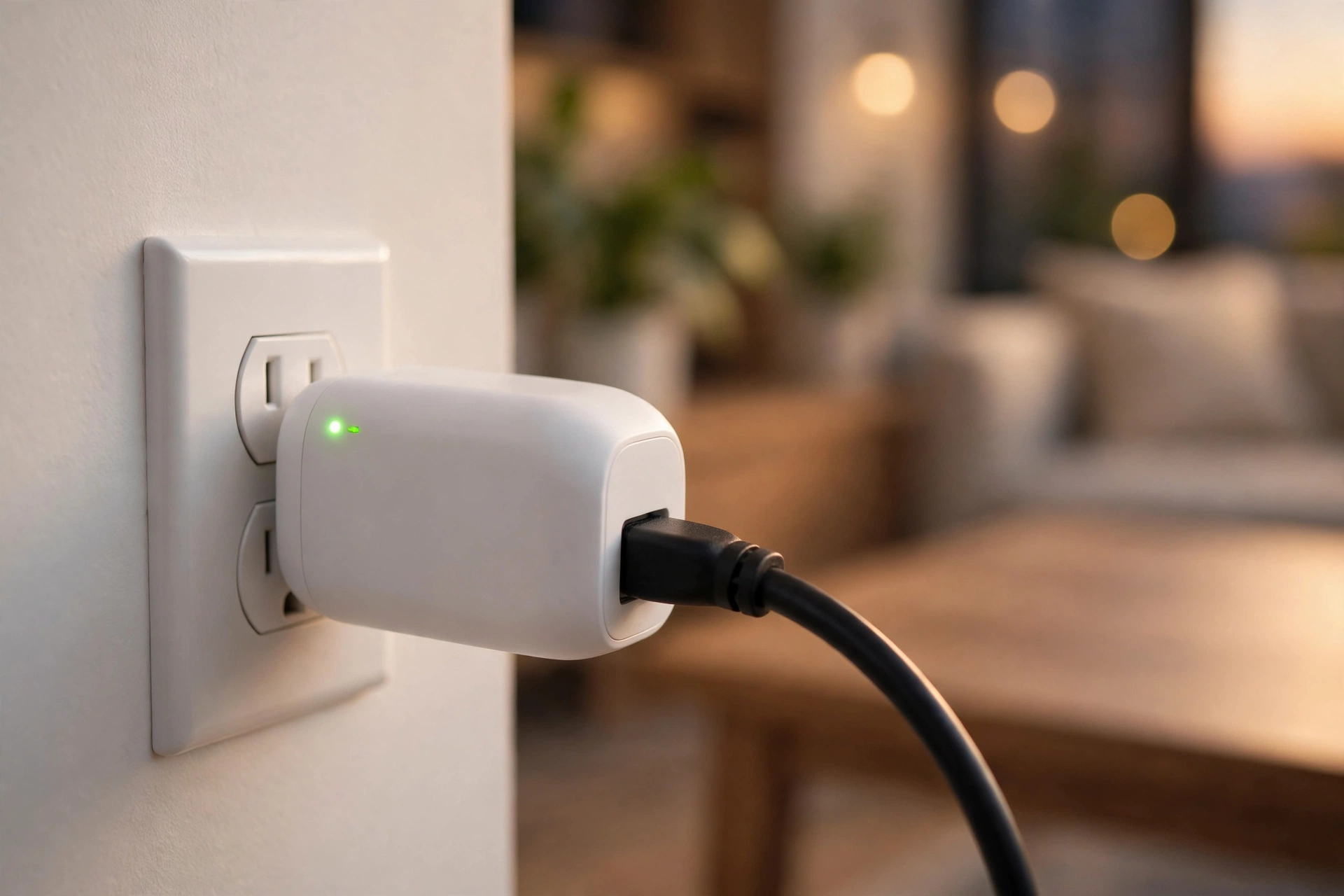
You know the ones. They show up as ads on social media: a small box that plugs into any outlet, promises to cut your electricity bill by 30-40%, and is usually being “sold out due to high demand” with a countdown timer. Names change constantly — PowerVolt, VoltSaver, EcoPlug, whatever — but the product is always the same little plastic box.
I bought one. I won’t name the brand because they’re all interchangeable, but I paid around $35, which felt like a fair price to test a claim. I put it through the most honest test I could: I measured my home’s total consumption for two weeks with the box plugged in, then two weeks without it, using a whole-home energy monitor, keeping my usage habits roughly the same. The difference was within the margin of error. Nothing. The box contained a capacitor and an LED that made it look like it was working. That’s the entire trick — a glowing light so you feel like something is happening.
What’s frustrating is that these things keep coming back because the scam is well-designed. The ads quote real-sounding reviews, show a meter “before and after,” and lean on the fact that bills fluctuate month to month anyway. If your bill drops in April, was it the box or the milder weather? The box makers are counting on you never knowing.
Red flags that scream scam: any claim above 20% savings, “power factor correction” aimed at homes, a countdown timer on the sales page, and no named manufacturer with a real address. If a device to reduce electricity bill arrives in a plain white box with no brand, you’ve bought an expensive nightlight.
Smart Plugs: The Quiet Winner
Now the good stuff. Smart plugs are boring, cheap, and genuinely useful, which is why nobody makes viral ads about them. A smart plug sits between your outlet and a device, lets you control it from your phone or on a schedule, and — the crucial part — cuts power completely so the device isn’t drawing standby power.
Standby power, or “vampire load,” is real. Your TV, game console, cable box, coffee maker, and phone chargers all draw a few watts around the clock doing absolutely nothing. Individually it’s tiny. Added up across a house, it’s a meaningful chunk of your bill — estimates from the U.S. Department of Energy suggest standby power can account for a noticeable slice of household electricity use, and their energy-saving tips page is worth a read for the full picture.
In my house, the entertainment center was the worst offender: TV, soundbar, game console, and a streaming box pulling a combined 25 watts while “off.” Two smart plugs on timers — cutting the whole setup from midnight to 5 PM — killed almost all of it. My desk setup got the same treatment. Total cost: about $20 for a pack of four plugs.
Are smart plugs glamorous? No. Do they work? Every single day. If you buy one device to reduce electricity bill from this entire article, make it these smart plugs. The honest math: each plug pays for itself in well under a year if you aim it at a real vampire load.
Smart Thermostats: Big Savings, One Caveat
Heating and cooling is the monster under the bed. In most homes it’s the single biggest electricity consumer by far — often half the bill or more. Which means a device to reduce electricity bill that targets your thermostat is aimed at the right problem. Smart thermostats genuinely work, and the savings claims (10-15% of heating/cooling costs) hold up in real-world studies.
I installed one two summers ago, and the difference was immediate and boring in the best way. It stops cooling an empty house at 2 PM on a Tuesday, dials back at night, and nudges the temperature when it notices you’ve been away. I barely think about it anymore, which is exactly the point.
The caveat: a smart thermostat saves money by running your HVAC less. If you’re already disciplined about setting the temperature back manually when you leave, the thermostat won’t add much. What it really does is automate discipline you weren’t practicing. Be honest with yourself about which camp you’re in. I was in the “leave the AC blasting while I’m at work” camp, so mine paid for itself in one summer.
Energy Monitors: The Gadget That Saves Money by Making You Look
A whole-home energy monitor clamps onto the wires in your breaker panel and shows you, in real time, exactly how much electricity your house is using. Mine cost about $100, and as a device to reduce electricity bill it’s the most interesting purchase on this list, because it doesn’t save a single watt by itself.
What it does is make the invisible visible. The week I installed it, I discovered my old water heater cycling on at 3 AM, a basement dehumidifier running twelve hours a day, and how much cheaper the dryer was to run in the morning instead of the evening.
Here’s the thing: within a month of installing the monitor, my bill dropped 12%. The monitor did nothing. I did everything — because for the first time I could see what was happening. Households that can see real-time usage consistently cut consumption. If you’re a data person, this is the most fun $100 you’ll spend. If you never check dashboards, skip it — it’s a paperweight without your attention.
LED Bulbs, Timers, and the Rest of the Honest Bunch
Lighting is the easy win everyone already knows about but half of us still haven’t finished. If any room in your house still has old incandescent or halogen bulbs, swapping them for LEDs is the highest-return move on this list. An LED uses roughly 80% less electricity for the same light, and a bulb that costs a few dollars pays for itself in months. I did my whole house in one weekend for under $60 and the lighting portion of my bill fell off a cliff.
Timers and motion sensors are the low-tech cousins of smart plugs and they’re excellent for specific jobs: outdoor lights, bathroom exhaust fans, garage lights — anything that gets left on by accident. A $10 timer on a porch light that was burning all night works every night forever.
Voltage stabilizers get marketed in some countries as bill-reducers. A stabilizer protects appliances from voltage fluctuations, which is genuinely valuable where the grid is unstable — but it doesn’t reduce consumption. Buy one to protect your fridge, not to shrink your bill. Those are different jobs.
The Biggest Levers Have Nothing to Do With Gadgets
I want to close the device section with a reality check. After a year of testing gadgets, here are the moves that saved the most money in my house, in order:
First, the thermostat. Setting heating and cooling a few degrees closer to the outside temperature is the single biggest lever most households have. The smart thermostat helped, but the setting itself is what matters.
Second, the water heater. Lowering it to 120°F, putting it on a $30 timer so it isn’t reheating water all night, and fixing a hot-water drip in the bathroom that was running the heater constantly.
Third, vampire loads, handled with smart plugs as described above.
Fourth, the dryer. Full loads, a clean lint filter every time, and a drying rack for some loads. Dryers are energy hogs, and cutting one load a week shows up on the bill.
Fifth, LEDs everywhere.
Notice that most of the five are habits, not purchases. The gadgets are force multipliers for behavior you’re willing to change. If you’re not willing to change behavior, no device to reduce electricity bill will do it for you — and anyone selling you one that claims otherwise is selling you a plastic box with an LED in it.
What I’d Actually Buy (and What I’d Skip)
If a friend asked me which device to reduce electricity bill is worth buying after reading all this, here’s my short list. Buy: LED bulbs for every socket, a few smart plugs aimed at your entertainment center and desk, a smart thermostat if you’re bad at remembering to adjust it, and a water heater timer if you heat water electrically. Consider: a whole-home energy monitor if you like data and will actually look at it. Skip: every “electricity saving box,” every power factor gadget, anything with a countdown timer on the sales page, and anything promising 30% savings with zero effort.
And here’s the part nobody in the gadget business will tell you: the cheapest device to reduce electricity bill is free. It’s the habit of turning things off, running full loads, and setting the thermostat like you mean it. My bills are down about 25% year over year, and maybe a third of that came from gadgets. The rest came from paying attention.
There’s a parallel here to the rest of household budgeting. The same discipline that cuts an electricity bill — tracking where money leaks out, fixing the big leaks first, automating the rest — is exactly how I learned how to save money on groceries: measure first, cut the biggest waste, then optimize the small stuff.
Conclusion
So, is there a device to reduce electricity bill that actually works? Yes — several. Smart plugs, smart thermostats, energy monitors, water heater timers, and LED bulbs all earn their keep in real homes with real bills. But none of them are magic, and the miracle boxes flooding your social media feeds are scams dressed up in tech jargon. The pattern is simple: honest devices either cut consumption or shift it to cheaper hours, and they tell you exactly how. Scam devices promise huge savings through mechanisms that don’t affect residential billing, and they rely on you never measuring the results.
My advice: spend $50 on LEDs and smart plugs, consider a thermostat, and spend an hour finding your home’s biggest energy hogs. The biggest savings were never in a box — they were in the thermostat setting, the water heater, and the pile of devices glowing softly in standby mode at 2 AM. Fix those, and the bill takes care of itself.