

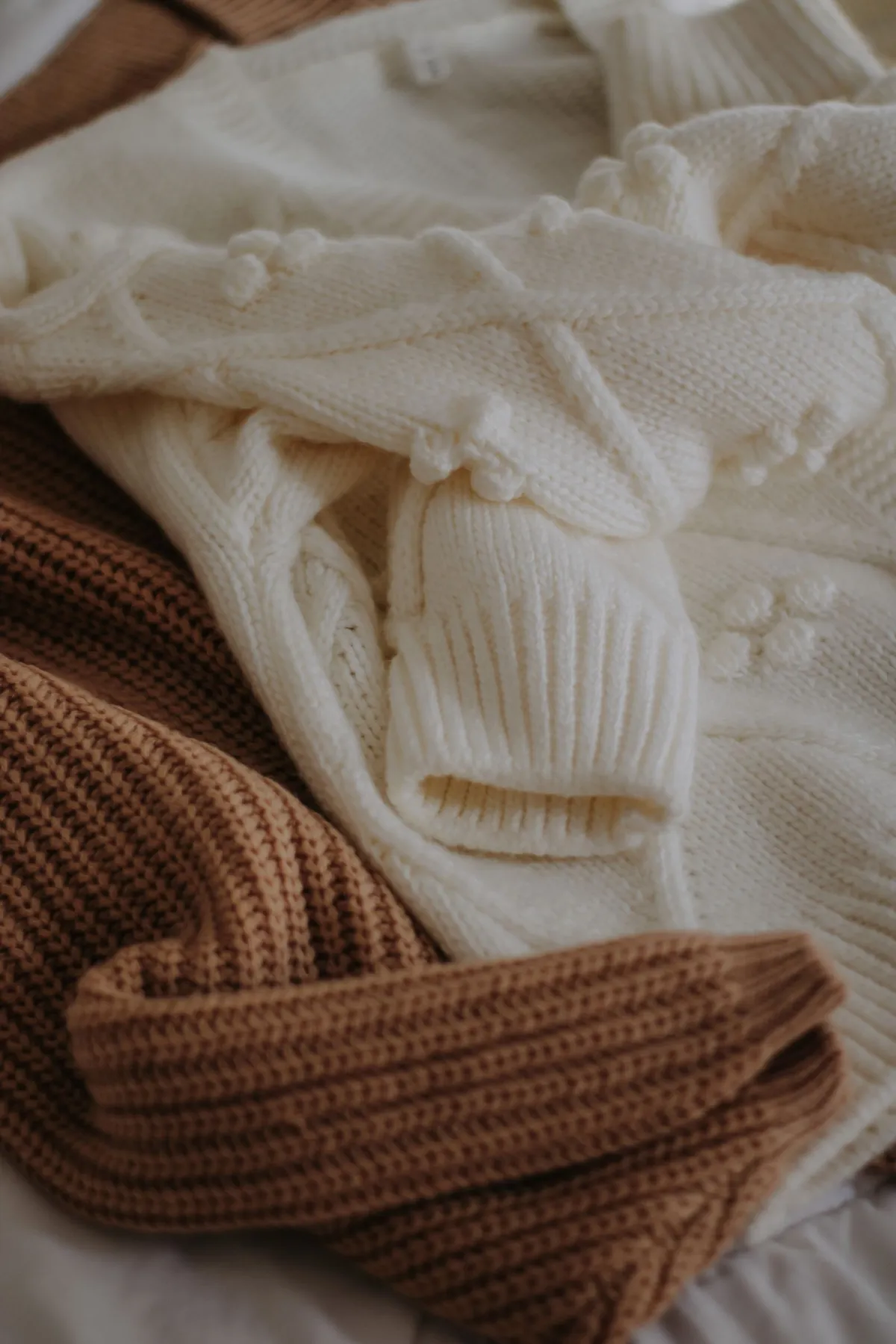
Learning how to unshrink a sweater became my personal mission the morning I pulled my favorite cream cable-knit out of the dryer and found it sized for a ten-year-old. I stood there holding this sad, tiny thing, doing the math on what I’d paid for it, and feeling genuinely sick. We’ve all been there — […]
Learning how to unshrink a sweater became my personal mission the morning I pulled my favorite cream cable-knit out of the dryer and found it sized for a ten-year-old. I stood there holding this sad, tiny thing, doing the math on what I’d paid for it, and feeling genuinely sick. We’ve all been there — one hot wash, one careless dryer cycle, and your beloved sweater is ruined. Or is it?
Here’s the good news: in most cases, a shrunken sweater is not a lost cause. I’ve spent the last few winters rescuing shrunken knits — mine, my husband’s, my sister’s — and I can tell you that the conditioner-soak method alone has saved at least six sweaters in my house. The science is simple: the fibers have tightened up and locked together, and with a little lubrication and gentle stretching, you can coax them back to their original shape. It won’t work miracles on a sweater that’s been felted into a solid mat, but for the everyday “oops, it shrank one size” disaster, your odds are genuinely good.
This guide walks you through everything: why sweaters shrink, the exact method I use first every time, backup methods for stubborn cases, special handling for cashmere, and how to make sure it never happens again.
Table of Contents
How to Unshrink a Sweater: Why Sweaters Shrink in the First Place
Before we fix it, it helps to understand what happened in that washing machine. Natural fibers like wool, cashmere, and cotton are covered in microscopic scales. When they’re exposed to heat, moisture, and agitation all at once — the classic hot wash plus tumble dryer combo — those scales lift, interlock, and lock together. The fibers literally felt themselves into a tighter, denser fabric. This is called felting, and it’s the same process used to make actual felt.
The tricky part is that felting is partly irreversible. If your sweater has been seriously felted — it feels thick, stiff, and matted, and you can’t see the individual knit stitches anymore — then learning how to unshrink a sweater may only get you partial results. But mild to moderate shrinkage, where the sweater is just smaller and a bit denser, responds beautifully to the methods below. Cotton and cotton blends are the easiest to rescue. Wool and wool blends come next. Cashmere needs the gentlest touch but often bounces back surprisingly well.
What You’ll Need to Unshrink a Sweater
Gather these before you start. Nothing fancy — you probably own all of it:
- A clean sink, basin, or bathtub
- Lukewarm water (comfortable to the touch, never hot)
- Hair conditioner, baby shampoo, or liquid fabric softener (about 2–3 tablespoons)
- Two or three large, clean, dry bath towels
- A flat surface where the sweater can dry undisturbed for a day or two
- Optional: rustproof pins and a blocking mat or corkboard, a measuring tape
The conditioner is the hero ingredient. It coats the fibers and reduces the friction between those interlocked scales, which is exactly what lets you stretch the knit back out. Baby shampoo works similarly because it’s formulated to be gentle on fine fibers. Don’t use regular laundry detergent for the soak — it’s designed to clean, not to relax fibers, and it can make things worse.
Method 1: The Hair Conditioner Soak (My Go-To)
This is the first thing I try every time I need to figure out how to unshrink a sweater, and it works in the majority of cases.
Fill your sink or basin with lukewarm water — enough to fully submerge the sweater. Stir in about 2 to 3 tablespoons of hair conditioner until the water turns slightly milky. Gently push the sweater under the surface, working the water through it with your hands so every part is saturated. Let it soak for 30 minutes to an hour. Don’t agitate, scrub, or swish it around — remember, agitation is what caused this mess.
After soaking, lift the sweater out and gently press the water out with your palms. Do not wring it, twist it, or rinse it (a little conditioner left in the fibers actually helps with the stretching). Lay a dry towel flat, place the sweater on it, roll the towel up like a jelly roll, and press down firmly to squeeze out more moisture. If the sweater is still dripping, repeat with a second dry towel — you want it damp, not sopping.
Now unroll it onto a fresh dry towel and start stretching. Work gently and evenly: tug the body wider, pull it longer, stretch each sleeve. Focus on the areas that shrank most — usually the sleeves, hem, and neckline. A great trick is to lay a similar sweater that still fits you on top as a template and stretch the damp one to match. Once you’re happy with the shape, leave it to air-dry flat. Check back after an hour or two; while it’s still damp, you can stretch it a little more. It may take 24 to 48 hours to dry completely. If it’s still a touch small when dry, repeat the whole process — the second soak often buys you the extra half inch you need.
Method 2: The Baby Shampoo Stretch
If your sweater is wool or a wool blend and the conditioner soak only got you partway there, try the baby shampoo variation. The steps are nearly identical, but baby shampoo is pH-neutral and extra gentle, which some knitters swear by for animal fibers.
Use the same lukewarm soak — about 1 tablespoon of baby shampoo per quart of water, 30 minutes of quiet soaking. The difference comes in the stretching phase: instead of stretching the sweater flat on a towel, some people have better luck gently stretching it while it’s still in the water, working section by section. The buoyancy supports the wet fibers so they don’t stretch unevenly under their own weight. Then towel-roll it, block it flat, and let it dry. I find this method especially good for sweaters that shrunk mostly in length rather than width.
Method 3: The Steam Stretch (The Quick Fix)
For a sweater that only shrank slightly — say it fits but the sleeves are a touch short — steam can be enough. Hold a steam iron or garment steamer a few inches above the damp sweater and let the steam relax the fibers, then gently tug the shrunken areas into shape with your hands. Never press the iron directly onto the knit; the pressure plus heat can felt it further. Work in small sections, stretching and then letting the area cool so the fibers “set” in their new position.
This method is also handy as a follow-up: after the conditioner soak gets you 90% of the way there, a little targeted steam stretching can fix that one stubborn sleeve cuff. For a detailed walkthrough of the soak-and-stretch approach from another angle, Apartment Guide’s guide to unshrinking sweaters covers the conditioner method with a slightly different pinning technique that’s worth a look.
Method 4: Borax and Vinegar for Stubborn Wool
When plain conditioner isn’t cutting it on a wool sweater, this old-school combination sometimes succeeds where gentler methods fail. Dissolve 1 to 2 tablespoons of borax in a basin of lukewarm water, submerge the sweater, and soak for 30 minutes. The borax helps relax wool fibers specifically. Some people add a splash of white vinegar to the final rinse water (after the borax soak, drain and refill with lukewarm water plus half a cup of vinegar) because the mild acidity helps wool fibers stay smooth.
I’ll be honest: this is the method with the most mixed results in my experience. It worked beautifully on my husband’s old fisherman’s sweater and did almost nothing for a cheap acrylic-wool blend of mine. Which brings me to an important point — fiber content matters enormously, and that’s our next topic.
Method 5: The Wear-It-Damp Trick
This one sounds strange, but knitters have used it forever. After the soak and towel-roll (Methods 1 or 2), while the sweater is still damp, put it on. Yes, really — a damp sweater. Wear it for 30 to 60 minutes around the house. Your body heat and natural movement stretch the knit exactly where it needs stretching: shoulders, chest, arms. It feels odd and a little cold, but the results can be impressively precise because the garment stretches to your actual body rather than your best guess on a towel.
This works best for sweaters that are only slightly too small. Don’t try it with a sweater that’s still dripping wet (towel-roll it first), and don’t do this with anything that might transfer dye to your skin. After wearing it, lay it flat to finish drying.
How to Unshrink a Sweater Made of Cashmere: The Gentle Version
Cashmere deserves its own section because it’s both the most expensive thing you’ll shrink and one of the most rescuable — if you’re gentle. Use cool water instead of lukewarm (heat is cashmere’s enemy), and use a silicone-free hair conditioner or a dedicated cashmere/wool wash. Soak for a full 30 minutes without touching it. Press out water with extreme gentleness — cashmere fibers are fine and break easily when wet.
For stretching, don’t pin cashmere aggressively. Instead, lay it on a towel and coax it into shape with open palms, smoothing rather than tugging. Block it to measurements if you have them (measure a similar garment before you start so you know your target). Dry it flat away from any heat source or direct sunlight — cashmere can take two full days to dry, and rushing it with a hairdryer or radiator will undo all your work. In my experience, cashmere often recovers better than regular wool because the fibers are so fine and pliable.
What to Do When a Sweater Won’t Unshrink
Let’s be realistic: sometimes the answer to how to unshrink a sweater is “you can’t, not fully.” Here are the signs you’re dealing with irreversible felting: the fabric feels thick and dense like a blanket, you can’t distinguish individual stitches, the surface looks matted or pilled all over, and it didn’t budge at all after two soak-and-stretch attempts.
Before you give up entirely, try one more soak with a longer duration — up to two hours — followed by very patient stretching. Some sweaters release gradually over multiple attempts. If it’s truly done, don’t throw it away: felted wool sweaters make excellent mittens, pillow covers, or dryer balls. A shrunken sweater that’s too small for you might fit a teenager perfectly.
Also check the fiber content on the label. If your “wool sweater” is actually 100% acrylic or polyester, no amount of soaking will help — synthetic fibers don’t shrink from heat and agitation the way natural fibers do; they shrink from high heat melting and deforming them, which is permanent. The methods in this guide are for natural fibers and natural-fiber blends.
How to Keep Sweaters From Shrinking Again
Rescuing a sweater once is a learning experience; rescuing the same sweater twice is a habit problem. Here’s my prevention checklist, earned the hard way:
- Read the label every time. “Machine washable” wool still prefers cold and gentle.
- Wash cold, always. Hot water is the number one cause of shrinkage.
- Skip the dryer. This is the big one. Lay knits flat to dry, or at minimum use the lowest heat and pull them out while still damp.
- Use a mesh laundry bag for sweaters in the machine — it reduces agitation.
- Choose the right detergent. Wool and cashmere washes are pH-balanced for protein fibers.
- Reshape while damp. Even with perfect washing, a quick reshape on a flat towel after every wash keeps sweaters true to size.
If laundry day in your house involves other delicate fabrics too, you might appreciate my guide on keeping towels soft without fabric softener — which covers the gentle-wash habits that protect all your laundry, not just knits.
The Bottom Line: How to Unshrink a Sweater
Figuring out how to unshrink a sweater comes down to one reliable process: soak it in lukewarm water with hair conditioner or baby shampoo, press out the water without wringing, and gently stretch it back to shape while it dries flat. Start with the conditioner soak — it solves most cases. Keep the baby shampoo, steam, and borax methods in your back pocket for stubborn wool, and treat cashmere with extra gentleness.
My cream cable-knit from the beginning of this story? It took two soaks and a lot of patient stretching, but it fits again. It’s a tiny bit shorter than it was originally, which I choose to think of as character. The real win is that I haven’t shrunk a
Can you really unshrink a sweater, or is it a myth?
It’s real, with limits. The conditioner-soak method genuinely relaxes the fibers in wool, cotton, and cashmere knits that have shrunk mildly to moderately. It won’t reverse severe felting where the fibers have permanently matted together, but for the common “one size too small after the dryer” situation, it works more often than not.
How long does it take to unshrink a sweater?
The active work takes about 20 minutes: mixing the soak, submerging the sweater, and stretching it afterward. But the sweater needs 24 to 48 hours to air-dry flat before you can judge the final result. Plan ahead and don’t rush the drying — heat will undo your progress.
Does the conditioner method work on 100% cotton sweaters?
Yes — cotton is actually one of the easiest fibers to rescue. Cotton fibers relax readily in a conditioner or baby shampoo soak and stretch back well. Just be aware that cotton is also prone to shrinking again, so wash it cold and lay it flat going forward.
Will unshrinking damage my sweater?
Done gently, no. The key rules: lukewarm (never hot) water, no agitation or wringing, and gentle, even stretching. The main risk is overstretching one area — that’s why using a well-fitting sweater as a template and stretching gradually is so important. If you pull too hard on wet wool, you can distort it.
Can I unshrink a sweater that shrank in the dryer?
Dryer shrinkage is the most common kind and usually the most fixable, because it’s typically mild to moderate rather than full felting. The conditioner soak followed by blocking is exactly the right treatment. The exception is high-heat damage to synthetic blends, which is permanent.
What if only the sleeves shrank?
Targeted rescue is easier than a full-sweater rescue. Soak the whole sweater (spot-soaking creates waterlines), but concentrate your stretching on the sleeves. The steam method works well for sleeves specifically — steam each sleeve and gently tug it longer, comparing against the other sleeve as you go.