

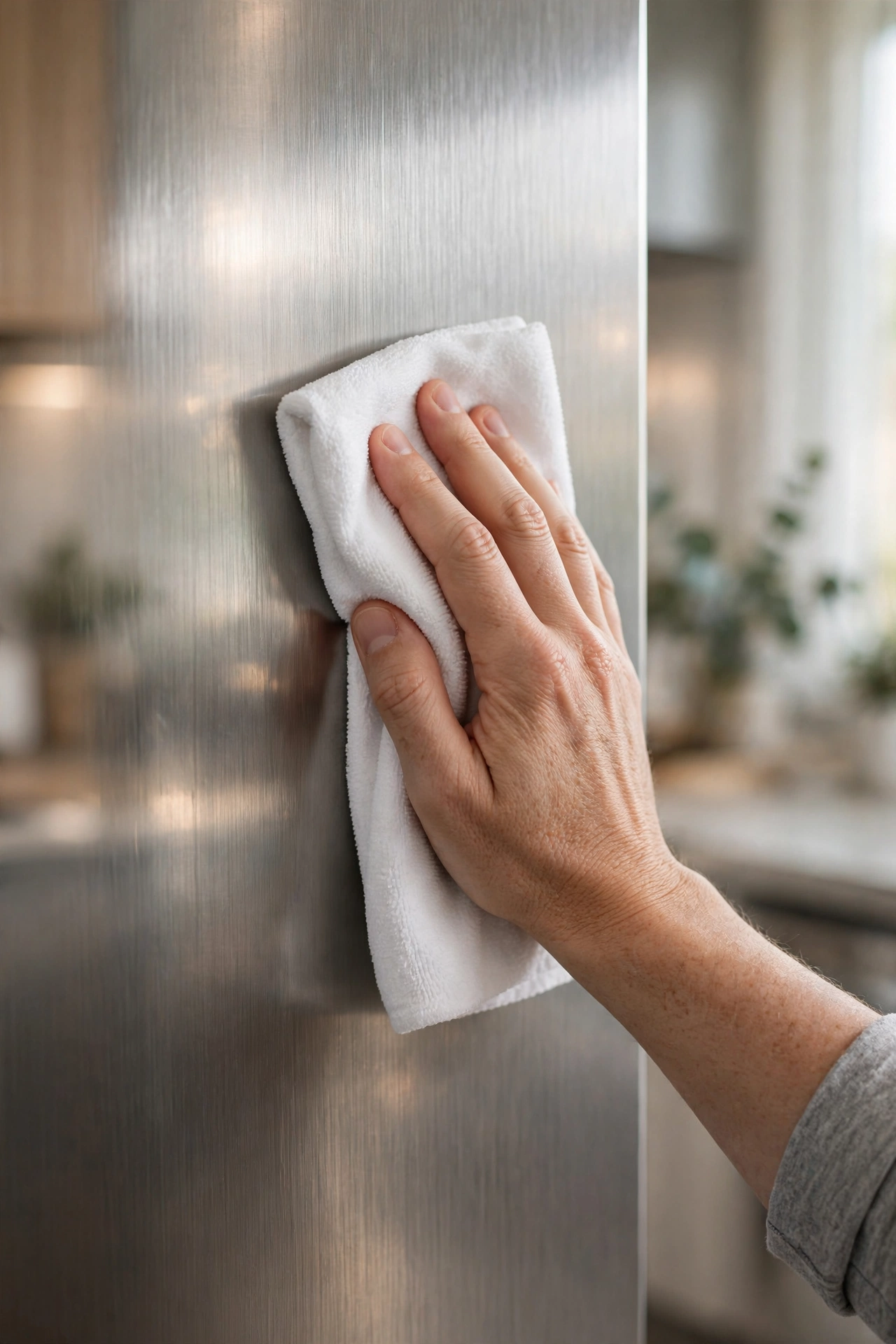
How to Clean Stainless Steel Appliances Without Streaks: My 8-Step Method If you’ve ever wondered how to clean stainless steel appliances without streaks after wiping them down only to be greeted by a smeary, cloudy mess, I feel your pain. My refrigerator door used to look like a crime scene of fingerprints and wipe marks […]
How to Clean Stainless Steel Appliances Without Streaks: My 8-Step Method
If you’ve ever wondered how to clean stainless steel appliances without streaks after wiping them down only to be greeted by a smeary, cloudy mess, I feel your pain. My refrigerator door used to look like a crime scene of fingerprints and wipe marks no matter what I tried. I’d clean it, step back, and see streaks running in every direction — as if the appliance was mocking me.
The good news is that learning how to clean stainless steel appliances without streaks isn’t about buying an expensive specialty cleaner. It’s about understanding what causes the streaks and using the right technique. After a lot of experimentation (and one regrettable encounter with an abrasive sponge), I’ve settled on an 8-step method that leaves my fridge, oven, and dishwasher genuinely streak-free every time. Here’s exactly how to clean stainless steel appliances without streaks.
Table of Contents
How to Clean Stainless Steel Appliances Without Streaks: Why They Streak So Easily
Stainless steel looks smooth, but under magnification it’s covered in tiny grooves — a directional texture called the “grain.” When you wipe across that grain, cleaning solution and dissolved grime get trapped in the grooves instead of lifting off, and they dry into the streaks and cloudy patches you keep seeing. The fingerprints that plague stainless steel happen for the same reason: the natural oils from your skin settle into those microscopic grooves.
Hard water makes everything worse. If your tap water has a lot of minerals, every drop that air-dries on the surface leaves a mineral deposit behind — those white water spots that seem welded on. And most all-purpose cleaners leave behind their own film, which is why so many people clean their appliances and end up with surfaces that look worse than when they started. Once you understand that streaks are just trapped residue drying in the grain, the whole method clicks: clean with the grain, rinse the residue away, and dry completely.
What Never to Use on Stainless Steel
Before we talk about what works, let’s get the danger list out of the way — because using the wrong product is how streaks become permanent damage. Never use steel wool, scouring pads, or any abrasive sponge. They scratch the protective layer of the steel, and those scratches grab grime forever after. The same goes for abrasive powders and gritty cream cleaners.
Avoid bleach, ammonia, and window sprays. They can discolor stainless steel and damage the finish, especially on appliances with special coatings. Oven cleaner is another hard no — it’s designed for porcelain, not steel. And skip the paper towels for your final wipe: most paper towels are surprisingly abrasive and leave behind lint that shows up as streaks. One caution about vinegar, which I’ll recommend below: manufacturers note that prolonged exposure to acidic cleaners can harm some finishes, so the quick-wipe method here is fine, but don’t soak the surface or leave vinegar sitting on it.
Gather the Right Supplies First
You don’t need much, but having the right tools makes all the difference in how to clean stainless steel appliances without streaks. Here’s my kit: three clean microfiber cloths (one for washing, one for rinsing/drying, one reserved for polishing), mild dish soap, distilled white vinegar in a spray bottle, plain mineral oil (food-grade, from the pharmacy), and a bowl of warm water. That’s genuinely it.
The microfiber cloths are the most important item on this list. They don’t shed lint, they don’t scratch, and their fine fibers pull grime out of the grain instead of pushing it around. If your cloths are old and stiff, replace them — a worn-out cloth streaks no matter what cleaner you use. I keep my stainless steel cloths separate from my other cleaning rags and wash them without fabric softener, which coats the fibers and ruins their cleaning power. (Getting the most out of your laundry basics matters here too — a proper deep clean of your washing machine keeps those cloths performing like new.)
Step 1: Dust and Wipe Off Loose Grime
Every session starts the same way: dry wipe. Take a dry microfiber cloth and go over the whole surface to pick up dust, crumbs, and loose grease splatter. Look at the grain direction while you do this — hold the appliance at an angle to the light and you’ll see faint lines running either horizontally or vertically. Note the direction, because from here on, every single wipe follows the grain.
This dry pass matters more than people think. If you go straight to a wet cleaner with crumbs and dust still on the surface, you drag those particles across the steel and create micro-scratches — which become permanent streak-catchers. Thirty seconds of dry dusting saves you from that entirely. For the refrigerator, don’t forget the top edge and the handle areas, which collect the most hand grime.
Step 2: Wash With Warm Dish Soap Water
Now the actual cleaning: add a few drops of mild dish soap to a bowl of warm water, dip your first microfiber cloth in, and wring it out well. You want it damp, not dripping — excess water is the number one cause of streaks, because it pools in the grain and dries into mineral marks.
Wipe the surface in long, straight strokes that follow the grain. Overlap your strokes slightly, like mowing a lawn, so you don’t miss bands of grime between passes. Rinse the cloth in clean warm water frequently and wring it out again before continuing — a dirty cloth just redistributes grease. For stubborn greasy spots near the stove or on the oven door, let the damp cloth sit on the spot for a minute to soften it before wiping, rather than scrubbing harder.
Step 3: Tackle Water Spots and Stubborn Marks With Vinegar
For water spots, hard-water haze, or spots the soap didn’t fully lift, grab your vinegar spray bottle. Spray a light mist directly onto your microfiber cloth — not onto the appliance — and wipe the affected area following the grain. The mild acidity dissolves mineral deposits that soap can’t touch, and it’s the reason vinegar shows up in almost every guide on how to clean stainless steel appliances without streaks.
Two rules here: don’t spray vinegar directly onto the surface, because it can drip into seams, control panels, and behind handles where you can’t wipe it off. And don’t let it sit — wipe it on, let it work for ten or fifteen seconds, then move to the rinse step. If you’re dealing with a fingerprint-resistant or black stainless finish, skip the vinegar entirely and stick with soap and water; those coatings are more sensitive to acids. Whirlpool’s own guidance confirms the grain-direction rule: always rub evenly in the direction of the grain, and keep surfaces fully dry afterward.
Step 4: Rinse Off All Residue
This is the step most people skip, and it’s the step that determines whether you get streaks. Take your second, clean microfiber cloth, dampen it with plain warm water (no soap, no vinegar), wring it out thoroughly, and wipe the entire surface again, following the grain. What you’re doing is removing every trace of soap and dissolved grime from the grooves.
If you leave soap residue in the grain, it dries into a film — and that film is exactly what “streaks” are. I do two rinse passes on the refrigerator door because it’s the most-touched surface and holds the most hand oil. Between passes, rinse the cloth and wring it well. The cloth should come away clean on the final pass; if it’s still picking up gray grime, do another pass. Patience here pays off in the final result.
Step 5: Dry Completely — This Is the Real Secret
Here’s the truth about how to clean stainless steel appliances without streaks: the streaks almost always come from the drying, not the cleaning. Water left on the surface — even clean rinse water — dries into mineral spots. Take your third microfiber cloth (completely dry) and buff the entire surface dry, following the grain in long strokes.
Don’t let the surface air-dry. Don’t walk away and come back in ten minutes. Dry it now, completely, while it’s still damp from the rinse. I work top to bottom so any moisture runs downward onto areas I haven’t dried yet. If you want to check your work, look at the surface from a low angle with a light behind you — any remaining dampness or streaking shows up immediately. A truly dry surface should look uniform, with the grain visible but no cloudy patches.
Step 6: Polish With a Drop of Mineral Oil
For that showroom finish, put two or three drops of food-grade mineral oil on your dry polishing cloth and buff it into the surface, following the grain. The oil fills the microscopic grooves so fingerprints can’t settle into them, adds a rich luster, and makes future cleaning dramatically easier — grime sits on top of the oil layer instead of bonding to the steel.
Use far less than you think you need. A few drops per appliance is plenty; too much oil leaves a greasy film that attracts dust. Buff until the surface feels dry to the touch — if your finger leaves a smudge in oil, keep buffing. This polish layer typically lasts a week or two on a refrigerator door, longer on less-touched surfaces like the oven front. Skip this step entirely on black stainless or fingerprint-resistant finishes, since oil can damage their coatings. For a second opinion on technique, this walkthrough on cleaning stainless steel appliances covers the same grain-direction and microfiber approach in detail.
Step 7: Maintain It Daily With Quick Wipes
You don’t need to do the full routine every day. The daily habit that keeps stainless steel streak-free takes about thirty seconds: a dry microfiber cloth, a quick wipe of the handle areas and the spots everyone touches, following the grain. Doing this prevents the buildup of hand oils that eventually require the deep clean.
Keep one microfiber cloth hanging near the kitchen for this purpose — if the cloth is right there, you’ll actually use it. Once a week, do a slightly deeper pass with the damp dish-soap cloth on the high-touch zones, then dry. Then reserve the full soap-vinegar-rinse-dry-oil routine for once a month, or whenever the surface starts looking tired. Small, frequent maintenance beats occasional heroic cleanings every time.
Step 8: Handle Special Finishes Differently
Not all “stainless” is the same, and this is where people get into trouble. Fingerprint-resistant stainless steel has a clear protective coating — treat it like a coated surface, not raw steel. That means soap and water and microfiber only: no vinegar, no mineral oil, no stainless steel polish, and definitely no abrasives. The coating is doing the anti-streak work for you, so you mostly just need to remove grime without damaging it.
Black stainless steel is similarly sensitive: no acidic cleaners, no citrus-based products, no oven cleaners, and no abrasive anything. And if your appliance is older with visible scratches in the steel, know that those scratches will always catch a little grime — the oil polish step helps mask them, but deep scratches are permanent. When in doubt about your finish, check the use-and-care manual for your specific model before trying anything new.
What is the best homemade cleaner for stainless steel appliances?
A few drops of mild dish soap in warm water, applied with a microfiber cloth and wiped in the direction of the grain, handles everyday grime. For water spots, follow with a light wipe of white vinegar on the cloth, then rinse with plain water and dry completely — the drying step is what prevents streaks.
Should I wipe stainless steel with or against the grain?
Always with the grain. Stainless steel has a directional texture of tiny grooves, and wiping with the grain lets your cloth pull grime out of those grooves. Wiping across the grain traps cleaning residue inside them, which dries into the streaks and cloudy patches most people complain about.
Why do my stainless steel appliances streak no matter what I use?
Almost always, it’s residue left behind — either soap film that wasn’t rinsed off, or water left to air-dry into mineral spots. Fix both: rinse with a clean damp cloth after washing, then buff the surface completely dry with a fresh microfiber cloth immediately. A drop of mineral oil polished into the grain also prevents future streaking.
Can I use vinegar on stainless steel appliances?
Yes, for quick spot treatment of water spots and mineral haze — spray it on your cloth, not the appliance, wipe with the grain, and rinse it off within seconds. Don’t soak the surface or leave vinegar sitting on it, and skip it entirely on fingerprint-resistant or black stainless finishes, which are more sensitive to acids.
How do I get fingerprints off stainless steel without streaks?
Fingerprints are skin oils settled into the grain. Wipe with a damp dish-soap microfiber cloth following the grain, rinse with a clean damp cloth, and dry completely with a fresh microfiber cloth. A light mineral oil polish afterward keeps fingerprints from bonding, so they wipe off with a dry cloth between deep cleans.
Is mineral oil safe to use on kitchen appliances?
Food-grade mineral oil is safe on traditional stainless steel surfaces — it fills the microscopic grain so grime sits on top instead of bonding, and it gives a rich shine. Use just a few drops and buff until the surface feels dry. Don’t use it on black stainless or fingerprint-resistant finishes, which have coatings that oil can damage.
The Bottom Line: How to Clean Stainless Steel Appliances Without Streaks
Once I figured out how to clean stainless steel appliances without streaks, the whole chore stopped feeling like a battle. The formula is simple: dry-dust first, wash with the grain using dish soap, spot-treat with vinegar, rinse every trace of residue off, dry completely and immediately, and finish with a whisper of mineral oil. The drying and the grain direction do 80% of the work — everything else is just supporting detail.
Keep a microfiber cloth handy for daily touch-ups, and your fridge, oven, and dishwasher will stay at that just-installed shine with a fraction of the effort I used to put in.


One thought on “How to Clean Stainless Steel Appliances Without Streaks: My 8-Step Method”