

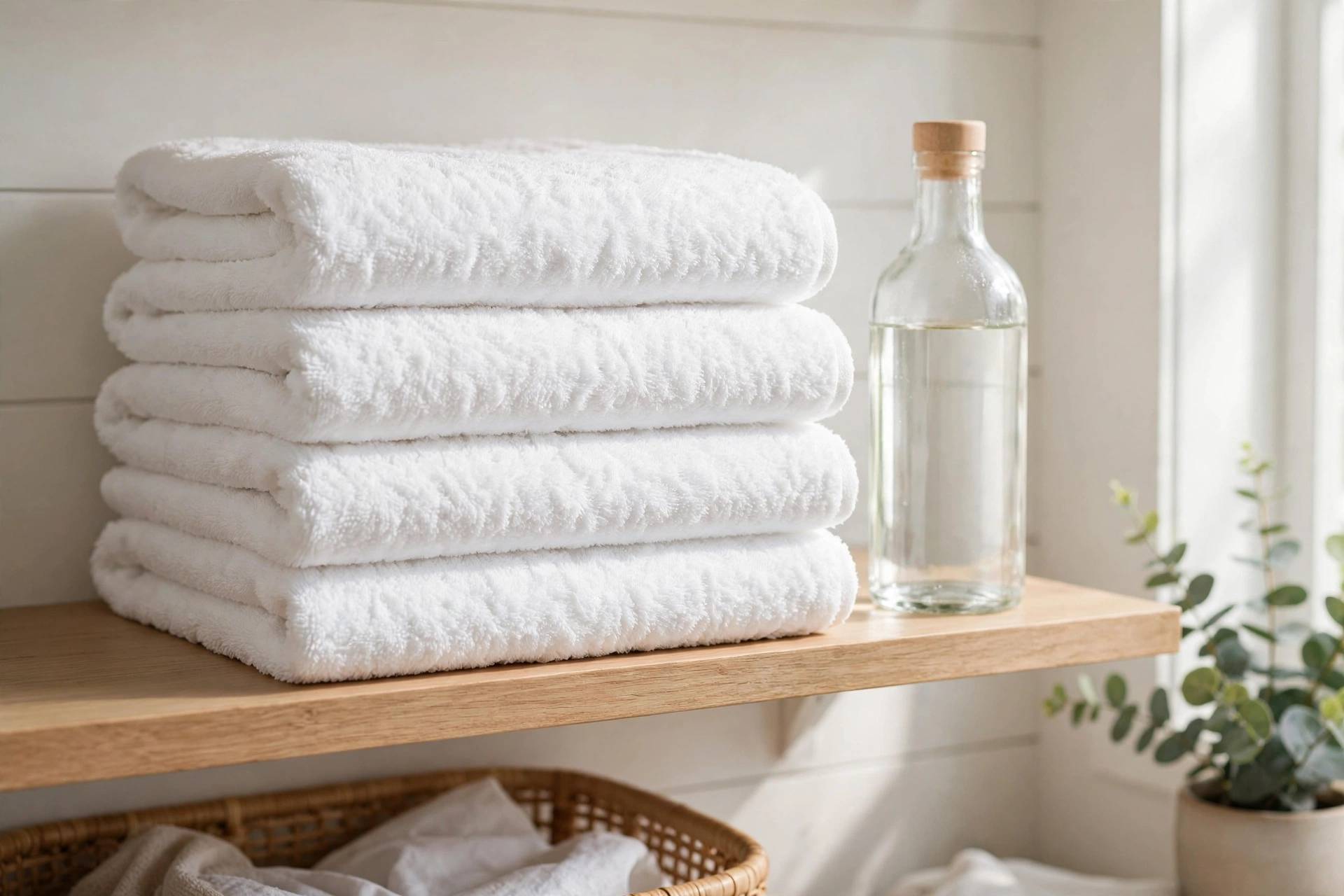
Learning how to keep towels soft without fabric softener changed my laundry game completely. For years I did what everyone does — poured in the softener, expected hotel-fluffy towels, and got scratchy, less-absorbent rectangles that smelled vaguely of artificial flowers. The irony is brutal: the product sold to make things soft is the number one […]
Learning how to keep towels soft without fabric softener changed my laundry game completely. For years I did what everyone does — poured in the softener, expected hotel-fluffy towels, and got scratchy, less-absorbent rectangles that smelled vaguely of artificial flowers. The irony is brutal: the product sold to make things soft is the number one reason towels go stiff. Fabric softener coats cotton fibers in a waxy film that kills absorbency and, over time, makes towels feel like sandpaper. Here is the full routine I switched to — nine habits that keep my towels genuinely soft, fluffy, and thirsty wash after wash, with no softener in sight.
Table of Contents
Why Towels Go Stiff in the First Place
Before fixing anything, it helps to know the enemy. Towels get scratchy because of invisible buildup: detergent residue, minerals from hard water, and the waxy coating left by fabric softener and dryer sheets. This crust mats down the cotton loops, so instead of standing up fluffy, the fibers lie flat and stiff. The towel then pushes water around your skin instead of drinking it up — which is exactly the opposite of what a towel is for.
An estimated 85% of U.S. homes have hard water, which leaves mineral film on fabric that grabs detergent and holds odors. That “clean towel smells musty the second it gets damp” problem? That is residue, not dirt. Once you understand that, the fix becomes obvious: strip the buildup and stop adding new coating.
The Truth About Fabric Softener and Towels
Fabric softener works by depositing a thin layer of lubricating chemicals on fabric. On clothes, that reads as softness. On towels — which are made of super-absorbent cotton loops designed to wick water — that same coating blocks absorbency. The towel feels slick at first, then increasingly stiff and water-repellent as layers accumulate. Laundry experts and appliance makers consistently advise against using softener on towels for exactly this reason: it reduces absorbency, shortens the towel’s life, and can trap odors instead of removing them.
Dryer sheets do the same thing with heat-activated coating. If you want to know how to keep towels soft without fabric softener, step one is simply: stop using it on towels. Everything else on this list replaces what softener was supposed to do — without the waxy tax.
White Vinegar: The One-Cup Reset
Distilled white vinegar is the single best tool for this job. Its mild acetic acid dissolves the mineral and detergent crust that makes towels stiff, resets the cotton loops, and leaves zero residue of its own. I add half a cup of plain white vinegar to the rinse cycle — where the softener would go — and let it work through the final rinse.
For towels that are already stiff and sad, I do a full reset wash: hot water, one cup of vinegar, no detergent, no softener, extra rinse. The towels come out lighter, springier, and noticeably more absorbent. Do not worry about the smell — vinegar’s odor washes away completely with the residue. And never mix vinegar with bleach in the same load; that combination creates harmful chlorine gas.
Baking Soda: The Booster That Breaks Up Residue
Baking soda is vinegar’s best partner. It is a natural deodorizer and a gentle scouring agent that breaks up the last remnants of soap and body oils trapped in the fibers. I add half a cup of baking soda directly to the drum with the towels, or into the detergent compartment, and run a normal warm cycle with my regular (small) amount of detergent.
For musty-smelling towels, the vinegar-plus-baking-soda combination is the gold standard: vinegar in the rinse, baking soda in the wash. Run them in the same load and you get the ultimate reset — towels that smell like nothing, feel like clouds, and drink water like they are supposed to.
Wash With Less Detergent (Not More)
This one feels backwards, but it is the habit that made the biggest difference for me. Most people massively overdose detergent — the cap markings are generous because detergent companies sell more that way. Excess suds do not rinse out fully, especially in high-efficiency machines, and the leftover soap is exactly the buildup that stiffens towels.
I now use about half the “recommended” amount for a towel load, and the towels come out cleaner and softer. If your machine has a “deep rinse” or “extra rinse” option, use it for towels. The goal is simple: leave nothing behind in the fibers except cotton.
Hot vs. Warm Water: Picking the Right Temperature
Temperature matters more than people think. Very hot water every time can wear cotton fibers down and contribute to stiffness over the long run. But lukewarm-only washes do not dissolve detergent fully or kill bacteria. My rhythm: warm water (around 30–40°C / 85–105°F) for everyday towel washes, and a hot wash every fourth wash or so to refresh and sanitize. That balance keeps fibers intact while still getting a genuinely clean towel. Always check the care label first — some dyed or specialty towels have specific limits.
Don’t Overload the Washer
Towels need room to move. A crammed washer means the towels cannot agitate properly, detergent does not rinse out, and everything comes out stiff and half-clean. My rule of thumb: never fill the washer more than three-quarters full for a towel load. Two full-size bath towels plus a couple of hand towels is plenty for a standard machine. Yes, it means more loads — but each load actually works, which is the whole point.
Dry Right: Medium Heat and Wool Dryer Balls
The dryer is where softness is won or lost. High heat bakes cotton fibers stiff and shortens the towel’s life. I dry towels on medium heat with two or three wool dryer balls, which physically fluff the fibers as they tumble — nature’s fabric softener, with no coating involved. I pull the towels out the moment they are dry; over-drying is a fast track to crunchiness.
If you line-dry, give each towel a vigorous shake before hanging, and hang them with space between them so air circulates. They will never be quite as fluffy as tumble-dried towels, but a quick 10-minute tumble on low after line-drying gets you most of the way there. For another take on reviving tired towels, Tom’s Guide has a step-by-step on how to make towels feel soft and fluffy again.
Shake Towels Before Drying
This tiny habit takes five seconds and makes a visible difference. Before a towel goes into the dryer (or onto the line), I snap it sharply two or three times. Shaking separates the cotton loops so they dry standing up instead of matted flat. It is the difference between a towel that comes out of the dryer plush and one that comes out like a board. I do the same thing when pulling towels out of the washer — a quick snap before they go anywhere.
The Quarterly Deep-Clean Reset
Even with perfect habits, minerals accumulate. Every few months, I give all my towels a reset wash: hot water, one cup of white vinegar in the rinse, half a cup of baking soda in the wash, no detergent, no softener, extra rinse. It is the laundry equivalent of a spa day. Towels that had started to feel a bit tired come back noticeably softer and brighter, and any lurking musty smell disappears. Put a reminder in your phone — “towel reset” every three months — and you will never have to wonder when you last did it.
When to Retire a Towel
No habit lasts forever. If a towel has been through the vinegar reset twice and still feels stiff, pushes water around instead of absorbing it, smells musty the moment it gets damp, or has fibers that look flat and worn no matter what you do — it is done. Retire it to cleaning duty (old towels make excellent car-washing and floor-cleaning rags) and replace it. A good cotton towel, treated this way, should give you several years of genuinely soft service first.
Conclusion: How to Keep Towels Soft Without Fabric Softener
The secret to how to keep towels soft without fabric softener is not a fancier product — it is removing the stuff that was making them stiff in the first place. Ditch the softener and dryer sheets, use half a cup of white vinegar in the rinse and half a cup of baking soda in the wash, halve your detergent, don’t overload the machine, dry on medium with wool dryer balls, and reset quarterly. My towels are softer now than they ever were with softener — and they actually dry me off, which is, you know, the job. And if your laundry room doubles as an art studio, here is how to remove crayon from walls without damaging paint.
Can I use vinegar on towels every wash?
Yes — half a cup of white vinegar in the rinse cycle every wash (or every other wash) is safe for cotton towels and keeps residue from building up. Just never mix vinegar and bleach in the same load.
Why are my towels stiff after washing without softener?
Stiffness without softener usually means detergent buildup, hard-water minerals, or over-drying on high heat. Do a reset wash (hot water, vinegar, baking soda, no detergent), halve your detergent going forward, and dry on medium heat.
Are wool dryer balls better than dryer sheets for towels?
Yes. Dryer sheets coat fibers with the same kind of waxy film as liquid softener, reducing absorbency. Wool dryer balls fluff fibers mechanically with no coating, and they cut drying time.
How often should I replace bath towels?
With good care, quality cotton towels last several years. Replace them when they stay stiff after a vinegar-baking-soda reset, stop absorbing water, or develop a musty smell that returns immediately after washing.
Does baking soda damage towels?
No — baking soda is gentle and safe for cotton. It dissolves in the wash, breaks up residue and odors, and rinses out completely. Use about half a cup per towel load.
Can I use apple cider vinegar instead of white vinegar?
White distilled vinegar is better for laundry: it is cheaper, has no color that could stain, and the higher acidity dissolves mineral buildup more effectively. Save the apple cider vinegar for salad dressing.


One thought on “How to Keep Towels Soft Without Fabric Softener: 9 Laundry Habits That Work”