

Learning how to remove crayon from walls is one of those parenting skills nobody warns you about until you walk into the living room and find a red-and-blue masterpiece across the hallway. I have been there — the heart-sinking moment, followed by the frantic “please don’t let this be permanent” panic. The good news? Crayon […]
Learning how to remove crayon from walls is one of those parenting skills nobody warns you about until you walk into the living room and find a red-and-blue masterpiece across the hallway. I have been there — the heart-sinking moment, followed by the frantic “please don’t let this be permanent” panic. The good news? Crayon is wax and pigment, and both come off painted walls if you use the right method for your paint finish. The bad news? The wrong method can take the paint right off with the crayon. So before you grab the nearest scrub pad, let me walk you through what actually works, what ruins walls, and the order I would try things in my own home.
Table of Contents
Before You Start: Identify Your Paint Finish
This is the step most people skip, and it is the one that matters most when you remove crayon from walls. The paint finish decides how aggressive you can be.
- Flat or matte: The most delicate. Anything abrasive will leave a shiny spot. Start gentle and stay gentle.
- Eggshell: Slightly tougher than flat but still easy to burnish. Light pressure only.
- Satin: Handles mild cleaning well. Most household methods are safe here.
- Semi-gloss or gloss: The most forgiving. You can use a bit more elbow grease, though you still should not gouge at the wall.
If you are not sure what finish you have, test your chosen method on a hidden spot first — behind a door, inside a closet, low near the baseboard. Give it 24 hours if you can, because some damage (like a dull patch) only shows up once the wall fully dries.
Method 1: The Magic Eraser (My First Go-To)
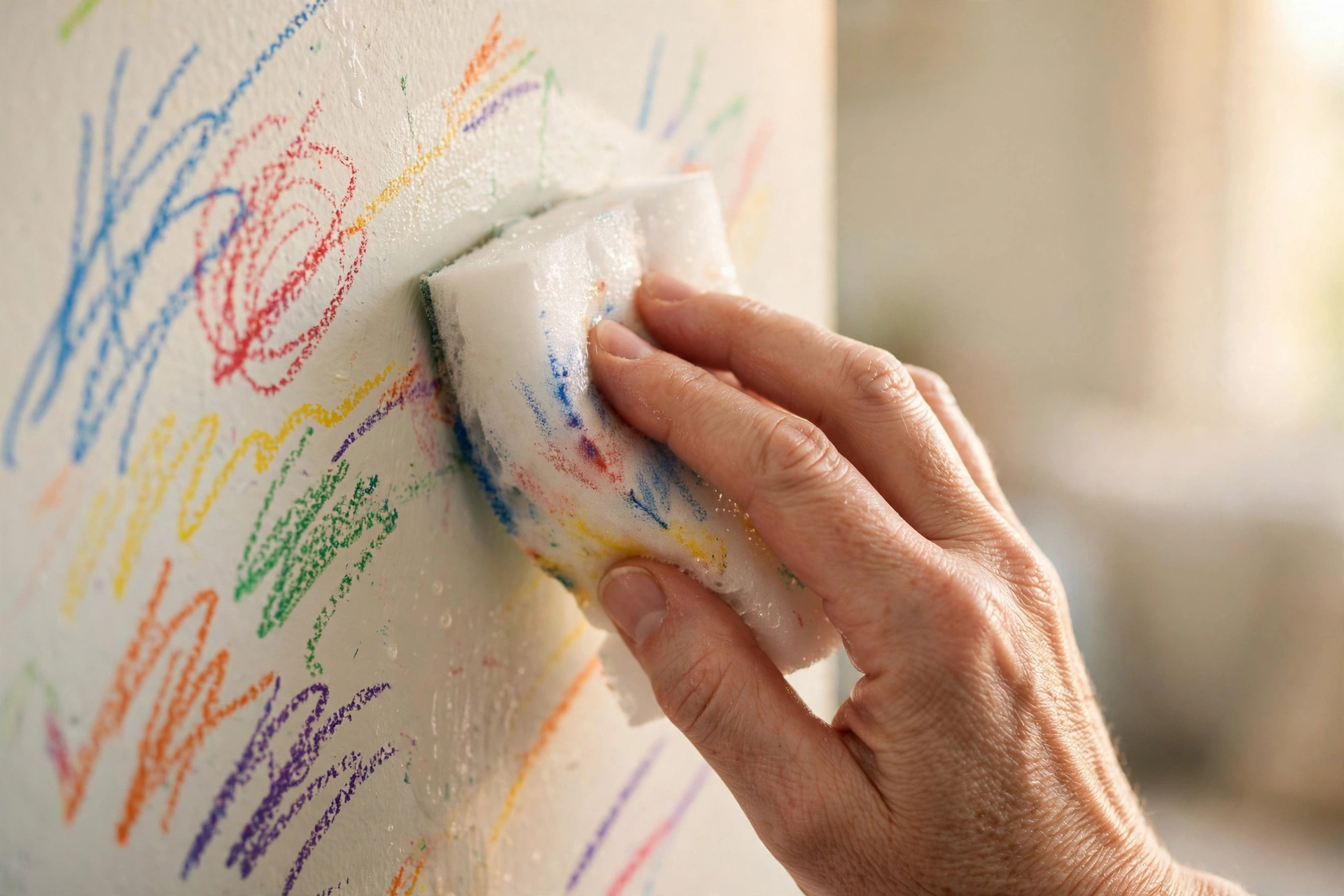
For most crayon marks, a damp melamine foam sponge — the kind sold as a Magic Eraser — is the fastest way to remove crayon from walls. I squeeze it nearly dry first, because a dripping sponge floods the wall and pushes wax around.
Technique matters more than force. I tap the foam onto the crayon line, then glide with short, light strokes in one direction. I check progress every few passes by wiping with a barely damp microfiber cloth. The color usually lifts within a minute. The trap is pressing hard: heavy pressure on flat or eggshell paint creates a burnished shiny patch that looks worse than the crayon did. Go lighter than you think. If a faint tint lingers, re-wet the foam and repeat a gentle cycle rather than bearing down.
Method 2: Baking Soda Paste
Baking soda is a mild abrasive that can lift crayon without the risks of a chemical cleaner. I mix three parts baking soda with one part water to make a thick paste, dab it onto the mark with a soft cloth, and rub in gentle circles. Then I wipe clean with a damp cloth and dry the spot.
This works best on satin and semi-gloss finishes. On flat paint, I use it sparingly and rinse well, because the paste can leave a light residue if it dries on the wall. It is one of the cheapest ways to remove crayon from walls, and it is non-toxic, which matters when the little artist is “helping” you clean.
Method 3: Dish Soap and Warm Water
Sometimes the simplest answer is the right one. Paint manufacturers like Benjamin Moore recommend mild soap and water for routine wall cleaning, and crayon is no exception for light marks. I add one or two drops of mild dish soap to a bowl of slightly warm water, dip a microfiber cloth, and wring it out until it is damp, not dripping.
I dab from the outside of the crayon mark inward for ten to fifteen seconds, then make two or three light passes with a clean section of the cloth. Then I rinse with a second cloth dampened in plain water and blot dry. Work in a small area so water does not run down the wall. If the mark is fading, I repeat one gentle cycle after the surface dries rather than increasing pressure. For a big mural, I divide it into hand-sized sections and finish the whole dab-rinse-dry sequence on one section before moving sideways.
Method 4: Rubbing Alcohol for Stubborn Marks
When wax refuses to budge, rubbing alcohol breaks it down fast. This is my secret weapon for the stubborn red and blue pigments that laugh at soap. I dot a cloth with a small amount of rubbing alcohol and pat the crayon line — I do not soak the wall, because alcohol evaporates quickly and a little goes a long way. Then I follow with the damp Magic Eraser step to finish.
Two cautions. First, always test in a hidden spot, because alcohol can affect some paint sheens. Second, ventilate the room — crack a window, especially if you are working on a large area. This method is best reserved for satin and semi-gloss walls; on flat paint I would try everything else first.
Method 5: White Vinegar Solution
A 50/50 mix of white vinegar and warm water is a decent grease-cutting option for crayon. I soak a soft cloth, wring it well, press it against the mark for a minute to soften the wax, and wipe in one direction. The mild acid helps loosen the wax from the paint surface.
Vinegar is not the strongest option on this list, but it is cheap, non-toxic, and safe for most finishes when used diluted. The smell fades as the wall dries. If you are sensitive to scents or cleaning with kids in the room, this is a calmer choice than alcohol-based methods.
Method 6: Non-Gel Toothpaste
Non-gel white toothpaste contains a fine, mild abrasive that works surprisingly well to remove crayon from walls. I squeeze a small amount onto the mark, rub gently with a soft cloth or old toothbrush, and rinse with a damp cloth. The key detail is “non-gel” — gel toothpaste does not have the same abrasive action, and colored or whitening formulas with extra chemicals can stain.
This method has been passed around parent groups for years, and it genuinely works on light to medium marks. I treat it as a middle option: stronger than soap, gentler than alcohol.
Method 7: Hair Dryer and Plastic Scraper
Heat softens wax, and crayon is mostly wax. I hold a hair dryer on medium heat about six inches from the mark, moving it constantly so I never overheat one spot. After 20 to 30 seconds, the crayon softens enough that I can wipe it away with a damp cloth — or gently lift thick buildup with a plastic card or old credit card. Never use a metal scraper; it will gouge the paint.
This method shines on heavy, thick crayon layers where scrubbing would just smear. The heat-then-wipe approach keeps the pigment from spreading across a wider area of wall. Once the bulk is off, I finish with the soap-and-water method to remove the last film.
Method 8: Repainting the Spot (When Nothing Works)
Sometimes the honest answer is that the crayon won. Deep wax pressed into flat paint, or marks that have been baked by sunlight for months, may not come out without taking paint with them. In that case, repainting is faster and cheaper than hours of scrubbing that ends in a damaged wall.
I clean the area as well as I can first, let it dry, apply a stain-blocking primer over the mark (crayon wax can bleed through regular paint), and then roll on a coat of matching paint. If you do not have the original paint, take a small chip to the store for a color match. This is also the right call for rental move-outs where the wall needs to look untouched.
What NOT to Use on Painted Walls
As important as knowing how to remove crayon from walls is knowing what ruins them. I would never use:
- Steel wool or abrasive scouring pads — they strip paint instantly.
- Bleach or harsh solvents — they discolor paint and can leave yellow patches.
- Mayonnaise or cooking oil soaks — an old folk remedy that leaves a greasy stain and can damage paint.
- Boiling water — it can blister latex paint.
- Magic Eraser with heavy pressure on flat paint — the tool is fine; the force is the problem.
When in doubt, gentler and slower beats faster and stronger every time. If you want a second tested walkthrough, see this guide on how to remove crayon from walls.
How to Prevent Crayon Art on Walls
Once the wall is clean, a little prevention saves the next round. I taped a big roll of kraft paper to the wall at kid height and declared it the “official mural wall” — the novelty wore off the forbidden walls within a week. Washable crayons are also worth the switch; they are designed to come off with soap and water. And I keep a Magic Eraser in the cleaning caddy now, because a fresh crayon mark removed within a day is ten times easier than one that has been sitting for a month.
Conclusion: How to Remove Crayon From Walls
Figuring out how to remove crayon from walls comes down to three things: match the method to your paint finish, start gentle and escalate slowly, and test in a hidden spot first. In my experience, a damp Magic Eraser with light pressure handles the vast majority of marks, with baking soda paste or dish soap as the safe backups, and rubbing alcohol or heat for the stubborn cases. The wall survived my toddler’s artistic phase, and with this order of operations, yours will too. For another easy home win, read how to keep towels soft without fabric softener.
Frequently Asked Questions
Does Magic Eraser damage wall paint?
It can if you press hard, especially on flat or eggshell finishes, where it may leave a shiny burnished patch. Use light pressure, keep the sponge damp (not dripping), and test in a hidden spot first.
Will rubbing alcohol take paint off walls?
Rubbing alcohol can damage some paint finishes if applied heavily or left to sit. Dab it on sparingly, wipe it off quickly, and always test behind a door or in a closet first. It is safest on satin and semi-gloss paint.
How do you get crayon off textured walls?
Use the tapping technique with a damp Magic Eraser — press and lift rather than scrubbing side to side, so the foam reaches into the texture without flattening it. A soft toothbrush can help work cleaning solution into the grooves.
Can I remove crayon from wallpaper?
It depends on the wallpaper type. Washable vinyl wallpaper can often handle the damp-sponge method. Paper-based or delicate wallpaper usually cannot — test a hidden spot, and if in doubt, consult the wallpaper manufacturer’s guidance before trying anything.
What is the fastest way to remove crayon from walls?
For a single fresh mark, a damp Magic Eraser with light pressure is usually the fastest — most marks lift in under a minute. For thick buildup, a hair dryer to soften the wax followed by a wipe is quicker than scrubbing.
How do I stop my toddler from drawing on walls?
Give them an approved surface — a roll of paper taped to the wall at their height works well. Switch to washable crayons, keep art supplies within reach only during supervised time, and calmly redirect them to the paper every time they reach for the wall.


One thought on “How to Remove Crayon From Walls: 8 Safe Methods That Won’t Damage Paint”