

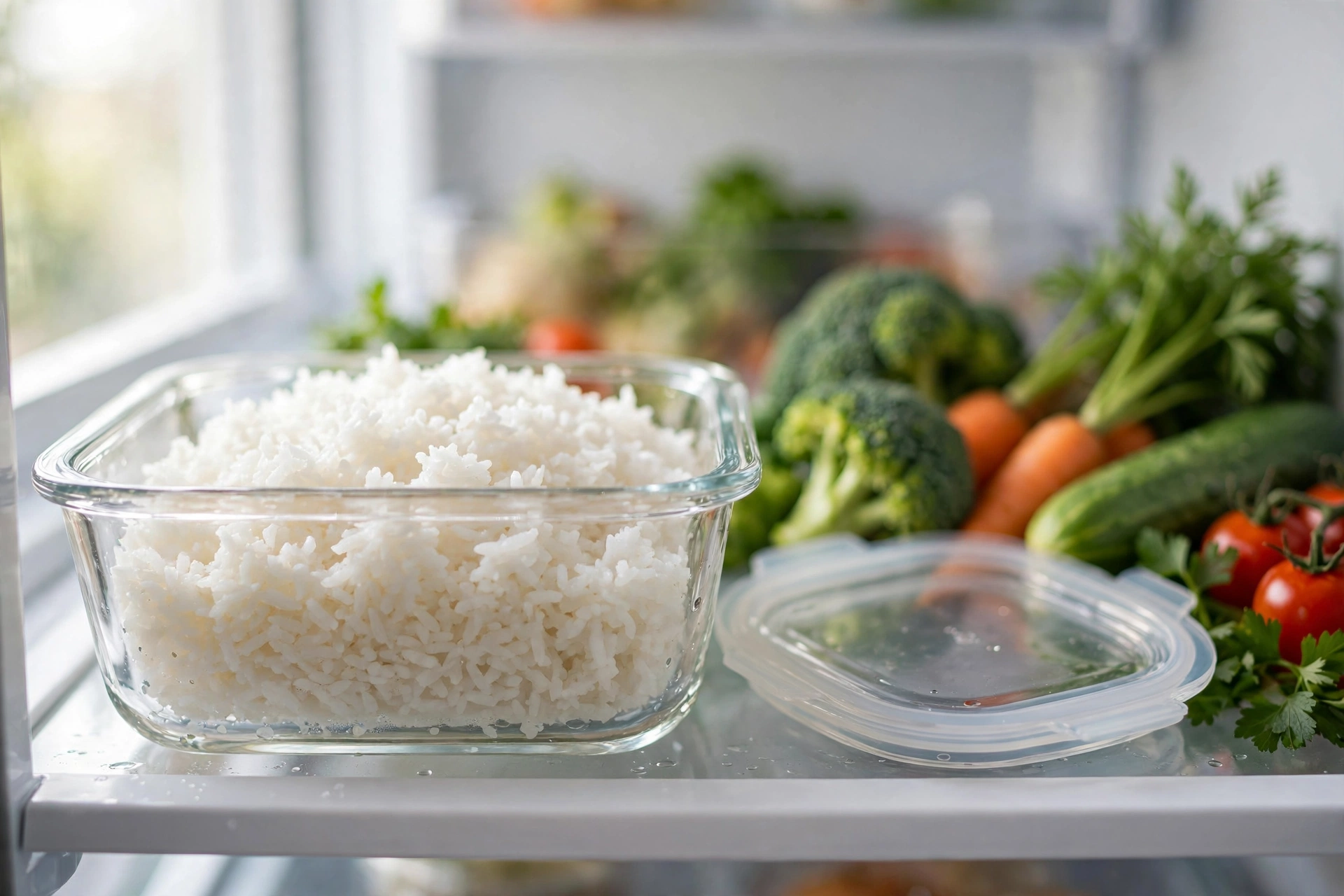
If you’ve ever stood in front of your open fridge at midnight, staring at yesterday’s rice and wondering if it’s still safe, you’re not alone. For years my approach was pure guesswork: if it smelled okay, I ate it. Then a friend who works in food safety told me a story about reheated rice that […]
If you’ve ever stood in front of your open fridge at midnight, staring at yesterday’s rice and wondering if it’s still safe, you’re not alone. For years my approach was pure guesswork: if it smelled okay, I ate it. Then a friend who works in food safety told me a story about reheated rice that genuinely scared me — and it changed everything.
So let’s answer it right away: if you’re wondering how long does leftover rice last in the fridge, the safe answer is 3 to 4 days — but only if you cooled it quickly and stored it right. Get those steps wrong and your rice can turn on you much faster than you’d expect.
I cook rice at least four times a week, I batch-cook for meal prep, and I’ve made every mistake in the book so you don’t have to. Here’s everything I wish someone had told me years ago.
Table of Contents
Why Rice Spoils Faster Than You Think (The Bacillus Cereus Problem)
Here’s what surprised me when I first learned it: cooked rice is one of the riskiest foods to leave sitting out. Sounds dramatic for something so plain, but there’s real science behind it.
The culprit is Bacillus cereus, bacteria that can be present on uncooked rice. Cooking kills most of it, but some form heat-resistant spores that survive the process. While the rice is hot, the spores sit quietly — but as it cools at room temperature, they wake up, multiply, and produce toxins.
Here’s the sneaky part: those toxins aren’t destroyed by reheating. You can’t cook your way out of rice that sat out too long. That’s why rice is the classic example of the temperature “danger zone” between 40°F and 140°F (4°C to 60°C), where bacteria multiply fastest — and why how long does leftover rice last in the fridge matters so much: the fridge stops those spores from growing in the first place.
I’ll never forget refrigerating a pot of rice that had sat on the stove all afternoon, feeling very responsible. I had no idea those counter hours were the actual problem — the fridge can’t undo what’s already happened at room temperature. That’s why the next section matters most.
The 1-Hour Rule That Changed How I Store Rice
Food-safety experts all say the same thing: leftover rice should be cooled and refrigerated within one hour of cooking. Not “after dinner.” One hour.
I’ll be honest — at first I thought this was overkill. Growing up, rice sat on our counter for hours and nobody connected any stomach bug to it. But most rice-related food poisoning is mild and easy to blame on something else, so it flies under the radar. That’s the difference between getting lucky and being safe.
Here’s my practical routine for cooling rice fast on busy weeknights:
- Spread it out. Don’t leave rice in the deep pot — tip it onto a wide baking sheet in a thin layer so heat escapes fast. This alone cut my cooling time dramatically.
- Divide into shallow containers. Several shallow containers cool far faster than one deep bowl, which keeps a warm insulated core where bacteria thrive.
- Leave the lid off briefly. Covering steaming rice traps heat and moisture — exactly what bacteria want. Cool uncovered for 15–20 minutes, then lid and refrigerate.
- Don’t fear putting warm rice in the fridge. This was my biggest myth to unlearn. A container or two of warm rice won’t heat up your whole fridge — but leaving it out for hours to “cool completely” genuinely lets bacteria thrive.
Once it became habit, it stopped feeling like a chore — cook, spread, portion, fridge. Five minutes of effort, tops.
How Long Does Leftover Rice Last in the Fridge? A Day-by-Day Timeline
So how long does leftover rice last in the fridge once it’s stored properly? Here’s my day-by-day guide:
Day 0–1 (the day you cooked it): Perfect. Soft, fresh, and safe — reheat as-is or save for fried rice tomorrow.
Day 2: Still completely fine, and honestly my favorite window for fried rice — the grains have dried just enough to stay separate in the pan.
Day 3: Safe, but quality starts to slide — a little drier, a little firmer. Fine for reheating with a sprinkle of water, or for soup and rice bowls with sauce. Give it a quick smell check (see below).
Day 4: The outer limit. I try to eat or freeze rice by day 3 myself, but day four is still safe if storage was ideal. Inspect it carefully — smell, texture, and appearance all need to pass.
Day 5 and beyond: Throw it out. When in doubt, throw it out — that’s a cliché because it’s true.
Four days is the ceiling, and that’s assuming ideal storage. If your fridge runs warm or the rice sat out too long before refrigerating, that timeline shrinks.
One more thing: a packed fridge doesn’t circulate cold air well, so your rice might sit warmer than you think. Keep the fridge at or below 40°F (4°C) — for a handy reference on safe storage times, check the USDA’s cold food storage chart.
Freezing Cooked Rice: My Favorite Backup Plan
Here’s a game-changer: rice freezes beautifully. If you won’t eat the leftovers within three or four days, freeze them.
I swear by the flat-freezer-bag trick: cool the rice within that golden hour, spoon portions into freezer bags, press flat, and squeeze out the air before sealing. Flat bags freeze faster, stack neatly, and thaw quicker. I date each bag with a marker, because frozen food and my memory aren’t a reliable combination.
Frozen rice keeps well for up to three months, though texture is best in the first month. Brown rice actually holds up a little better than white in the freezer, thanks to its tougher bran layer.
Thaw overnight in the fridge, or reheat straight from frozen in the microwave with a splash of water. One rule: once thawed, eat it — never refreeze.
Since I started doing this, I almost never throw rice away.
The Best Containers for Storing Leftover Rice
After trying pretty much everything over the years, here’s what I actually recommend:
Glass containers with locking lids are my top pick — airtight, odor-proof, and transparent so you can see what’s inside. Most are microwave-safe.
BPA-free plastic containers work fine too — just make sure the lid actually seals.
What I avoid: leaving rice in the cooking pot (it doesn’t seal), covering bowls with plastic wrap alone (it leaks air), and paper takeout containers from restaurants (not airtight enough for multi-day storage).
One underrated tip: portion rice into single servings before refrigerating. Opening one big container five times over three days exposes the rice to warm air again and again; individual portions stay sealed until you need them. Most fresh food keeps longer when you handle it less — it’s the same lesson I learned figuring out how to keep bananas from ripening too fast, where small storage habits made the biggest difference.
How to Tell If Your Leftover Rice Has Gone Bad
This is the section I wish I’d had on day four of some long-forgotten batch of rice, back when the question of how long does leftover rice last in the fridge suddenly felt very urgent. Here’s how I check, in order:
Smell it. Fresh leftover rice smells mild and starchy — nothing dramatic. Spoiled rice turns sour or just plain off. If it smells funky at all, don’t taste it to confirm. Just throw it out.
Look at it. A yellowish or grayish tint, a slimy film, or pooled moisture are all bad signs. Any visible mold means the whole container goes in the bin.
Feel it. Good leftover rice is firm with separate grains. Bad rice turns mushy, slimy, or crunchy in patches — if the texture is dramatically different, trust your hands.
Check the timeline. If it’s been more than four days, the other three checks don’t matter. Time’s up.
My overriding rule: if I have to talk myself into believing it’s fine, it’s not fine. Two dollars of rice isn’t worth a night of food poisoning.
How to Reheat Leftover Rice Safely
Reheating is where people undo all their good storage work. The rules are simple:
Heat it steaming hot all the way through. Aim for 165°F (74°C), stirring halfway to kill cold spots.
Add a little water. Leftover rice loses moisture in the fridge. A tablespoon or two of water per cup, plus a lid to trap the steam, brings back surprising freshness.
Method 1: Microwave. Sprinkle with water, cover with a damp paper towel, heat 1–2 minutes per cup, stirring halfway. Rest covered for a minute after.
Method 2: Stovetop. Add a couple tablespoons of water or broth, cover, and heat over medium-low for 5–8 minutes, stirring once or twice. My preferred method for larger portions.
Method 3: Pan-fry. Heat a little oil over medium-high heat, add the rice, and stir-fry 3–5 minutes until hot and a little crispy at the edges. The gateway to fried rice.
The big rule: only reheat once. Every cool-and-reheat cycle gives bacteria another shot at the danger zone, so only reheat what you’ll eat. Extra reheated rice goes in the trash, not back in the fridge.
The Secret Reason Leftover Rice Makes Better Fried Rice
Now the good part: day-old refrigerated rice isn’t just acceptable for fried rice — it’s genuinely better than fresh. Every restaurant chef knows this; home cooks discover it by accident.
The reason is moisture. Freshly cooked rice is soft and steamy, so it clumps and turns mushy in the pan. Fridge-dried rice has firmer starches — the grains stay separate, crisp lightly at the edges, and absorb flavor without dissolving.
My routine: get the pan really hot, add oil, toss in the cold rice straight from the fridge — never warm it first. Break up clumps, add vegetables, protein, soy sauce, and a scrambled egg. Under ten minutes — some weeks I cook extra rice on purpose, just for fried rice the next day.
Common Mistakes I Made (So You Don’t Have To)
Let me save you the learning curve. These are the mistakes I made before I really understood how long does leftover rice last in the fridge in real-world terms:
Leaving rice out “to cool” for hours. I thought I was being careful. In reality I was parking rice in the danger zone for hours — warm and refrigerated beats room-temperature for hours, every time.
Storing rice in the cooking pot. It doesn’t seal, the center stays warm for ages, and it’s a pain to reheat. Always transfer to real containers.
Guessing instead of checking the date. A strip of masking tape with the date takes five seconds and ends the “when did I make this?” game forever.
Reheating the whole container, eating half, refrigerating the rest. I did this for years. Portion before storing so reheating means opening one serving.
Assuming the fridge resets the clock. Putting rice in the fridge stops bacterial growth, but it doesn’t undo growth that already happened while the rice sat out. The hour of cooling matters as much as the days of refrigeration.
Keeping rice because it “looks fine.” Appearance is the least reliable indicator of safety with rice. If the timeline says it’s done, it’s done.
FAQs About Leftover Rice Storage
Can you eat cold leftover rice straight from the fridge?
Yes — as long as it was cooled within an hour, kept at or below 40°F, and eaten within 3–4 days. Perfectly safe in a rice salad; I just prefer mine warm for texture.
How long does cooked rice last at room temperature?
One hour — that’s the safe standard. Remember, Bacillus cereus toxins survive reheating, so room-temperature time can never be undone. That brings us back to the core question of how long does leftover rice last in the fridge: the fridge clock only starts once the rice is actually in there.
Can you reheat rice twice?
No. Reheat once, and only reheat what you’ll eat. Each trip through the danger zone (40°F–140°F) is another chance for bacteria to multiply. Portioning before storage makes this rule easy to follow.
Does brown rice last longer than white rice?
Safety-wise, no — the same 3–4 day rule applies. Its natural oils can turn rancid faster at room temperature, but in the fridge the difference is minor. In the freezer, brown rice holds texture slightly better than white.
The Bottom Line
Rice is totally safe when handled right and quietly risky when it isn’t. The rules aren’t complicated: cool it within an hour, keep it 3–4 days max (freeze what you won’t eat), store it sealed, reheat steaming hot exactly once, and trust your nose over your optimism.
Now you know how long does leftover rice last in the fridge — and why the answer depends on what you did in the first hour. Follow these rules and you’ll never do the midnight fridge stare-down again.
More rice than you can eat in four days? Two escape routes: the freezer, or a screaming-hot pan of fried rice. Neither has ever let me down.