

My dog is a golden retriever, which means she sheds roughly her entire body weight in fur every single week — which is exactly why I had to learn how to remove pet hair from car seats, since a meaningful percentage of it ends up woven into my car’s back seat. I have tried everything: […]
My dog is a golden retriever, which means she sheds roughly her entire body weight in fur every single week — which is exactly why I had to learn how to remove pet hair from car seats, since a meaningful percentage of it ends up woven into my car’s back seat. I have tried everything: the gas station vacuum that eats quarters and returns nothing, the lint roller that filled up in four swipes, the well-meaning advice to “just brush her more.” The fur remained, smugly embedded in the upholstery, mocking me.
Table of Contents
Then I started learning how professional detailers actually handle this, and it turns out that learning how to remove pet hair from car seats is a solvable problem — you just have to work with the physics of the stuff instead of against it. Pet hair clings to car seats because of static electricity and the barbed structure of the hair itself, which lets individual strands weave into fabric fibers like tiny hooks. Vacuuming first, which is what everyone does, is actually the wrong first move: suction alone can’t break that grip.
Below are the seven methods that genuinely work, in the order I’d recommend trying them — from the single most effective trick to the finishing touches. I tested all of these on my own hairy back seat, and the combination got it looking genuinely clean, not just “cleaner than before.”
Why Pet Hair Is So Hard to Get Out of Car Seats
Before learning how to remove pet hair from car seats, it helps to understand your enemy. Most pet hair carries a natural static charge, and car upholstery — especially the woven fabric in economy and mid-range cars — gives those charged strands thousands of tiny fibers to hook into. Every time someone sits on the seat, body heat and pressure drive the hair deeper into the weave. Over weeks, the hair isn’t just sitting on the fabric anymore; it’s part of the fabric.
That’s why a plain vacuum pass disappoints: suction pulls straight up, but the hair is hooked in sideways and downward. The fix is to break the static bond and loosen the hooks first, then let suction do its easy part. Every method below is really just a different way of doing that.
What You’ll Need
You don’t need a professional detailing kit to learn how to remove pet hair from car seats. For the full routine, gather: a vacuum with a brush or upholstery attachment (a shop vac or a handheld with a motorized pet head is ideal), a pair of rubber cleaning gloves, a rubber squeegee (the kind for shower doors works), a spray bottle with water and a little fabric softener, a lint roller or some packing tape, and a microfiber cloth. A pumice stone is a bonus for floor mats. Total cost if you own none of this: well under twenty dollars.
Method 1: Loosen First With Damp Rubber Gloves
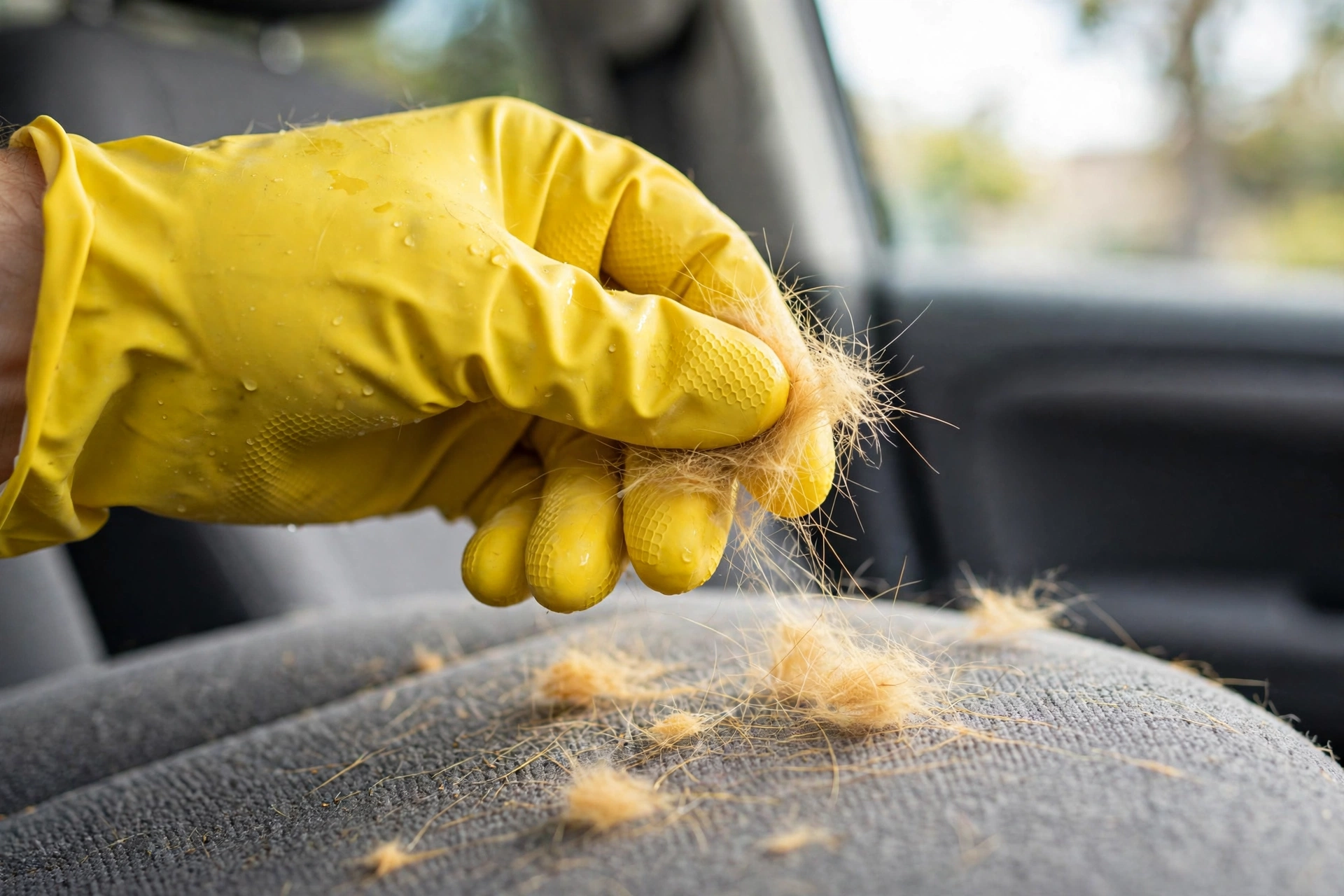
This is the single most effective trick and the one most people have never tried. Put on a pair of rubber cleaning gloves, lightly dampen them with water, and rub your hands across the seat in one direction, in firm, sweeping strokes. The rubber creates static friction that pulls hair out of the fabric and clumps it into little rolls you can pick up by hand.
Watch what happens the first time you do this — it’s weirdly satisfying. Hair that three vacuum passes couldn’t touch suddenly rolls up into clumps like it’s been waiting for permission. Work in sections, moving from the top of the seat down and from the center outward, and vacuum up the clumps as you go. For seats that look hopeless, this first step in how to remove pet hair from car seats removes the majority of the hair. On my back seat, the rubber glove pass did about seventy percent of the total job.
Method 2: Squeegee Sweep for Large Areas
A rubber squeegee does the same job as the gloves but covers ground much faster, which matters when you’re doing a whole SUV. Lightly mist the seat with water (barely damp, not wet), then drag the squeegee across the upholstery in slow, overlapping strokes. The hair balls up along the squeegee’s edge in satisfying little tumbleweeds.
This is my go-to for the big flat areas: seat bottoms, seat backs, and the cargo area. A shower-door squeegee costs a few dollars and lives in my trunk now. One caution: use light, even pressure. Pressing hard doesn’t grab more hair — it just pushes the hair deeper, which is the opposite of what you want.
Method 3: Vacuum With a Brush Attachment (After Loosening)
Now — and only now — bring out the vacuum. The mistake everyone makes when figuring out how to remove pet hair from car seats is vacuuming first. Once the hair’s static grip is broken by the rubber gloves or squeegee, suction finally works the way you expect. Use the brush or upholstery attachment, not the bare nozzle: the bristles agitate the fibers and free strands that the suction alone would miss.
Go slowly, in multiple directions. Fast passes look productive and accomplish little. Pay special attention to the seams and creases where the seat back meets the seat bottom — hair collects there in dense little colonies, and a crevice tool is your friend. If your vacuum has a pet hair or turbo brush head, this is the moment it earns its keep.
Method 4: Fabric Softener Anti-Static Spray
For the stubborn strands that survive the rubber and the vacuum, mix one part liquid fabric softener with three parts water in a spray bottle, and lightly mist the upholstery. Don’t soak it — a light mist is plenty. The softener neutralizes the static charge that keeps hair glued to the fabric, and after a minute or two, the remaining hair wipes away with a microfiber cloth or lifts easily with a second vacuum pass.
This is also the trick Speed Queen’s pet hair guide recommends for household fabrics, and it works just as well in cars — their pet hair removal tips cover the same static-breaking principle for upholstery, which is the whole secret of how to remove pet hair from car seats. Always test the spray on a hidden spot first, especially on light-colored or delicate fabrics, since fabric softener can leave a faint residue on some materials.
Method 5: Lint Roller or Tape for Surface Hair
The humble lint roller won’t fix embedded hair, but it’s perfect for the final pass on surface-level fur — headrests, seat edges, the dashboard, and door panels. Roll in one direction and peel the sheets often; a full roller just smears hair around.
No lint roller handy? Wrap packing tape or duct tape around your hand, sticky side out, and press it onto the fabric. It works surprisingly well for touch-ups and costs nothing. I keep a mini lint roller in the glove box now for the weekly five-minute maintenance pass, which prevents the hair from ever building up to “project” levels again.
Method 6: Pumice Stone for Mats and Heavy Buildup
This one sounds like witchcraft until you try it. A dry pumice stone, stroked gently across car floor mats and carpeted cargo areas, grabs embedded hair with its rough surface and pulls it out in clumps. Professional detailers use this trick on the worst jobs — the cars where the previous owner apparently transported a husky farm.
Use light pressure and short strokes, and confine it to carpet and floor mats, not seat fabric — pumice is too aggressive for upholstery weave and can roughen or pill the fabric. Test in an inconspicuous corner of the mat first. For rubber all-weather mats, a stiff brush and the squeegee method work better than the pumice.
Method 7: Silicone Pet Hair Brush for the Finishing Pass
The dedicated silicone pet hair brushes sold for couches work brilliantly on car seats too. The soft silicone “fingers” create friction in every direction at once, pulling up the last stragglers that the other methods missed. I use mine as the final pass after vacuuming, and it’s the difference between seats that look clean and seats that look detailed.
These brushes are also self-cleaning in a practical sense — the collected hair peels right off the silicone in one satisfying sheet. If you only buy one tool for this job, make it either this brush or the rubber gloves; everything else you probably already own.
Adjusting for Your Seat Material
Not all car seats respond the same way to these methods for how to remove pet hair from car seats, so match the method to the material:
Fabric/upholstery seats (the most common): use the full routine above in order. Fabric is the grippiest surface for pet hair and benefits most from the loosen-first approach.
Leather seats: lucky you — hair doesn’t embed in leather the way it does in fabric. The rubber glove and squeegee methods work, but often a simple vacuum plus a damp microfiber cloth is enough. Skip the fabric softener spray on leather; use a proper leather cleaner and conditioner instead, since softener can leave leather feeling tacky.
Suede or microsuede: use only the gentlest methods — vacuum with a soft brush attachment and the silicone brush. No pumice, no aggressive rubbing, and test the fabric softener spray in a hidden spot before committing, since moisture can mark suede.
Prevention: 6 Habits That Keep Hair From Coming Back
Figuring out how to remove pet hair from car seats once is satisfying, but doing it every month is not a lifestyle I recommend. These habits cut the job down to a five-minute touch-up:
- Brush your pet before car rides. Two minutes with a de-shedding brush removes the loose coat that would otherwise end up on your seats. Do it outside, obviously.
- Use a washable seat cover or blanket. Put it in your pet’s usual spot and launder it weekly. This single habit prevents most of the problem.
- Keep a silicone brush in the trunk. A two-minute sweep after each trip stops hair from getting pressed into the fabric over weeks.
- Run the fabric softener mist monthly. A light anti-static mist after your monthly clean makes the next cleanup dramatically easier.
- Dry wet paws and coats first. Wet hair mats into fabric and dries into it. A quick towel-off at the door saves you a detailing session later.
- Clean the cargo area after outdoor trips. Hiking, beach, and park outings deposit a season’s worth of hair at once. Ten minutes right after beats an hour next month.
Mistakes That Make It Worse
A few well-meaning approaches to how to remove pet hair from car seats backfire: vacuuming first on dry, untouched seats (you’ve seen why — the grip isn’t broken yet), working on wet upholstery (damp hair smears and packs deeper into the weave), pressing hard with any tool (pressure embeds hair; let friction do the work), and ignoring the seams (the hidden fur colony migrates back onto the clean seat the first time someone sits down).
Also: don’t use sharp scrapers or metal tools on upholstery. I’ve seen people recommend them online for “stubborn spots.” They cut threads, snag the weave, and turn a cleaning job into an upholstery repair job. Rubber, silicone, and tape are all you need.
When It’s Worth Paying a Pro (And What It Costs)
If the car looks like a pet hair crime scene — years of buildup, multiple pets, hair in the headliner — a professional interior detail with pet hair removal typically runs $75 to $200 depending on your area and the car’s size. It’s money well spent as a reset: let a pro get it to zero, then maintain it yourself with the habits above.
Fun side note: I once watched a mobile detailer de-fur an SUV in about forty minutes and charge $120 for it, which got me thinking about how many simple skills like this people happily pay for. If you’re handy and enjoy this kind of work, services like car detailing can genuinely grow into a side income — I wrote a whole guide on starting a side hustle from home if that idea appeals to you.
Frequently Asked Questions
What is the fastest way to remove pet hair from car seats?
The damp rubber glove method is the fastest high-impact trick for how to remove pet hair from car seats: put on rubber cleaning gloves, dampen them lightly, and rub across the seats in sweeping strokes. The hair clumps up for easy pickup. Follow with a vacuum pass using a brush attachment. Most seats take fifteen to twenty minutes with this one-two punch.
Does fabric softener really help remove pet hair?
Yes — diluted fabric softener (one part softener to three parts water, lightly misted) neutralizes the static charge that keeps hair clinging to upholstery. It doesn’t dissolve the hair; it breaks the static bond so the hair releases easily. Always test on a hidden area first and use a light mist, not a soak.
How do I keep pet hair off my car seats permanently?
You can’t stop shedding, but you can stop buildup: brush your pet before rides, use a washable seat cover in their usual spot, keep a silicone pet hair brush in the trunk for two-minute touch-ups, and do a quick vacuum after outdoor trips. The five-minute maintenance pass prevents the monthly deep-clean project.
Will a regular vacuum remove pet hair from car seats?
Not on its own. Standard suction can’t break the static grip that holds hair in woven upholstery. Loosen the hair first with rubber gloves, a squeegee, or a silicone brush, then vacuum — the same vacuum suddenly works dramatically better. A brush or turbo attachment makes a real difference too.
Final Thoughts
My back seat went from “evidence in a shedding trial” to genuinely clean with nothing fancier than rubber gloves, a squeegee, a spray bottle, and a vacuum I already owned. The whole job took under an hour, and most of that was me marveling at how well the rubber glove trick worked.
The real lesson in how to remove pet hair from car seats isn’t any single method — it’s the order. Loosen first, then vacuum. Break the static, then collect. Do it once properly, adopt the five-minute maintenance habit, and pet hair in your car becomes a minor chore instead of a permanent condition. Your dog can keep riding shotgun. The fur just doesn’t get to stay.