

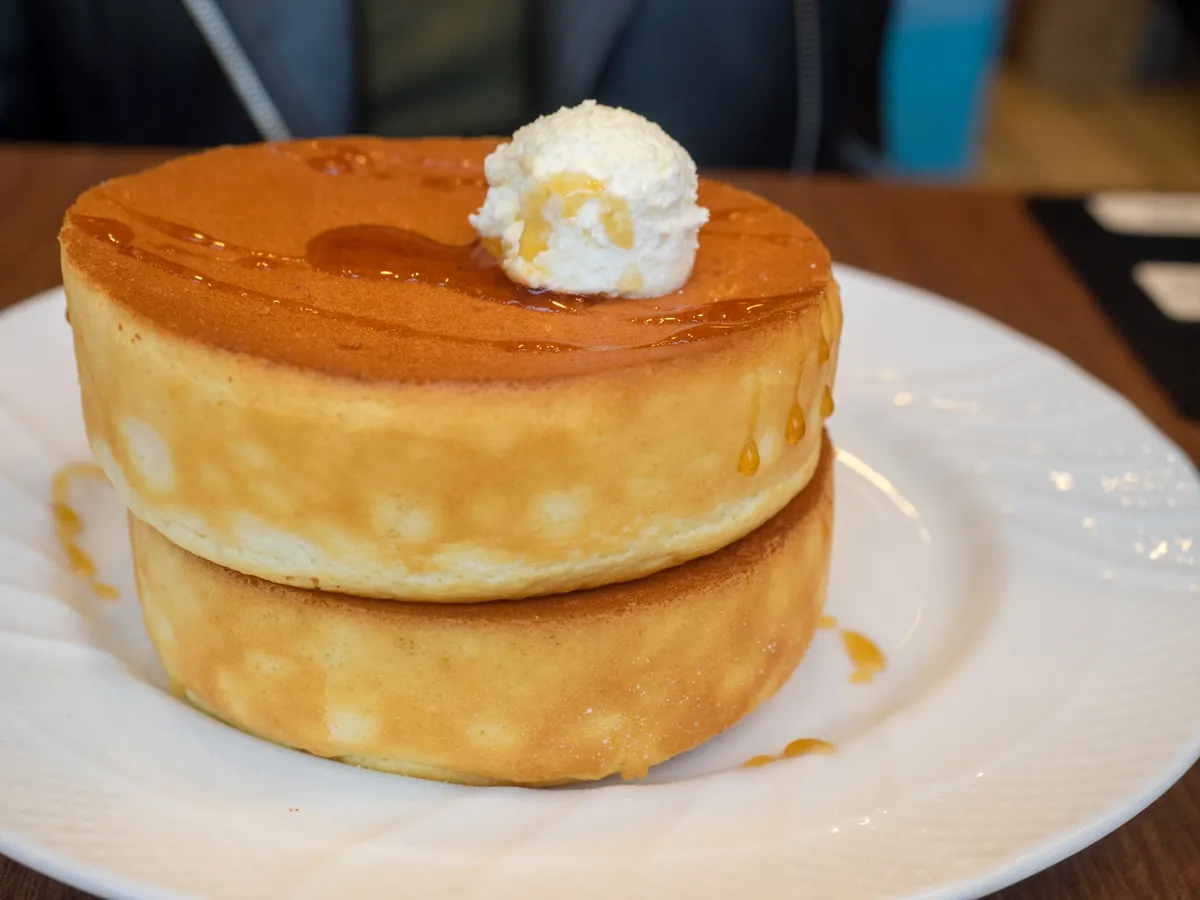
Learning how to make pancakes fluffy honestly changed my weekend mornings. For years I served my family pancakes that looked more like tortillas with delusions of grandeur — thin, pale, and a little bit rubbery. I’d follow the recipe to the letter and still end up with flat, sad little discs that soaked up syrup […]
Learning how to make pancakes fluffy honestly changed my weekend mornings. For years I served my family pancakes that looked more like tortillas with delusions of grandeur — thin, pale, and a little bit rubbery. I’d follow the recipe to the letter and still end up with flat, sad little discs that soaked up syrup like a paper towel and tasted like a missed opportunity.
Here’s the thing nobody tells you: fluffy pancakes aren’t about some secret ingredient or an expensive gadget. They’re about a handful of small decisions, each one adding a little bit of lift. If you’ve ever typed how to make pancakes fluffy into a search bar at 7 a.m. while staring at a plate of flat pancakes, this guide is for you.
Over the next few minutes, I’m going to walk you through the nine things that made the biggest difference in my kitchen — from leavening science to the great butter-versus-oil debate to the one mistake I see almost everyone make at the stove. By the end, you’ll know exactly how to make pancakes fluffy enough that a short stack looks like a tall one. Grab your spatula and let’s get into it.
Table of Contents
How to Make Pancakes Fluffy: Start With Fresh Leavening
The single biggest breakthrough in my own quest for how to make pancakes fluffy came from the most boring place imaginable: my baking powder tin. Baking powder is the engine that lifts your pancakes, and it goes stale. That tin that’s been sitting in your cabinet since last spring? It might as well be flour at this point.
Baking powder works through a two-stage reaction: first when it hits liquid, and again when it hits heat. That’s the “double-acting” part. But over time, exposure to air and moisture dulls that reaction until your pancakes barely rise at all. The fix takes ten seconds. Drop half a teaspoon of baking powder into a cup of hot water. If it fizzes energetically, you’re golden. If it just sits there looking bored, toss it and buy a fresh tin. I replace mine every six months now, and I write the purchase date on the lid with a marker so I don’t have to guess.
Amount matters too. A good rule of thumb is about two teaspoons of baking powder per cup of flour. Less than that and you won’t get enough lift; much more and your pancakes can taste metallic or soapy, which is honestly worse than flat. And here’s a detail people miss: whisk your dry ingredients together thoroughly before the wet ingredients go in. If the baking powder is sitting in one pocket of the batter, one pancake will be a tower and the next will be a coaster.
Buttermilk Is Your Best Friend (and How to Fake It)
If I had to name the most reliable answer to how to make pancakes fluffy, it would be buttermilk. Real buttermilk is slightly acidic, and that acidity does two wonderful things. First, it reacts with baking soda to produce extra carbon dioxide — more bubbles, more lift. Second, it tenderizes the crumb, giving you that soft, cake-like texture that separates great pancakes from merely okay ones.
But here’s the honest truth: I don’t always have buttermilk in my fridge. On those mornings, I make a quick substitute that gets me about 90 percent of the way there. Pour one tablespoon of lemon juice or plain white vinegar into a measuring cup, then add regular milk up to the one-cup line. Let it sit for five to ten minutes until it looks slightly curdled and thicker. That’s it — you’ve got a serviceable stand-in with enough acidity to wake up your baking soda.
Don’t skip this step if your recipe includes baking soda but you’re using plain milk. Baking soda needs an acid to react with; without one, it just sits there and can even leave a faintly bitter taste. The soda-and-acid partnership is the quiet workhorse behind tall pancakes, and it’s free.
Stop Overmixing — Lumps Are Totally Fine
If you want to know how to make pancakes fluffy, the most important thing I can tell you is this: put the whisk down sooner than feels natural. Almost everyone overmixes pancake batter, and I was absolutely guilty of this. I’d stir and stir until the batter was silky smooth, proud of myself, completely unaware that I was developing gluten with every stroke.
Here’s what’s happening in the bowl. Flour contains proteins that form gluten when they get wet and agitated. A little gluten is fine — it gives pancakes structure. But overmix and those proteins link up into a tough, elastic network. The batter becomes stretchy, the bubbles from your leavening get trapped in a chewy matrix instead of a tender one, and your pancakes come out dense, rubbery, and flat. Smooth batter is the enemy of fluffy pancakes.
The fix is simple: stir the wet and dry ingredients together just until you can’t see dry flour anymore. Ten to twelve gentle strokes with a fork or spatula is plenty. The batter should look lumpy and a bit shaggy — that’s exactly right. I like to tell people that if your batter looks like something you’d be embarrassed to serve to guests, you’re probably doing it perfectly. Those lumps hydrate and disappear as the batter rests and cooks, and they leave behind a tender, open crumb.
Give Your Batter a Rest
Resting the batter is one of the most underrated tricks for how to make pancakes fluffy, and it costs you nothing but five or ten minutes. After you mix, set the bowl aside and go preheat your pan. During those minutes, two good things happen at once.
First, the flour fully hydrates. Those little dry lumps absorb liquid and soften, which means a more even texture and no raw-flour taste in the finished pancake. Second, your double-acting baking powder begins its first reaction, starting to produce tiny bubbles throughout the batter. You’ll actually notice the batter getting slightly thicker and a little bit puffy-looking — that’s the lift beginning to happen before a single pancake hits the pan.
One warning: don’t stir the batter again after it rests. I know it’s tempting to give it one more mix “just to smooth it out,” but that knocks out the bubbles you just built. If a little liquid has separated on top, gently fold it back in with two or three strokes, max. Then cook. Ten minutes of patience here genuinely buys you a quarter-inch of extra height, and in pancake terms that’s a lot.
Master Your Pan Heat
Pan heat is one of the most overlooked pieces of how to make pancakes fluffy, and it’s where I see the most kitchen tragedies. Too hot, and the outside burns before the inside has a chance to rise — you get a dark, flat hockey puck with a gummy center. Too cool, and the batter just sits there spreading outward into a thin, pale oval while the leavening exhausts itself before any structure sets.
You want medium to medium-low heat. Here’s my test: flick a few drops of water onto the pan. If they sizzle and dance across the surface before evaporating, you’re ready. If they just sit there and lazily steam, give it another minute. If they explode into a frenzy instantly, back the heat off — your pan is angry and your pancakes will pay for it.
Fair warning: the first pancake is almost always a sacrifice. Even experienced cooks use the first one to calibrate the heat, so don’t feel bad if it comes out weird-looking. Eat it yourself as a cook’s treat — it’s still delicious. For more on dialing in technique, the bakers at King Arthur Baking have a wonderful deep dive in King Arthur Baking’s fluffy pancake guide that covers pan temperature and batter science in detail.
If you cook pancakes often, an electric griddle is worth considering. Holding a steady 325 to 350 degrees across a big surface takes the guesswork out entirely, and you can cook a whole batch at once instead of playing pancake-by-pancake relay.
Butter vs. Oil: What Should You Cook Them In?
People ask me about this constantly, so let’s settle it. Butter gives you the best flavor — that rich, nutty browning on the surface of the pancake is mostly thanks to butter’s milk solids caramelizing. But butter also burns faster than oil, and burnt butter on a hot pan makes bitter pancakes with dark, spotty surfaces.
Oil — a neutral one like canola or avocado — handles heat beautifully and gives you an even, golden crust. The trade-off is flavor: oil-cooked pancakes taste a little cleaner and a little less indulgent. My personal compromise is to cook with a thin film of oil and then add a small knob of butter to the pan for the last few seconds, or simply serve the pancakes with plenty of butter on top. You get the browning control of oil and the flavor of butter.
Whatever fat you choose, use less than you think. You want a whisper-thin film, not a shallow fry. Wipe the pan with a folded paper towel dipped in oil between batches to keep the coating even. Too much fat and your pancakes will fry up with lacy, crispy edges — tasty, sure, but not fluffy. And never let the fat smoke; if it’s smoking, the pan is too hot anyway.
Pour Thick and Flip Exactly Once
This is where the magic of how to make pancakes fluffy either happens or dies. Pour your batter — about a quarter cup per pancake — and then leave it alone. Don’t spread it, don’t swirl it, don’t coax it into a perfect circle. A thick mound of batter has somewhere to rise to; batter you’ve spread thin across the pan has already given up.
Now the hard part: wait. Let the pancake cook undisturbed until you see bubbles forming across the surface and popping, and the edges look set and slightly dry. This takes about two to three minutes on proper medium-low heat. Peek underneath with your spatula — you want a deep golden brown.
Then flip once, confidently, in a single smooth motion. One flip. Not two, not three, and definitely not a flip followed by a nervous little adjustment flip. Every extra flip presses out air and compacts the crumb. And here’s the rule I break people’s hearts with: never, ever press the pancake down with your spatula after flipping. I know it feels satisfying. I know everyone does it. But you’re literally squeezing the fluffiness out with your own hand. Let the pancake be.
Keep Finished Pancakes Warm Without the Sog
Nothing deflates the triumph of learning how to make pancakes fluffy like serving the last pancake cold while the first one has gone limp. The solution is your oven. Before you start cooking, heat it to its lowest setting — usually around 200 degrees Fahrenheit — and put a wire rack on a baking sheet inside.
As each pancake finishes, transfer it to the rack in a single layer. The rack is the key detail: it lets air circulate underneath so steam escapes instead of getting trapped and turning your beautiful golden bottoms soggy. Whatever you do, don’t stack hot pancakes in a pile under a lid or a towel. They’ll steam each other into a gummy, compressed mess in minutes.
This oven trick also buys you time to be a relaxed host instead of a frantic short-order cook. While the batch cooks, plan your toppings — and if you’re stuck in a breakfast rut, these nutritious breakfast ideas are full of options that pair beautifully with a tall, fluffy stack.
Why Your Pancakes Turn Out Flat: 6 Common Mistakes
Nine times out of ten, when someone’s how to make pancakes fluffy experiment fails, one of these culprits is responsible. Run through this checklist honestly.
First, expired leavening. As I mentioned, old baking powder is the number-one pancake killer. If your tin is older than six months, test it or replace it. Second, overmixing. If your batter is smooth as silk, you’ve gone too far — embrace the lumps. Third, batter that’s too thin. Fluffy pancakes need a thick batter that mounds when you pour it. If yours runs across the pan like crepe batter, whisk in a spoonful of flour at a time until it holds its shape.
Fourth, wrong pan temperature — usually too hot. Scorched outsides and raw middles are the classic symptom. Turn it down and be patient; thick pancakes need gentle, sustained heat to cook through while they rise. Fifth, flipping too early or too often. If the pancake isn’t set enough to flip cleanly, it wasn’t ready. Wait for the bubbles. Sixth, pressing with the spatula. I said it before and I’ll say it again: step away from the pancake. Pressing is fluffiness murder.
There’s also a sneaky seventh: cold ingredients straight from the fridge. Room-temperature eggs and milk mix more evenly and the batter starts cooking more uniformly. It’s a small thing, but small things are what this whole guide is about.
A Simple Framework for Tall Stacks (Not a Copy-Paste Recipe)
I’m not going to hand you someone else’s exact recipe — instead, here’s the framework I use, built from everything above. Ratios matter more than any specific ingredient list. For a batch that serves about four: one cup of all-purpose flour, two teaspoons of baking powder, half a teaspoon of baking soda if you’re using an acidic liquid like buttermilk, a pinch of salt, two tablespoons of sugar, one cup of buttermilk or milk, one egg, and two tablespoons of melted butter or oil.
The method: whisk the dry ingredients in one bowl. Whisk the wet ingredients in another. Pour wet into dry and stir just until combined — lumpy is perfect. Rest the batter for five to ten minutes while your pan preheats over medium-low. Pour quarter-cup mounds, cook until bubbles pop on the surface and the bottom is golden, flip once, and cook about a minute more until the center springs back when you press it lightly.
That’s the whole system. Once you internalize the framework, you can riff endlessly — add vanilla, fold in blueberries after portioning, swap in whole wheat flour for half the all-purpose. The principles of how to make pancakes fluffy stay exactly the same no matter what flavor direction you take.
Frequently Asked Questions
Here are the questions I get asked most about how to make pancakes fluffy, with straight answers.
Can I make fluffy pancakes without buttermilk?
Yes, absolutely. Make the quick substitute I described earlier — one tablespoon of lemon juice or vinegar plus milk to make one cup, rested for five to ten minutes. You’ll get nearly all the lift and tenderness of real buttermilk. Plain milk works too, but skip the baking soda in that case since there’s no acid to activate it.
How do I know exactly when to flip a pancake?
Watch for bubbles forming on the raw surface and popping, plus edges that look dry and set rather than wet and shiny. Then peek underneath — you want an even golden brown. If the pancake resists the spatula or looks pale underneath, give it another thirty seconds. Patience here is everything.
Why are my pancakes gummy in the middle?
Almost always, the pan was too hot. The outside set and browned before the inside finished cooking and rising, so the center stayed dense and underdone. Turn the heat down to medium-low and give each pancake a full two to three minutes on the first side. Thick pancakes need gentle heat to cook all the way through.
Can I make the batter the night before?
You can mix the dry ingredients the night before and combine everything in the morning — that’s the smart move. But don’t mix the full wet batter ahead of time, because your baking powder starts reacting the moment it hits liquid and loses its lifting power overnight. The real magic of how to make pancakes fluffy happens in the ten minutes before cooking, so keep the batter fresh.
Is it better to cook pancakes in butter or oil?
For flavor, butter wins. For even browning and heat tolerance, oil wins. I use a thin film of neutral oil in the pan for control and serve with butter on top for flavor — the best of both worlds. Avoid using a heavy hand with either one, since excess fat fries the edges instead of letting the pancake rise.
The Bottom Line
So that’s how to make pancakes fluffy: fresh leavening, buttermilk or an acidic stand-in, a lumpy barely-mixed batter, a short rest, the right pan heat, a whisper of fat, one confident flip, and a warm oven waiting at the finish line. None of these steps is hard on its own, but together they transform flat, forgettable pancakes into the tall, golden, cloud-soft stacks you actually dream about.
This weekend, pick just three of these secrets and try them. I’d bet money you’ll see a difference in the very first batch — and once you’ve tasted what your pancakes are capable of, there’s no going back to the flat ones.


One thought on “How to Make Pancakes Fluffy: 9 Secrets for Tall, Golden Stacks”