

How to Clean Fabric Sofa Without Machine: 9 Steps That Actually Work If you’ve ever wondered how to clean fabric sofa without machine equipment because your couch is looking dull and you don’t own a carpet cleaner, you’re in the right place. My sofa has survived spilled coffee, a muddy-pawed dog, two kids with sticky […]
How to Clean Fabric Sofa Without Machine: 9 Steps That Actually Work
If you’ve ever wondered how to clean fabric sofa without machine equipment because your couch is looking dull and you don’t own a carpet cleaner, you’re in the right place. My sofa has survived spilled coffee, a muddy-pawed dog, two kids with sticky hands, and more movie-night popcorn than I care to admit — and I’ve never once rented or bought a cleaning machine to bring it back to life.
Learning how to clean fabric sofa without machine help honestly changed the way I take care of my living room. Once I figured out that a vacuum, some baking soda, dish soap, and a little elbow grease could handle almost anything, I stopped stressing about every spill. Here’s the exact 9-step method I use, from prepping the fabric to drying it properly.
Table of Contents
How to Clean Fabric Sofa Without Machine: Start by Vacuuming Everything
The first real step in how to clean fabric sofa without machine power is also the easiest: vacuum. I know, it sounds too simple, but dry soil is the enemy of every cleaning method. If you skip this and go straight to wet cleaning, you end up turning loose dust and crumbs into muddy residue that works deeper into the fibers.
Pull off every cushion and pillow, and shake them out outside if you can. Then vacuum the whole sofa — the back, the arms, the seat deck, and the cushions themselves. Use the crevice tool to get into the cracks where crumbs, coins, and mystery objects love to hide, then switch to the upholstery attachment for the flat surfaces. Go slowly; rushing through this step is the number one reason people end up with lackluster results.
If you have a pet, you’ll probably need to go over everything twice. Pet hair weaves itself into fabric like it has a personal mission. A rubber glove rubbed over the surface in short strokes balls up stubborn hair before vacuuming, and a cheap lint roller handles whatever is left on the cushions. Once the sofa is genuinely free of loose debris, you’re ready for the real work.
Read the Care Tag: The Cleaning Codes That Decide Everything
Before a single drop of water touches your sofa, find the care tag — usually tucked under the cushions, behind a back flap, or along the bottom edge. Manufacturers print a cleaning code there, and ignoring it is how good sofas get ruined.
Here’s what the codes mean. W means you can use water-based cleaners, which covers almost everything in this guide. S means solvent-only — water can leave marks or shrink the fabric, so stick to dry-cleaning solvents or call a pro. WS means both water-based and solvent cleaners are safe, which gives you the most flexibility. X means vacuum only; no water, no solvents, or you’ll damage the fabric.
Most modern fabric sofas are W or WS, so you’re probably fine. One more caution: even with a W code, always spot-test your cleaner on a hidden area (the back panel or under a cushion) and let it dry completely before going further.
Deodorize With Baking Soda: The Overnight Odor Eraser
After vacuuming, the next step in how to clean fabric sofa without machine fuss is deodorizing. Sofas absorb everything — sweat, food smells, pet odors, the general funk of daily life — and wet cleaning alone won’t always fix a deep-set smell. Baking soda is my favorite weapon here because it actually absorbs odors instead of masking them with perfume.
Sprinkle a generous, even layer of baking soda over the entire sofa: the seat cushions, the back cushions, the arms, everything. Use your hand or a soft brush to work it gently into the fabric so it reaches the fibers instead of just sitting on top. Then — and this is the part most people rush — leave it alone for at least 30 minutes. For a truly tired, smelly sofa, I leave it overnight, which makes a dramatic difference.
When the time is up, vacuum it all off thoroughly with the upholstery attachment. Go slowly and check that you’ve picked up all the powder, especially in seams and crevices, because leftover baking soda can feel gritty. This trick works on mattresses and carpets too — and the same principle applies when you’re removing musty smells from a closet naturally. Baking soda plus patience beats any spray-on deodorizer I’ve tried.
Mix Your DIY Upholstery Cleaner: The Recipe I Swear By
Here’s where the actual washing begins. You don’t need a store-bought upholstery shampoo — the most effective part of how to clean fabric sofa without machine help is a homemade cleaner made from things already in your kitchen. After a lot of trial and error (and one memorable incident involving too much vinegar), this is the recipe I keep coming back to.
Mix 1 tablespoon of clear dish soap (not the moisturizing kind, and definitely not the stuff with bleach), 1 tablespoon of white vinegar, and 2 cups of warm water in a spray bottle or bowl. The dish soap cuts through grease and food residue, the vinegar helps with odors and mineral deposits, and the warm water activates both without being hot enough to set stains or shrink fabric.
That’s it. No exotic ingredients, no expensive products. If you have a really light-colored sofa, you can add a teaspoon of oxygen-based stain remover (the color-safe kind) to the mix for extra brightening power.
Spot-Treat Common Stains Before You Wash the Whole Sofa
Tackling stains before the all-over clean is a non-negotiable part of learning how to clean fabric sofa without machine equipment. Different stains need different approaches, and trying to wash them out during the general clean usually just spreads them around. Work from the outside of each stain inward so you don’t push it into clean fabric.
For coffee, tea, and food stains, blot up what you can, then dab the spot with your DIY cleaner using a white cloth — blot, don’t rub, since rubbing frays fibers and grinds stains deeper. Rinse the cloth, reapply, and repeat until it lifts.
For grease or oil, sprinkle cornstarch or baking soda on the spot and let it sit for 15–20 minutes to absorb the oil before you touch it with any liquid. Brush off the powder, then treat with the dish-soap solution. For ink, dab gently with rubbing alcohol on a white cloth, changing to a clean part of the cloth often so you don’t redeposit the ink. For pet accidents, blot thoroughly, then use cool water with a drop of dish soap followed by a 50/50 mix of water and white vinegar to neutralize the odor.
The Pot-Lid Scrubbing Method: Wash the Entire Sofa by Hand
This is the centerpiece of how to clean fabric sofa without machine scrubbing — the pot-lid trick. It sounds odd, but wrapping a cloth around a pot lid gives you a flat, firm scrubbing surface that covers large areas evenly and keeps you from over-wetting the fabric. It’s the closest thing to a machine clean you can get by hand.
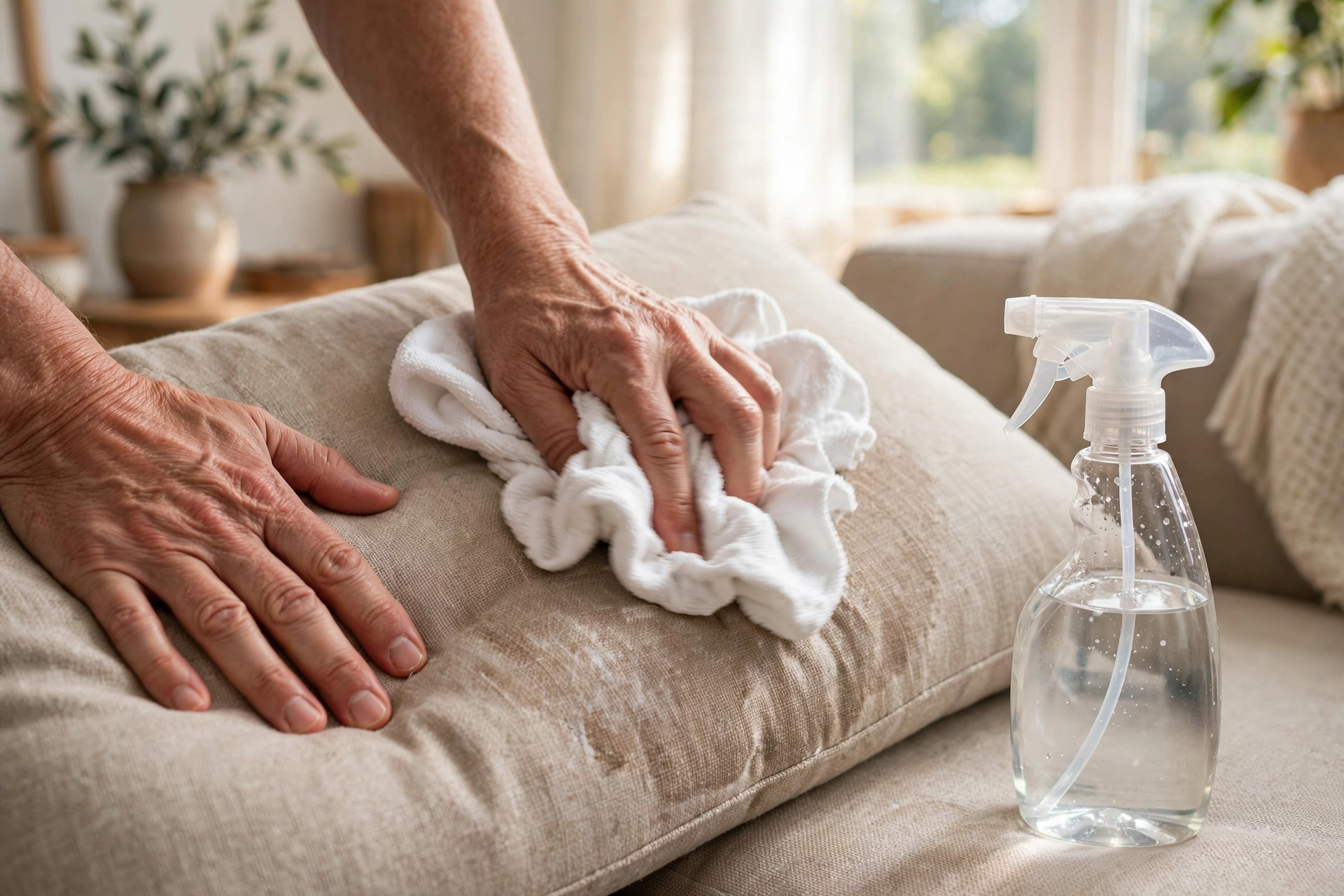
Dampen a white microfiber cloth or towel in your DIY cleaning solution and wring it out well — it should be damp, not dripping. Wrap it tightly around a pot lid (a medium saucepan lid works perfectly) and hold the handle. Working in sections about two feet square, scrub the fabric in slow circular motions, applying light, even pressure.
Rinse your cloth in clean water between sections and wring it out again before continuing. Change to a fresh cloth when yours starts looking gray. Once you’ve gone over the entire sofa, take a clean cloth dampened with plain water and wipe everything down to remove soap residue — leftover soap attracts dirt, so this rinse step matters more than people think. Finish by blotting each section with a dry towel to pull out as much moisture as possible. If you’d like a second opinion on the technique, this detailed guide to cleaning a sofa without special equipment walks through a very similar approach.
Rinse, Blot, and Dry the Sofa Properly
How you dry the sofa is just as important as how you wash it, because damp upholstery is an invitation for mildew and that musty smell that defeats the whole point. The golden rule: never soak the fabric. Every step of this process uses minimal water, and your drying routine should be designed to get the sofa back to bone-dry as fast as possible.
After your final rinse wipe, press dry towels firmly into every section you cleaned to wick out moisture. Stand the cushions up so air circulates around all sides, and if possible, position a fan to blow directly across the sofa — moving air does more for drying than heat ever will.
Give the sofa a full 6 to 8 hours before you sit on it, and a full day if you cleaned deeply or live in a humid climate. If cushions have removable covers, you can also pop the covers off, let them air-dry fully, and fluff the inserts before zipping them back up. Resist the urge to use a hair dryer or heater — concentrated heat can shrink fabric and set any stain you missed.
Protect the Fabric So It Stays Cleaner Longer
Once your sofa looks great again, a little prevention keeps you from having to learn how to clean fabric sofa without machine equipment every other month. The easiest habit: vacuum the sofa weekly. It takes five minutes and stops the slow buildup of dust and grit that grinds into fibers and makes fabric look dull over time.
Consider a fabric protector spray made for upholstery. These create an invisible barrier that makes spills bead up instead of soaking in, buying you precious seconds to blot before a stain sets. Apply it to a freshly cleaned, fully dry sofa and reapply every few months or after each deep clean. Always spot-test first, especially on delicate or light-colored fabrics.
Rotate and flip cushions every couple of weeks for even wear, and keep the sofa out of direct sunlight — UV fades fabric faster than almost anything else. Deal with spills the moment they happen — a damp cloth within the first minute beats a deep clean every time.
Mistakes to Avoid When Cleaning a Fabric Sofa
Knowing how to clean fabric sofa without machine help also means knowing what not to do. These are the mistakes I see people make most often — and a couple I’ve made myself.
First, don’t use too much water. Over-wetting is the number one cause of water stains, mildew, and cushions that smell worse after cleaning than before. Damp cloths, wrung-out towels, and light mists — that’s the approach. Second, don’t scrub aggressively with a brush or your fingernails. Vigorous scrubbing damages the weave and can leave a fuzzy, worn patch that looks worse than the stain did.
Third, don’t mix random cleaners. Bleach-based products, harsh solvents, and laundry detergent with optical brighteners can discolor fabric permanently. Stick to the simple recipe in this guide unless your care tag allows otherwise. Fourth, don’t skip the spot test. It takes five minutes on a hidden area and it’s the only thing standing between you and a bleached rectangle on your favorite chair. And finally, don’t sit on the sofa until it’s fully dry — pressure on damp fabric pushes moisture deep into the cushions where it lingers.
Frequently Asked Questions
Can I really deep clean a fabric sofa without any machine?
Yes, absolutely. Vacuuming, baking soda deodorizing, a DIY dish-soap cleaner, and the pot-lid scrubbing method together remove dirt, stains, and odors just as well as a rented machine for most everyday grime.
How often should I clean my fabric sofa this way?
Vacuum weekly, do a baking soda deodorize monthly, and give the sofa the full hand-clean treatment two to four times a year depending on pets, kids, and how much living happens on it. If you follow this routine, learning how to clean fabric sofa without machine help becomes a quick maintenance habit rather than an annual ordeal.
What if my sofa’s care tag says “S” for solvent-only?
Then skip the water-based methods in this guide entirely and use a dry upholstery solvent instead, or hire a professional. Water on an S-coded fabric can leave water rings, cause shrinkage, or change the texture. The vacuum and baking soda steps are still safe, since neither involves liquid.
Will baking soda damage my sofa fabric?
No — baking soda is one of the gentlest deodorizers you can use on upholstery. Just make sure to vacuum it up completely afterward, since leftover powder can feel gritty underfoot (or under-seat). For very delicate fabrics like silk blends, test on a hidden spot first, as you should with anything.
How long does it take for the sofa to dry completely?
Usually 6 to 8 hours with good airflow from a fan or open windows. Thicker cushions and humid weather can push that to a full day. To check, press a dry paper towel firmly into the fabric — if it comes away damp, give it more time before using the sofa.
The Bottom Line: How to Clean Fabric Sofa Without Machine Hassle
Learning how to clean fabric sofa without machine equipment is one of those skills that pays off for years. With nothing more than a vacuum, baking soda, dish soap, vinegar, and a pot lid, you can lift stains, kill odors, and refresh the whole piece of furniture in a single afternoon — no rentals, no expensive products, no appointments.
The real secret isn’t any single trick; it’s consistency. Vacuum weekly, deodorize monthly, deep clean a few times a year, and blot spills the moment they happen. Do that, and your fabric sofa will stay the kind of couch people actually want to sit on — fresh-smelling, clean-looking, and comfortable — for many years to come. Your living room deserves it, and honestly, so do you.


One thought on “How to Clean Fabric Sofa Without Machine: 9 Steps That Actually Work”